
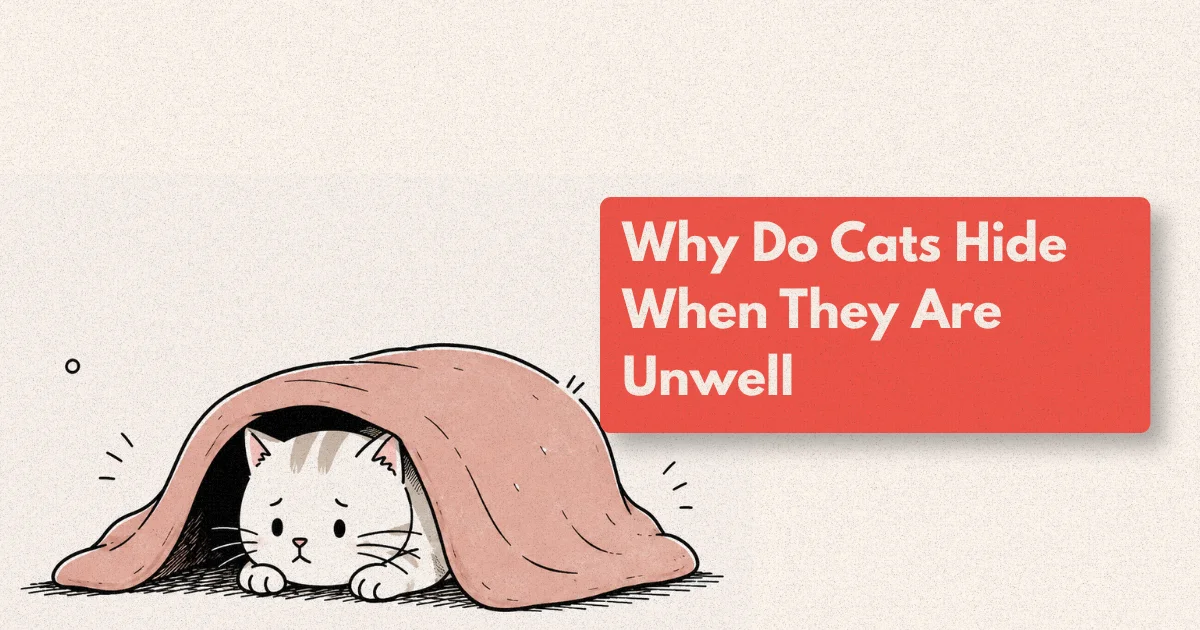
Cats are exceptional at concealing illness. This is not a personality quirk or stubbornness — it is a deeply wired survival behaviour with an evolutionary logic that, unfortunately, directly conflicts with early veterinary intervention. A cat that hides when unwell is doing exactly what its biology tells it to do. The problem is that by the time an owner recognises the hiding as something other than ordinary solitary feline behaviour, the illness driving it has often been progressing for days or weeks.
Hiding or withdrawal from normal activity is reported as a presenting owner concern in approximately 20 to 30% of feline consultations where significant disease is subsequently diagnosed (Journal of Feline Medicine and Surgery, 2025). It is one of the most common and most underacted-upon signs in cats, precisely because it is so easily rationalised. A cat that retreats to under the bed, to the back of a wardrobe, or to a spot it has never used before is sending a signal — the challenge for owners is distinguishing that signal from routine feline independence.
What to Know
Cats hide when unwell because concealing vulnerability is an ancestral survival strategy. A cat that has always had access to the same resting spots but suddenly chooses a new, enclosed, or very low-traffic location is behaving differently, not just independently. Hiding lasting more than 24 hours, particularly combined with reduced eating or a change in litter box use, warrants a same-day veterinary call. Chronic kidney disease, hyperthyroidism, dental disease, and hypertension together account for the majority of serious conditions discovered when hiding is the presenting owner complaint in cats over seven years old (ISFM, 2025).
Why Do Cats Hide? The Instinct Behind the Behaviour
To understand why a sick cat hides, it helps to understand what a cat is doing when it isn’t hiding. Cats in the wild are both predator and prey. As a prey animal for larger predators, displaying vulnerability is dangerous: a cat that looks weak, moves slowly, or behaves abnormally is a more attractive target. The evolutionary pressure to mask illness, injury, and pain is therefore intense, and it has produced cats that are physiologically capable of suppressing visible pain behaviours even when the underlying pain signal is significant.
This is well-documented in feline pain research. The Feline Grimace Scale (FGS), developed by researchers at the Université de Montréal, is a validated observational tool that scores subtle facial action units (ear position, orbital tightening, muzzle tension, whisker changes, head position) to identify acute pain in cats. The existence of the FGS reflects a fundamental clinical problem: cats in pain do not reliably show the behaviours that humans associate with pain (vocalisation, obvious lameness, resisting touch). They reduce activity, withdraw from social interaction, and seek concealment. These signs look so much like routine solitary cat behaviour that they are frequently missed for extended periods (JFMS, 2025).
Hiding behaviour specifically is linked to the cat’s response to feeling physiologically compromised. When a cat is nauseated, in pain, febrile, or experiencing cardiovascular or neurological dysfunction, it seeks a location that offers three things: low stimulation (reduced light, sound, and movement), physical enclosure (which provides a proprioceptive sense of security), and inaccessibility to other animals or people. These criteria describe the classic hiding spots owners report: under beds, inside wardrobes, behind appliances, inside boxes, or in the far corners of rarely used rooms.
The critical distinction between normal resting behaviour and illness-driven hiding is change. A cat that has always enjoyed resting in a particular spot is not hiding in the clinical sense. A cat that suddenly abandons its usual resting locations and chooses an enclosed, low-traffic space it hasn’t previously used is making a behavioural shift that reflects a change in its internal state. Noticing that shift requires owners to know their cat’s normal pattern — which is precisely why baseline behavioural familiarity is one of the most valuable health-monitoring tools available for cat owners.
Which Illnesses Cause Cats to Hide Suddenly?
The diseases that most commonly drive hiding behaviour in cats cluster around two patterns: acute conditions that cause rapid systemic deterioration, and chronic conditions that have been quietly progressing until the cat’s functional reserve is finally exhausted.
Acute Causes
Acute pain from any source is the most immediate driver of hiding. Urinary obstruction in male cats (a genuine emergency) produces severe abdominal and urethral pain that causes the cat to withdraw, strain in the litter box, and sometimes vocalise. Dental pain from a fractured tooth or severe periodontal disease produces a cat that stops eating and retreats. Trauma (road traffic accidents, falls, bite wounds) causes pain and physiological shock that drives hiding as the cat seeks a sheltered location to rest following injury. Any cat that has been outdoors and returns hiding and not moving normally should be examined for trauma.
Gastrointestinal disturbance. Acute pancreatitis, intestinal obstruction, and severe gastroenteritis all produce nausea, abdominal pain, and lethargy that drive hiding. Unlike dogs, cats with pancreatitis frequently show no vomiting or diarrhoea; the presenting signs are anorexia, withdrawal, and abdominal tenderness on palpation. This makes pancreatitis one of the most commonly underdiagnosed conditions in cats presenting with hiding as the chief complaint.
Feline upper respiratory infection. A cat in the acute phase of a herpesvirus or calicivirus infection is febrile, has a reduced sense of smell that suppresses appetite, and is physically uncomfortable. It will often seek a quiet, enclosed space and resist normal social interaction until the infection resolves or treatment begins.
Chronic Causes
Chronic kidney disease (CKD) is the leading cause of morbidity and mortality in older cats and is present in approximately 30 to 40% of cats over ten years of age (IRIS CKD Staging Guidelines, 2023). CKD produces nausea, uraemic toxin accumulation, anaemia, hypertension, and a progressive decline in the cat’s energy and engagement. The hiding behaviour in CKD cats often develops insidiously: the owner notices over weeks that the cat is “less active” and “sleeping more” before the hiding behaviour becomes conspicuous. By the time hiding is the presenting owner concern in a CKD cat, the disease is frequently at Stage 3 or beyond.
Hyperthyroidism affects approximately 10% of cats over ten years of age and is the most common endocrine disease in older cats (ISFM Feline Hyperthyroidism Guidelines, 2025). The typical presentation is weight loss despite a good appetite, hyperactivity, and vocalisation, but a proportion of cats (particularly those with concurrent CKD or cardiac disease) present atypically, with lethargy, withdrawal, and hiding rather than the expected hyperactivity. These “apathetic hyperthyroid” cats are a well-recognised clinical subgroup that is particularly prone to diagnostic delay because the presentation contradicts the textbook picture.
Hypertension (systemic arterial hypertension) affects approximately 20% of cats over 15 years of age and is most commonly secondary to CKD, hyperthyroidism, or hyperaldosteronism (ISFM, 2025). Hypertensive cats may hide following a sudden hypertensive event that causes acute vision changes, a stroke-like episode, or neurological signs. Owners sometimes report that their cat “suddenly seemed confused” or “started bumping into things” before retreating to hide. Sudden-onset hypertension with retinal haemorrhage or detachment is one of the few feline emergencies that carries a time-sensitive treatment window for preserving vision.
Dental disease. Feline tooth resorption (previously called feline odontoclastic resorptive lesions) affects more than 50% of cats over five years of age in some prevalence studies and is a significant and under-recognised source of chronic oral pain (AVDC, 2025). Cats with severe dental disease often hide around mealtimes because eating is painful, but otherwise appear well. The hiding is episodic and food-associated rather than continuous, which can mislead owners into attributing it to a preference change.
Cardiac disease. Hypertrophic cardiomyopathy (HCM) is the most common cardiac disease in cats, affecting approximately 15% of apparently healthy cats in echocardiographic prevalence studies, with significantly higher rates in Maine Coons, Ragdolls, and Siberians (JVIM, 2025). Cats with HCM can decompensate into congestive heart failure or aortic thromboembolism (ATE) — a catastrophic and excruciatingly painful event where a clot lodges in the aortic trifurcation, causing sudden partial or complete hindlimb paralysis. A cat that suddenly cries out, hides, and then presents with cold, painful hindlimbs is experiencing ATE and needs emergency care immediately.
CKD and dental disease together account for half of the diagnoses in cats whose owners’ presenting complaint was hiding behaviour. Both are conditions where earlier detection dramatically improves long-term outcome, which is the clearest argument for treating a change in hiding behaviour as a prompt for investigation rather than observation.
How Long Is Too Long? When Hiding Becomes a Red Flag
Duration and context are the two variables that convert “my cat is hiding” from a normal observation into a clinical concern. Most cats retreat occasionally: after a stressful event (a loud noise, a new animal in the house, a vet visit), following minor gastrointestinal upset, or simply when their daily rhythm calls for solitude. The question is whether the hiding is resolving within a normal timeframe and with a recognisable trigger, or whether it is persisting, worsening, or occurring without an identifiable cause.
A practical framework for owners:
A cat that retreats after a known stressor (a fireworks event, the arrival of a visitor, a car journey) and resumes normal behaviour including eating and litter box use within 12 to 24 hours is within normal range. The stressor explains the behaviour, and resolution confirms it. No veterinary action is needed unless other signs accompany it.
A cat that is hiding without a clear trigger, or that continues hiding beyond 24 hours, or that is hiding while also not eating or showing any change in litter box frequency or character, should be assessed by a vet. The combination of hiding and reduced food intake is particularly significant because cats who do not eat for 48 hours or more begin mobilising hepatic fat stores at a rate that can trigger hepatic lipidosis, a life-threatening condition that develops independently of the illness that caused the anorexia in the first place.
Hiding accompanied by any of the following makes same-day emergency assessment appropriate rather than next-available: vocalisation or crying while hiding (indicates acute pain); sudden onset in a cat with no prior hiding behaviour; hindlimb weakness or dragging; sudden visible distress followed by hiding; visible ocular changes (dilated pupils that don’t respond to light, blood visible in the eye); or any cat that cannot be roused from hiding to accept food or water.
What Does a Feline Wellness Evaluation Involve?
When a cat is presented for hiding or withdrawal as the chief complaint, the veterinary workup is designed to systematically screen for the conditions most likely in that age group rather than to investigate a specific organ system. This is one of the things that makes feline wellness evaluations different from a problem-oriented consultation: the starting point is a broad screen, narrowed by findings.
Physical examination. A thorough physical examination covers body condition score, muscle mass assessment (muscle wasting is an early and highly sensitive sign of chronic disease in cats), hydration status, mucous membrane colour, lymph node assessment, oral examination (periodontal grade, tooth resorption, oral masses), palpation of the thyroid gland for nodules, cardiac and respiratory auscultation, and abdominal palpation. In cats that are actively hiding and therefore stressed, the examination is conducted as calmly and briefly as possible, with the cat allowed to remain in its carrier if that provides comfort; many physical examination findings can be gathered with minimal handling.
Body condition scoring and muscle condition scoring are not the same measurement and both matter. A cat can maintain normal body weight while losing significant muscle mass (sarcopenia), a finding that independently predicts chronic disease. Muscle wasting over the temporal muscles, lumbar spine, and proximal limbs visible on inspection and palpable on examination is a sensitive early marker for CKD, hyperthyroidism, and cancer, often preceding laboratory abnormalities by months (JFMS, 2025).
Baseline laboratory screening. For any cat over five years old with behavioural changes, a minimum database of haematology, biochemistry, and urinalysis is the standard starting point. The biochemistry panel screens for CKD (creatinine, urea, phosphorus, SDMA — the last a sensitive early CKD marker), hyperthyroidism (T4), liver disease, and electrolyte disturbances. Urinalysis with urine specific gravity is essential: a cat with low urine concentration (USG below 1.035) alongside elevated creatinine changes the CKD staging significantly compared with creatinine alone. Haematology identifies anaemia (a cause and a consequence of CKD and neoplasia), leukocyte changes suggesting infection or inflammation, and thrombocyte abnormalities.
SDMA (symmetric dimethylarginine) as a CKD biomarker is now a standard component of feline wellness panels. It identifies a decline in glomerular filtration rate approximately 17 months earlier than serum creatinine in cats, when approximately 40% of nephron mass has been lost rather than the 75% required to elevate creatinine (IRIS, 2023). This 17-month early detection window is clinically meaningful because dietary phosphorus restriction and other CKD-slowing interventions started at IRIS Stage 1–2 substantially reduce progression rate.
Blood pressure measurement. Systemic arterial hypertension is common in older cats and is both underdiagnosed and undertreated. Blood pressure measurement using Doppler or oscillometric methods is a standard part of any feline wellness evaluation in cats over seven years old, and any cat presenting with hiding or neurological signs. A Doppler systolic pressure above 160 mmHg on two readings taken in a calm, settled patient meets the threshold for antihypertensive treatment discussion; above 180 mmHg represents severe hypertension with high risk of target organ damage (ISFM, 2025).
Abdominal and thoracic ultrasound. For cats where hiding has been present for days to weeks and the cause is not immediately identified on examination and baseline labs, abdominal ultrasound adds substantial diagnostic value. It assesses kidney architecture (CKD staging changes, cysts, masses), intestinal wall thickening (IBD vs. small cell lymphoma), hepatic and pancreatic changes (pancreatitis, lipidosis), adrenal size (hyperaldosteronism), and the presence of free fluid. Thoracic ultrasound screens for pleural effusion and cardiac enlargement in cats suspected of cardiac disease.
Echocardiography. Where cardiac disease is suspected (murmur, arrhythmia, respiratory signs, or breed predisposition), echocardiography provides definitive assessment of cardiac morphology, HCM grading, left atrial size (the most important predictor of thromboembolic risk in cats), and haemodynamic function.
In cats over seven years old with no presenting owner complaint, a standard wellness biochemistry panel identifies actionable abnormalities in approximately 38% of patients, blood pressure measurement in 24%, and abdominal ultrasound in 31% (JFMS, 2025). In cats presenting with hiding or behavioural withdrawal as the chief complaint, these rates are substantially higher because the behaviour change is itself a signal that something is already affecting the cat’s physiology. The wellness screen in a hiding cat is not a precautionary exercise; it is an investigation with a high prior probability of finding something.
How Are the Conditions That Cause Hiding Treated?
Treatment follows diagnosis, and the conditions discovered when hiding is the presenting complaint have treatments that range from straightforward to complex but are almost universally more effective when started earlier in the disease course.
CKD management is organised around the IRIS staging system. Stage 1 and 2 cats benefit from dietary phosphorus restriction (prescription renal diets reduce progression rate by approximately 30% over two years compared with standard maintenance diets), blood pressure control if hypertensive, and management of any concurrent conditions. Subcutaneous fluid supplementation at home is a practical, owner-administered intervention that significantly improves quality of life in Stage 3 and 4 CKD cats by providing consistent hydration support. Median survival from Stage 2 diagnosis with appropriate management is approximately 1,151 days; from Stage 3, 679 days; from Stage 4, 35 days, illustrating the magnitude of the benefit of early detection (IRIS, 2023).
Hyperthyroidism is highly treatable. Medical management with methimazole (or the transdermal gel formulation applied to the inner ear pinna, which owners often find far easier to administer than tablets) normalises thyroid hormone levels and resolves clinical signs in the majority of cats within two to four weeks. Radioactive iodine (I-131) therapy is the definitive cure, destroying hyperactive thyroid tissue while sparing normal tissue, and produces permanent remission in over 95% of cats with a single treatment. Surgical thyroidectomy and dietary iodine restriction (Hill’s y/d diet) are alternative options for specific clinical situations.
Hypertension is treated with amlodipine as first-line therapy in cats; it is consistently effective, well-tolerated, and produces rapid blood pressure reduction. The urgency of treatment in acute hypertensive crises relates to the risk of retinal detachment: cats with acute severe hypertension who are treated within 24 to 48 hours of onset of ocular signs have a significantly higher rate of vision preservation than those treated later.
Dental disease. Confirmed tooth resorption and severe periodontal disease are treated with dental extraction under general anaesthesia. The behavioural transformation in cats post-dental surgery is frequently dramatic: owners whose cats had been hiding and apparently lethargic report a return to youthful engagement and activity within days of recovery, because the chronic pain that was driving the withdrawal has been removed. Dental disease is the condition where treatment most consistently and visibly confirms that the hiding was pain-driven.
Cardiac disease management in cats with HCM depends on stage. Preclinical HCM with significant left atrial enlargement (LA:Ao ratio >1.7) is treated with clopidogrel to reduce thromboembolism risk, based on the FATCAT study showing a significantly longer event-free survival compared with aspirin. Cats in congestive heart failure receive furosemide for diuresis and, in some cases, atenolol or diltiazem for rate control. ATE survivors with neurological recovery receive long-term antiplatelet therapy and cardiac management, though prognosis for recurrence is significant.
Your Cat Is Telling You Something. A Wellness Evaluation Listens.
Cats don’t make veterinary appointments for themselves. The decision to bring a hiding cat to the vet is an owner decision, and it’s one that consistently produces meaningful clinical findings in cats over seven years of age. The 18-day median from behaviour change to presentation in our feline medicine cohort suggests that many owners already recognise that something is different — the remaining delay comes from uncertainty about whether hiding is a reason to seek care.
It is. A feline wellness evaluation for a hiding cat takes one visit to establish whether something is driving that behaviour or whether the cat’s baseline health is genuinely normal. In 70% of cases in cats over seven with this presentation, it finds something that warrants attention. In the remaining 30%, it establishes a normal baseline for future comparison.
Frequently Asked Questions
Is it normal for cats to hide sometimes?
Yes. Cats routinely seek solitary resting spots, particularly after stressful events. Normal hiding resolves within 12 to 24 hours and does not affect eating, drinking, or litter box use. The clinical concern arises when hiding is in a new location the cat hasn’t previously used, when it persists beyond 24 hours without a trigger, or when it is combined with any change in appetite, elimination, or general responsiveness.
How can I tell if my cat is hiding because of pain?
Cats in pain do not vocalise reliably. Signs that suggest pain-driven hiding include remaining motionless and avoiding eye contact when approached, not responding to food nearby, a hunched posture or tucked-in limbs, and components of the Feline Grimace Scale (flattened ears, narrowed eyes, tense muzzle). Any cat uncharacteristically resistant to being touched in a specific area is likely protecting a painful site. Veterinary assessment is the only reliable way to confirm pain (JFMS, 2025).
At what age should I be more concerned about my cat hiding?
From seven years of age, the prevalence of CKD, hyperthyroidism, hypertension, and dental disease rises steeply enough that hiding behaviour warrants veterinary assessment rather than monitoring. For cats over ten, ISFM recommends wellness screens every six months, and any new hiding behaviour should prompt assessment within days rather than weeks (ISFM, 2025).
Can stress alone cause a cat to hide for days?
Environmental stressors can drive hiding in cats for days, particularly in anxious or reserved cats. However, stress is a diagnosis of exclusion and should only be attributed after physical disease has been assessed and ruled out, because the same stressor may simultaneously mask illness-driven hiding. A vet assessment rules out a physical cause and can guide environmental modification and anxiolytic support if needed.
My cat is hiding and not eating. How urgent is this?
This combination is urgent. A cat not eating for 48 hours is at significant risk of hepatic lipidosis regardless of the underlying cause, because cats mobilise hepatic fat rapidly during food restriction. Hepatic lipidosis compounds the original illness with a serious separate liver condition. If your cat has been hiding and not eaten for 24 hours, call your vet today; if not eating for 48 hours or more, same-day assessment is appropriate even if the cat appears otherwise stable (ISFM, 2025).