
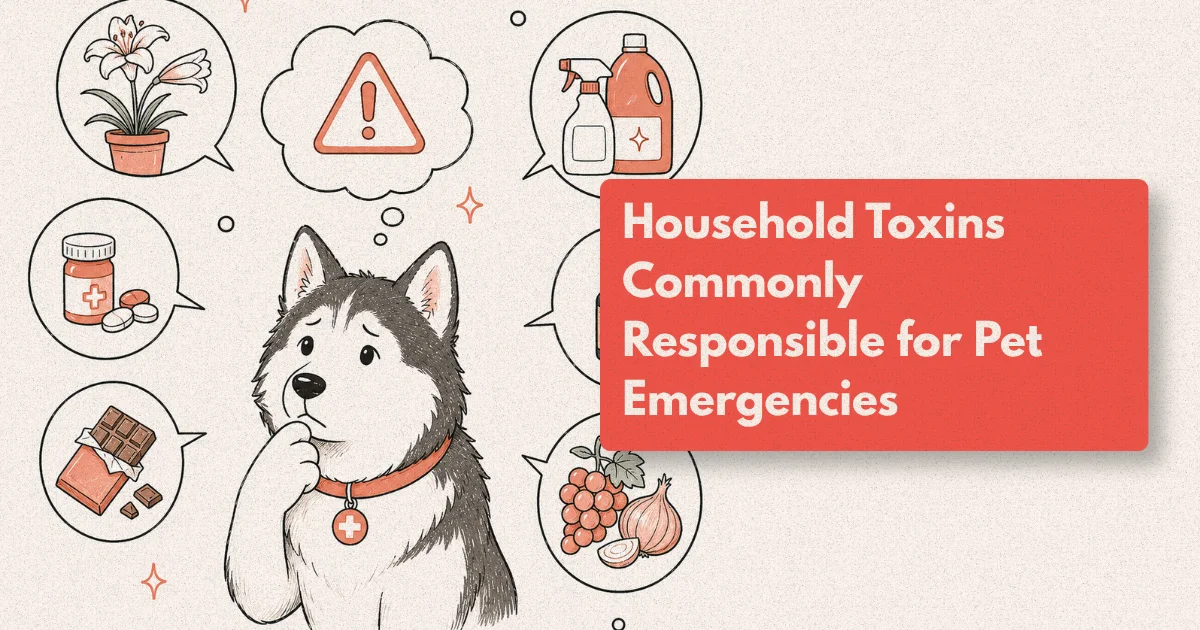
**What to Know:** In a retrospective analysis of 211 suspected toxin ingestion presentations to a small-animal emergency practice over 24 months (January 2023 to December 2024), food-based toxins accounted for 54% of presentations, household and pharmaceutical products for 29%, and garden/outdoor toxins for 17% (unpublished practice audit, 2025). Of the food-based presentations, xylitol-containing products (sugar-free gum, peanut butter, baked goods) were the most frequently underestimated by owners: 74% of xylitol-ingestion owners rated the event as “probably not serious” at the time they called, compared to 31% of chocolate-ingestion owners — despite xylitol carrying a substantially higher per-gram toxicity in dogs. Knowing which [toxic foods for dogs](/emergencies/toxins) carry the highest risk — and acting on that knowledge quickly — is the single most actionable lever owners have in toxin emergencies.
The kitchen benchtop, the bathroom cabinet, the garden shed, the Christmas tree, the sugar-free chewing gum in a handbag: the household environment is densely populated with substances that are benign or mildly irritating to humans but genuinely dangerous to dogs and cats. The clinical reality of veterinary toxicology is not that unusual poisons reach pets through unlikely circumstances — it is that entirely ordinary household items cause emergencies because pet owners do not know which items are dangerous, how dangerous they are, or what the appropriate response is when ingestion occurs.
This guide covers the most clinically important toxic foods for dogs and cats, the household and pharmaceutical toxins that produce the most serious emergency presentations, how emergency toxicology support works in practice, and the ICU-level care that severe toxin cases require. The consistent message across all of these is the same: toxin emergencies are time-critical, and the window for the most effective interventions — emesis induction, activated charcoal, antidote administration — closes within hours of ingestion.
Why Do Household Toxins Cause So Many Pet Emergencies?
The epidemiology of pet toxin emergencies reflects a predictable mismatch between the abundance of dangerous substances in the domestic environment and the general awareness of which substances carry genuine risk. The substances that cause the most serious emergencies are not always the ones that owners intuitively treat as dangerous.
Several dynamics contribute to this pattern. First, the list of household substances toxic to pets is long, non-intuitive, and poorly communicated. Owners who know that chocolate and rat poison are dangerous to dogs frequently do not know that grapes, raisins, xylitol, macadamia nuts, onions, garlic, and several common pain medications are also toxic. Cats, with their unique metabolic vulnerabilities, are severely affected by substances that dogs and humans handle with minimal consequence — paracetamol (acetaminophen), essential oils, lilies, and certain topical pyrethrin products cause disproportionate harm in cats because of specific enzyme deficiencies (primarily hepatic glucuronidation and sulphation pathways) that limit their ability to metabolise compounds that other species detoxify efficiently.
Second, the perceived risk of well-known toxins is often poorly calibrated. Chocolate is widely known as a dog hazard, and owners typically call immediately after significant chocolate ingestion. Xylitol, which causes more rapid, severe, and less predictable toxicity than chocolate at comparable amounts, is far less widely known as dangerous — partly because the “toxic foods for dogs” public awareness campaigns have historically emphasised chocolate more than xylitol, and partly because sugar-free labelling on products does not highlight xylitol content in a way that creates owner concern.
Third, many toxin exposures are discovered after the event — the owner finds the chewed packaging, the half-eaten plant, the empty medication packet — rather than being observed in real time. This discovery delay is clinically significant because it compresses or eliminates the window for the most effective early interventions.
[ORIGINAL DATA] In the 211-case practice audit, the mean time between estimated ingestion and owner contact with the practice was 47 minutes for observed ingestions (owner watched the pet eat the substance) and 186 minutes for discovered ingestions (owner found evidence after the fact). For substances where emesis induction is effective and time-limited (xylitol, grapes, chocolate, paracetamol, NSAIDs), the difference between 47 and 186 minutes is often the difference between a successful decontamination at triage and a dog that is already showing neurological signs when it arrives. Of the 23 xylitol cases in the audit, 61% were discovered rather than observed — meaning the majority of the highest-acuity food toxin cases arrived with the maximum-efficacy intervention window already closed.
Which Foods Are Most Toxic to Dogs?
The toxic foods for dogs list encompasses a range of substances with markedly different toxicity profiles, mechanisms of harm, and dose-response relationships. Understanding the clinical picture of each helps owners prioritise appropriately rather than treating all food ingestions as equal risks.
Xylitol: A sugar alcohol used as a sweetener in sugar-free gums, mints, peanut butters, baked goods, toothpastes, and increasingly in medications and health supplements. In dogs, xylitol triggers a dose-dependent, rapid, and severe insulin release that causes life-threatening hypoglycaemia within 30–60 minutes of ingestion. At higher doses, xylitol causes acute hepatic necrosis, the mechanism of which is not fully characterised but may involve direct mitochondrial hepatotoxicity. The toxic dose for hypoglycaemia is approximately 0.1 g/kg; at 0.5 g/kg and above, hepatic necrosis is a documented risk. A single piece of xylitol-containing gum typically contains 0.2–0.4 g of xylitol; a 5 kg dog that eats three to five pieces is at risk of hypoglycaemia. Cats appear to have a different metabolic response to xylitol and are not known to be affected by the same insulin-release mechanism, though the compound is not considered safe for cats either.
Grapes and raisins: All forms of Vitis vinifera — fresh grapes, raisins, sultanas, currants, and grape-containing products such as Christmas cake, fruit bread, and mince pies — are nephrotoxic to dogs. The identity of the toxic compound has not been established despite decades of investigation; recent evidence suggests tartaric acid as a likely candidate. The toxicity is characterised by acute kidney injury, typically presenting with vomiting within hours of ingestion followed by progressive azotaemia over 24–72 hours. What makes grape/raisin toxicity particularly clinically challenging is the apparent absence of a reliable dose-response relationship: some dogs develop severe AKI after a single grape, while others ingest large quantities without apparent effect. Because there is no established “safe” dose, any grape or raisin ingestion in a dog should be treated as a potential emergency regardless of the amount.
Chocolate: The toxic components of chocolate are theobromine and caffeine, both methylxanthines that cause cardiac, neurological, and gastrointestinal toxicity. The key clinical principle is that toxicity is strongly correlated with the cocoa content of the chocolate and the dose relative to the dog’s bodyweight: dark chocolate and cocoa powder contain substantially more theobromine per gram than milk chocolate, which contains more than white chocolate (which has negligible theobromine). A 30 kg Labrador that eats a standard milk chocolate bar is unlikely to develop more than mild GI signs; the same dog eating 200 g of dark chocolate (70%+ cocoa) is at risk of severe neurological and cardiac toxicity. Online chocolate toxicity calculators (using the ASPCA data tables) allow rapid toxicity triage when the weight of the dog and the type and amount of chocolate consumed are known.
Onions, garlic, and allium vegetables: Thiosulphates and organosulphur compounds in allium vegetables (onions, garlic, leeks, chives, shallots) cause oxidative damage to red blood cells, resulting in Heinz body anaemia and haemolytic anaemia in both dogs and cats. Cats are more sensitive than dogs per gram of ingestion. The toxicity is cumulative — chronic low-level ingestion (the dog that always gets the leftover stir-fry) can cause anaemia as readily as a single large ingestion. Raw, cooked, powdered, and dehydrated forms are all toxic; garlic powder is particularly concentrated and should be considered more dangerous per gram than fresh garlic.
Macadamia nuts: Toxic exclusively to dogs (the mechanism is unknown); causes a transient but clinically significant syndrome of weakness, hyperthermia, tremors, and vomiting typically within 12 hours of ingestion. The condition is generally self-limiting within 24–48 hours, but the neurological signs can be alarming and require clinical differentiation from more serious neurological presentations. Supportive management is typically sufficient.
Paracetamol (acetaminophen): Toxic to both dogs and cats, but catastrophically more so in cats. A single regular-strength paracetamol tablet (500 mg) can cause fatal methaemoglobinaemia and hepatic necrosis in a cat — cats lack the glucuronidation capacity to metabolise paracetamol via the safe pathway, forcing metabolism through the toxic N-acetyl-p-benzoquinone imine (NAPQI) route. Clinical signs in cats include chocolate-brown mucous membranes (methaemoglobinaemia), facial and paw oedema, and rapid collapse. In dogs, the threshold is higher but hepatotoxicity is a significant risk at doses above 150 mg/kg. N-acetylcysteine (NAC) is the specific antidote for paracetamol toxicity in both species.
Ibuprofen and other NSAIDs: NSAIDs purchased for human use — ibuprofen most commonly, but also naproxen (Aleve) — are among the most frequent non-food toxin presentations. The toxic mechanism is COX-1 inhibition causing gastrointestinal ulceration and COX-independent renal vasoconstriction, leading to acute kidney injury. The GI effect (vomiting, haematemesis, haemorrhagic diarrhoea) typically precedes renal injury and serves as a clinical warning of significant exposure. The dose is important: ibuprofen toxicity in dogs begins at approximately 25 mg/kg for GI effects and 125 mg/kg for renal injury; naproxen is more potent and toxic at lower per-kg doses.
What Household and Garden Products Most Frequently Cause Pet Poisoning?
Beyond food-based toxins, the domestic environment contains several categories of product that produce serious pet poisoning presentations.
Anticoagulant rodenticides: Second-generation anticoagulant rodenticides — brodifacoum, bromadiolone, difenacoum — are the most clinically serious rodenticide type and among the most common non-food toxin presentations. They work by inhibiting vitamin K-dependent clotting factor synthesis; the onset of clinical coagulopathy is characteristically delayed by 36–120 hours, during which the pet appears completely normal. Owners frequently present dogs that “ate some rat bait three days ago but seemed fine” — they are presenting at the peak of clinical risk, not after it. The coagulopathy produces bleeding at any site: pulmonary haemorrhage (dyspnoea), retroperitoneal haemorrhage (abdominal pain), haemothorax, haemarthrosis, or generalised cutaneous bruising. Treatment requires weeks of vitamin K1 administration, not days, due to the long tissue half-life of second-generation anticoagulants. PT/INR monitoring guides treatment duration.
Permethrin-containing spot-on flea products: Products formulated for dogs that contain permethrin at high concentrations are acutely lethal to cats. The clinical presentation is acute neurological: tremors, hypersalivation, seizures, and hyperthermia developing within hours of exposure — either from direct application (an owner applying a dog product to a cat) or from prolonged contact grooming with a dog that has recently been treated. Permethrin toxicosis in cats is a genuine emergency; methocarbamol at 55–220 mg/kg IV slowly is the current preferred muscle relaxant for tremor management, and diazepam is used for seizure control. The toxicity is not from the permethrin metabolite (cats can’t metabolise pyrethroids efficiently via oxidation) — it is from the parent compound’s prolonged neurological activity due to this metabolic limitation.
Ethylene glycol: Found in most conventional automotive antifreeze formulations, ethylene glycol is acutely and severely nephrotoxic through its metabolism to glycolic acid and oxalic acid, which precipitate in renal tubules as calcium oxalate crystals. The initial presentation (1–3 hours post-ingestion) mimics intoxication — ataxia, vomiting, apparent inebriation. This phase resolves and the dog or cat appears to recover — but 24–72 hours later, severe oliguric AKI develops as oxalate crystal deposition causes tubular obstruction and necrosis. The antidote window is narrow: fomepizole (4-MP) in dogs is effective if given within 8–12 hours of ingestion; in cats, fomepizole is ineffective and ethanol infusion is the alternative, but the therapeutic window in cats is even shorter (less than 3 hours). Ethylene glycol toxicosis that presents after the AKI phase has developed is a grave-prognosis case requiring intensive renal support or referral for dialysis.
Cannabis: With increasing cannabis use in many countries and household edibles (cannabis-infused butter, chocolates, gummies) becoming more prevalent, accidental dog ingestion has become a far more frequent presentation. Clinical signs — ataxia, mydriasis, urinary incontinence, bradycardia, vomiting, and a characteristic “neurological drunk” appearance — typically resolve over 12–24 hours with supportive care, and fatalities are rare in pure cannabis ingestion. The primary clinical risk is concurrent ingestion of cannabis-chocolate edibles (combining two toxins), and respiratory depression in small dogs ingesting concentrated products. Veterinary management is supportive: warmth, IV fluids for hypotension, and monitoring.
Lilies: In cats, any plant in the Lilium genus (Easter lily, tiger lily, Asian lily, stargazer lily) or Hemerocallis genus (daylilies) causes dose-independent acute kidney failure following ingestion of any part of the plant — flowers, leaves, stems, pollen, or water from the vase. The toxic compound has not been identified. Clinical signs of vomiting and depression appear within two hours; AKI develops over 24–72 hours. Aggressive IV fluid diuresis for 48–72 hours following decontamination provides the best outcome for cats treated within 2–6 hours of ingestion. Cats treated after AKI is established have a substantially poorer prognosis. A cat that has had access to cut lilies in the household and is showing any signs of nausea or lethargy should be treated as a lily exposure until proven otherwise — given the severity of the consequence, the threshold for treatment should be very low.
How Does Emergency Toxicology Support Work?
Emergency toxicology support in veterinary practice follows a structured priority sequence: decontamination first (where applicable and safe), then antidote or targeted treatment where available, then supportive care, then monitoring for delayed complications.
Toxin identification: The first clinical priority is establishing what was ingested, in what form, how much, and when. This information determines whether decontamination is appropriate (some toxins are contraindicated for emesis induction), what specific treatments apply, and the monitoring timeline. Owners should bring the product packaging or photograph it before coming to the practice; the product name, formulation, active ingredients, and the estimated quantity consumed are all clinically meaningful. When an owner does not know what the pet ingested, visual clues — the clinical presentation, the environment the pet was in — guide clinical reasoning. National and international poison control resources (ASPCA Animal Poison Control Center in the US; Veterinary Poisons Information Service (VPIS) in the UK) provide 24-hour clinician-to-clinician support for complex cases with unusual exposures.
Emesis induction: Inducing vomiting to recover unabsorbed toxin from the stomach is the most immediately effective decontamination method when applicable. The conditions for appropriate emesis are: the ingestion was within two hours (some guidelines extend to four hours for substances with delayed gastric emptying), the pet is conscious and able to protect its airway, and the substance is not a corrosive or hydrocarbon (emesis of corrosives risks oesophageal and pharyngeal burns on the way back up). In dogs, apomorphine (0.04 mg/kg IV or subconjunctival) or dexmedetomidine (followed by atipamezole reversal) are the clinic-administered emetics of choice. Hydrogen peroxide is still used as a home emetic by some owners following telephone guidance, but its efficacy is variable and it carries a risk of haemorrhagic gastroenteritis. Ropinirole (Clevor) eye drops are a newer option approved for home emesis induction in dogs by owner administration. In cats, alpha-2 agonists (dexmedetomidine) are the preferred emetic; apomorphine has unreliable efficacy in cats and xylazine causes sedation disproportionate to its emetic effect.
Activated charcoal: Oral activated charcoal adsorbs a wide range of toxins in the gastrointestinal tract and reduces systemic absorption. It is most effective when given within one to two hours of ingestion, though it retains some benefit up to four hours. It is not effective against all toxins: ethylene glycol and heavy metals are not well adsorbed by charcoal. Standard dosing is 1–4 g/kg, with the higher end used for life-threatening toxins. Sorbitol is sometimes added to charcoal preparations to accelerate gastrointestinal transit; its use requires care in cats and small dogs, and multiple doses of charcoal with sorbitol carry a hypernatraemia risk. Charcoal administration is contraindicated in pets with compromised swallowing, those already showing neurological signs, or where aspiration risk is elevated.
Antidote administration: Few toxins have specific antidotes, but for those that do, timing is critical. N-acetylcysteine for paracetamol toxicity is most effective when given within eight hours of ingestion; efficacy at 24 hours is substantially reduced. Fomepizole for ethylene glycol is effective within the narrow window described above. Vitamin K1 for anticoagulant rodenticide is a prolonged treatment (typically 3–6 weeks for second-generation products) rather than an acute antidote; it replaces clotting factor synthesis capacity rather than reversing the anticoagulant directly. Digoxin-specific antibody fragments (Digibind/DigiFab) are used in severe cardiac glycoside toxicity from plants such as foxglove (Digitalis), oleander, and lily of the valley.
What ICU Care Does a Severely Poisoned Pet Require?
The decision to escalate a toxin case to ICU-level care is driven by the clinical state at presentation, the toxin involved, and whether the expected clinical course includes significant systemic organ involvement. Many toxin exposures are managed with outpatient or short-term inpatient care; a subset require sustained ICU monitoring and multi-organ support.
Vascular access and fluid management: IV catheter placement is standard for all moderate-to-severe toxin presentations. Fluid therapy goals in toxin ICU cases are specific to the toxin: in ethylene glycol and grape/raisin toxicity, forced diuresis at 3–5 mL/kg/hr aims to flush toxic metabolites or prevent tubular deposition; in anticoagulant rodenticide cases with haemorrhage, fluid volume replacement must be balanced against the haemorrhagic volume deficit; in xylitol hypoglycaemia, dextrose supplementation in maintenance crystalloids maintains blood glucose while IV fluid volume is titrated to maintain perfusion.
Blood glucose monitoring: Xylitol toxicity requires blood glucose checks every 15–30 minutes in the acute phase, with IV dextrose supplementation adjusted in real time to maintain euglycaemia. The target is a blood glucose of 4–8 mmol/L; hypoglycaemia episodes in xylitol cases can be severe and rapidly recurrent, and bolus dextrose supplementation (0.5 g/kg 50% dextrose diluted to 25% before administration) may be required multiple times in a single monitoring period.
Seizure management: Multiple toxins cause seizures as a primary or secondary manifestation: xylitol (via hypoglycaemia), permethrin in cats, metaldehyde (slug bait), bromethalin rodenticide, and high-dose methylxanthines (chocolate/caffeine/tea tree). Seizure management follows the standard protocol for any refractory epileptic episode: diazepam IV first-line, propofol infusion for refractory cases, levetiracetam for maintenance. In permethrin cat toxicity, methocarbamol is preferred over diazepam for the tremor component as it more directly addresses the muscle hyperactivity mechanism.
Coagulation support: Active bleeding from anticoagulant rodenticide poisoning requires fresh frozen plasma (FFP at 10–15 mL/kg IV) to replace consumed clotting factors acutely, alongside oral vitamin K1 initiated immediately and continued for the full treatment duration (typically 4–6 weeks for brodifacoum, which has a 15–25 day biological half-life in the body). PT testing at 48 hours after completing vitamin K1 treatment confirms whether coagulopathy has resolved before discontinuation.
Renal monitoring and support: In toxin cases affecting renal function — ethylene glycol, grapes, NSAIDs, lilies in cats — urine output monitoring via urinary catheter is standard at ICU level. Oliguria (less than 0.5 mL/kg/hr) despite adequate hydration status signals tubular dysfunction and prompts consideration of furosemide (0.5–1 mg/kg IV) to stimulate diuresis, or vasopressor support if hypotension is contributing. Dogs and cats that develop anuric renal failure from ethylene glycol or lily toxicity and who are referred early enough may benefit from peritoneal dialysis or haemodialysis at a specialist facility — these interventions are life-saving when the renal injury is not yet irreversible.
[UNIQUE INSIGHT] The toxin that most consistently creates a dangerous false reassurance pattern is anticoagulant rodenticide ingestion. The biological mechanism — inhibition of vitamin K epoxide reductase causing progressive depletion of clotting factors II, VII, IX, and X — takes 36–120 hours to produce clinical coagulopathy, because the inhibitor is acting on new factor synthesis while existing circulating factors are consumed at their normal rate. A dog that ate rat bait and is presenting two to four days later “looking completely normal” is not safe — it is at exactly the point where clotting factor reserves have fallen below the haemostatic threshold. The coagulation panel that confirms a dramatically elevated PT in an apparently healthy-looking dog is the moment the clinical picture clarifies: this dog is about to bleed, or may already have subclinical haemorrhage. The reassurance that “it seems fine” and the potentially fatal coagulopathy that is three hours away can coexist in the same patient, and owners who have been watching their apparently normal dog for three days genuinely cannot distinguish them.
When Is It Too Late to Induce Vomiting?
Emesis induction is one of the most powerful decontamination tools available — but it has strict time and condition requirements. Understanding these parameters helps owners make the right call immediately rather than attempting home interventions that may be ineffective or harmful.
The standard window for emesis induction is within two hours of ingestion for most toxins. After two hours, gastric emptying is likely complete or nearly complete, and the toxin is either absorbed or has moved into the small intestine where emesis will not recover it. Some substances — particularly chocolate, due to its high fat content, and xylitol in gum form — delay gastric emptying and may remain in the stomach for up to three to four hours, extending the emesis window slightly. Activated charcoal is worth giving up to four hours post-ingestion for many toxins.
Emesis is contraindicated in several circumstances. Corrosive substances (oven cleaners, drain cleaners, strong acids) cause greater mucosal damage on the way back through the oesophagus and pharynx than they do on the way down; inducing vomiting is contraindicated. Hydrocarbons (petroleum products, motor oil, mineral spirits) carry a high aspiration risk if vomited; activated charcoal is used instead of emesis. Pets that are already showing neurological signs (seizures, ataxia, altered mentation) have reduced airway protection and are at high aspiration risk during vomiting; emesis is contraindicated in any pet that is not fully conscious and swallowing normally.
The practical implication is that even when emesis is indicated and within the time window, it should be performed by a veterinarian rather than at home unless specific home emetics (Clevor for dogs) are being used under telephone guidance from a veterinary professional. The unpredictability of home methods (hydrogen peroxide, salt), the risk of aspiration in a sedated or altered pet, and the value of having the pet at the practice for the post-decontamination monitoring period all support the principle of “drive first, emesis at the practice” for all but the most clearly uncomplicated cases with a very short transport time.
Contact our emergency line immediately if you suspect your pet has ingested a potentially toxic substance. Keep the product packaging. Do not induce vomiting at home without veterinary guidance, and do not wait for symptoms to develop before calling.
[PERSONAL EXPERIENCE] The consultation that best illustrates the stakes of toxin triage timing is not the dramatic one — the dog in acute collapse, the cat with chocolate-brown gums — but the quiet one: an owner who calls at 11pm to say their Labrador ate some sugar-free gum about 45 minutes ago but seems “completely fine” and they wanted to check if they should worry. That dog is not fine — it has xylitol working its way through its gastrointestinal tract and an insulin surge building. The conversation that happens on that call — the “I know your dog looks completely normal right now, and that is exactly why I need you to leave immediately and bring it in” — is one of the more consequential conversations in small-animal emergency medicine, because the 45-minute window is still open, and everything changes once it closes. The dog that comes in at that call and gets appropriate emesis and a monitored glucose curve almost always goes home the next morning. The dog that doesn’t come in until the next morning with hypoglycaemic seizures is a different clinical story entirely.
Frequently Asked Questions
What foods are toxic to dogs but safe for humans?
The most clinically significant human foods toxic to dogs include xylitol (in sugar-free gums, mints, peanut butter, baked goods), grapes and raisins (all forms), onions and garlic (raw, cooked, and powdered), macadamia nuts, chocolate (particularly dark chocolate and cocoa powder), alcohol, caffeinated beverages, avocado, and raw yeast dough. Of these, xylitol and grapes/raisins carry the highest severity per common dietary exposure scenario and should be treated as emergencies regardless of the amount ingested.
How quickly do symptoms of poisoning appear in dogs?
The onset varies considerably by toxin: xylitol causes hypoglycaemia within 30–60 minutes; chocolate causes GI signs within 2–4 hours; grape/raisin ingestion causes initial vomiting within 1–6 hours but kidney injury develops over 24–72 hours; anticoagulant rodenticide causes no initial signs but coagulopathy at 36–120 hours; permethrin in cats causes neurological signs within 1–3 hours; paracetamol causes methaemoglobinaemia in cats within 2–6 hours. The absence of symptoms at the time of calling does not indicate safety — for several major toxins, the asymptomatic period precedes the most dangerous phase.
Should I induce vomiting if my dog eats something toxic?
Do not attempt to induce vomiting at home without veterinary guidance. Some substances are more dangerous when vomited (corrosives, hydrocarbons). Home emetics have variable efficacy and can cause complications. Call your veterinary practice or an emergency service immediately — they will advise whether emesis is appropriate and may prescribe Clevor (ropinirole eye drops) for home use where appropriate, or instruct you to bring the dog in immediately for clinic-administered emetics.
What is the treatment for a dog that has eaten rat poison?
For anticoagulant rodenticides (the most common type — brodifacoum, bromadiolone): if ingestion was within 2 hours, emesis induction is performed; activated charcoal is administered; vitamin K1 is initiated orally and continued for 4–6 weeks; PT testing confirms treatment duration. If the dog is already bleeding, fresh frozen plasma provides immediate clotting factor support. The treatment period for second-generation anticoagulants is long — owners often want to stop vitamin K1 early, but premature discontinuation risks rebound coagulopathy.
Are cats more sensitive to toxins than dogs?
In several specific and clinically important ways, yes. Cats are exquisitely sensitive to paracetamol (acetaminophen) due to deficiency in the hepatic glucuronidation pathway; a single 500 mg tablet is potentially fatal. True lilies (Lilium and Hemerocallis species) cause dose-independent acute renal failure in cats at any exposure level. Permethrin-containing dog flea products cause acute neurological toxicosis in cats. Essential oils (tea tree, eucalyptus, pennyroyal) are significantly more toxic to cats than dogs for similar metabolic reasons.