What Is Inside a 24-Hour Pet Emergency Hospital?
Triage, an oxygen cage, in-house bloods and someone awake with your animal at 3am. What the overnight team can do, what to ring and ask, and what not to delay.
A 24/7 pet emergency hospital is three things stacked into one building. A triage area that sorts arrivals by how close they are to dying. A treatment room built for the first hour of a crisis. A ward where a trained person stays awake with your animal all night. Every machine in the place exists to compress hours of ordinary clinic work into minutes.
What it is not is a day clinic with the lights left on. The staffing pattern is different, the equipment is weighted towards stabilisation rather than investigation, and the whole operation is organised around a single question asked repeatedly: is this animal getting better or worse in the next fifteen minutes.
This article covers what happens in the first ten minutes after you walk in, what the overnight team can and cannot do, which signs genuinely cannot wait until morning, and how to arrive prepared rather than panicked.
What to Know Emergency hospitals run on triage, not arrival order, so a stable pet may wait while a collapsed one is taken straight through. The first two minutes are an airway, breathing and circulation check with vital signs; diagnostics follow stabilisation, not the other way round. Ring on your way in, because a warned team meets you at the door with oxygen and a trolley. Treat any struggle to breathe, a male cat straining in the tray, a tense swollen abdomen with unproductive retching, a seizure past five minutes, heatstroke, suspected poisoning, snake bite and any bite wound as immediate. Do not wait for morning. Never give human painkillers; paracetamol and ibuprofen are both dangerous to dogs and cats.
What Happens in the First Ten Minutes After You Walk In?
A nurse meets you at the door and takes your animal out of your arms. That part surprises people, and it is the most important thing the building does.
Your pet goes to a triage bench. Someone counts the breathing rate, looks at the colour of the gums, presses a gum to see how quickly the colour returns, feels the pulse in the groin, takes a temperature and a weight, and listens to the chest. That sequence takes under two minutes and it decides everything that follows. Airway first. Then breathing. Then circulation. An animal that fails any of those three is carried through to the treatment room and given oxygen, an intravenous catheter and pain relief before anyone asks you a single question.
While that is happening, a second person takes the history from you at the desk. What happened, and when. What your pet has eaten, chewed or been given. What medicines it is on. Whether it is vaccinated. The split feels abrupt when you are frightened, and it is deliberate. Information gathering and treatment run in parallel, because neither can wait for the other.
Triage also means the waiting room is not a queue. It is a ranked list that reorders itself every time the door opens.
The hard part of triage is that it keeps changing. You can be third in line at midnight, then fifth at ten past, because two animals arrived behind you in a worse state. Staff know this is infuriating. The honest trade is that the same rule protects your own pet on the night it is the one carried in.
One practical consequence: tell the person at the desk the worst thing, first, in plain words. "He is struggling to breathe" moves faster than "he has not been himself since this afternoon". Lead with the sign that frightens you.
What Equipment Is Here That a Day Clinic May Not Have?
Walk through the treatment room and almost everything you see is there to buy time.
| Equipment | What it does | Why it matters overnight |
|---|---|---|
| Oxygen kennel or cage | Delivers controlled, humidified oxygen with no handling | A cat in respiratory distress can be tipped over the edge by restraint alone |
| Multiparameter monitor | Tracks ECG, blood pressure, oxygen saturation and exhaled carbon dioxide | Shows deterioration minutes before it is visible from across the room |
| In-house analysers | Haematology, biochemistry, electrolytes, blood gas, lactate | Answers in minutes, where an external lab would mean waiting for daylight |
| Point-of-care ultrasound | Scans chest and abdomen on the table | Finds free fluid, a full bladder or a twisted stomach without moving the patient |
| Infusion and syringe pumps | Deliver fluids and drugs at an exact, set rate | Fluid overload is a genuine risk in cats and in heart patients |
| Active warming and cooling | Forced-air warming, cooling mats, fans, cool water | Hypothermia after trauma and hyperthermia after heatstroke both kill |
| Crash trolley | Drawn-up drugs, dosing chart, airway kit, suction | Cardiac arrest is won or lost inside the first minute |
| Blood products or a donor register | Whole blood, packed cells, plasma | Tick fever, rat bait and trauma cause bleeding that fluids cannot fix |
Two of those deserve a word more. The in-house analyser is the quiet workhorse of night medicine. A blocked cat's potassium, a collapsed dog's lactate, a vomiting puppy's glucose and the packed cell volume of an animal with pale gums are all numbers that change the next decision, and all of them are useless if they arrive six hours later. A rising lactate is one of the most honest signals in the building: it says perfusion is failing even when the patient still looks reasonable.
Point-of-care ultrasound is the tool that has changed overnight emergency work most in recent years. A quick scan of the abdomen and chest at the table answers questions that used to need a trip to radiology and a sedative. Free fluid in the abdomen after a road accident, a bladder the size of an orange in a straining cat, fluid around the lungs in a breathless dog: all visible in under a minute, with the animal still on oxygen.
Not every hospital has every item. A ventilator, a dedicated blood bank and overnight in-house imaging are the usual gaps. It is a fair question to ask on the phone.
Who Is Awake at 3am, and What Can They Do?
This is where the words on the sign matter, and where owners are most often misled by their own reasonable assumptions.
Three very different arrangements all get described as 24-hour care. The first is a hospital with a vet and nurses physically on the premises all night, awake, with inpatients under observation. The second is a clinic with nursing staff overnight and a vet on call from home, perhaps twenty minutes away. The third is a daytime practice that answers a phone at night and asks you to come in at opening time. All three are legitimate. They are not interchangeable at two in the morning with a dog that has been hit by a car.
So ask directly when you ring. Is there a vet in the building right now. Is there a nurse with the hospitalised patients all night, or are they checked on rounds. Can you anaesthetise and operate tonight if it comes to that. Can you run bloods in-house. Can you transfuse. Do you have oxygen. If the answers are not what your pet needs, a good team will tell you where to go instead, and that conversation takes thirty seconds.
A fully staffed overnight shift is usually smaller than people picture. One emergency clinician on the floor, one or two nurses, and a support member handling the door and the phone is a common pattern. The surgeon, the imaging specialist and the internal medicine clinician are reachable but not present. That shapes what happens to your animal: the night team stabilises, investigates enough to make a plan, and hands over to the day team at shift change. Definitive surgery for a non-urgent problem usually waits for daylight, a rested surgical team and a full theatre. Surgery that cannot wait, such as a twisted stomach or a bleeding spleen, happens when it needs to happen.
Handover is a clinical event rather than an administrative one. The night clinician walks the day clinician through each patient at the kennel door, with the overnight record open. Ask who will be looking after your pet in the morning and when that changeover takes place, because that is the person you will be speaking to about the plan.
Which Signs Genuinely Cannot Wait Until Morning?
Owners are far better at sensing something is wrong than at grading it. The list below is the grading.
| Sign | Urgency | Why |
|---|---|---|
| Any struggle to breathe; open-mouth breathing in a cat | Go now | Oxygen debt is measured in minutes, and cats hide it until they cannot |
| Male cat straining in the tray, producing nothing | Go now | A blocked bladder raises potassium until the heart stops |
| Tense swollen abdomen, retching with nothing coming up | Go now | Gastric dilatation and volvulus; surgical, and hours decide the outcome |
| A seizure lasting beyond five minutes, or repeated seizures | Go now | Body temperature and brain injury both climb with time |
| Collapse, pale or white gums, cold paws | Go now | Signs of internal bleeding or circulatory failure |
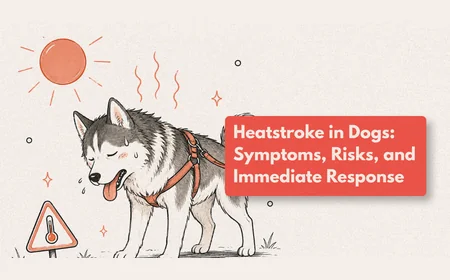
| Heavy panting and unsteadiness after heat or exertion | Go now, start cooling on the way | Heatstroke damages gut, kidneys and clotting, not just temperature |
| Suspected poison: paracetamol, rat bait, chocolate, grapes, lilies in cats | Go now, bring the packet | Several of these are treatable only early, before damage is done |
| Any bite wound, from any animal, and any snake bite | Go now | Bite wounds are deeper than they look, and rabies exposure changes the plan |
| Hit by a vehicle, even if walking normally afterwards | Go now | Chest and bladder injuries are silent for several hours |
| Straining to deliver for over thirty minutes with no puppy or kitten | Go now | Obstructed labour loses the litter and then the mother |
| Bloody vomiting or diarrhoea in an unvaccinated puppy | Go now | Parvovirus dehydrates fast and is survivable with early support |
| One vomit, bright, drinking, no other signs | Ring for advice, see a vet in the morning | Reasonable to watch, with a clear threshold for changing your mind |
Three Bengaluru-specific additions belong on that list. Heatstroke clusters through the hot months and hits flat-faced breeds, heavy-coated dogs and any animal left in a parked car or walked at the wrong hour. Leptospirosis rises after heavy monsoon rain and standing water, and it presents as a suddenly lethargic dog with vomiting and yellow gums. Dog-bite wounds carry rabies exposure as well as infection, so they need veterinary attention the same day however small the puncture looks, and the vaccination status of both animals becomes part of the clinical decision.
Where a sign sits between two rows of that table, treat it as the more urgent of the two and see a vet tonight. Owners who wait rarely regret the waiting itself; they regret how much ground was lost while they waited. A clinician can send you home reassured in ten minutes. A missed window cannot be reopened.
If your pet is on the list and you are reading this in the car park, stop reading and walk in.
What Does the Overnight Workup Actually Involve?
The order of operations is the part owners find counterintuitive, and it is the part that saves lives.
Stabilisation comes before diagnosis. A dog with pale gums and a fast weak pulse gets an intravenous catheter, a measured fluid bolus, pain relief and oxygen before anyone decides why it is bleeding. Blood samples are drawn from the same needle stick that places the catheter, so nothing is done twice. A breathless cat goes into an oxygen kennel and is left alone for twenty minutes, because the X-ray that would answer the question could also be the thing that kills her. Treating before you have a diagnosis feels wrong in principle and is correct in practice.
Once breathing and circulation are holding, the investigation starts and it moves in layers. Point-of-care ultrasound first, because it is quick and needs no sedation. Then the in-house bloods, which often reframe everything. Then radiographs, which usually need the patient to be stable enough to be positioned. Advanced imaging and specialist opinion sit on the far side of the night in most hospitals.
Consent runs in stages for the same reason. You will be asked to approve stabilisation and a first round of diagnostics, then given a picture and a decision point, then asked again. Nobody can give you a full plan at the door, because at the door nobody has one. What a good clinician will give you is a shape: here is what I am worried about, here is what the next two hours will tell us, here is what each likely answer would mean. If you are not given that, ask for it in those terms.
Expect to be sent home to wait for part of it. That is not dismissal. An animal in an oxygen kennel does better without a worried person leaning over the door, and most of the first few hours is watching and measuring rather than doing. Ask for a time to ring, and ask for the direct ward number if there is one.
The other thing to settle early, while you are still able to think, is what you want to happen if your pet's heart stops. Every hospital records a resuscitation decision for inpatients. Making that choice calmly at eleven at night is far kinder to everyone than being asked to make it in thirty seconds at four in the morning. Ask what full resuscitation would involve for your animal, and what the realistic outcome looks like. The answer differs enormously between a young dog recovering from anaesthesia and an elderly cat in kidney failure.
What Happens If Your Pet Is Admitted Overnight?
An inpatient gets a kennel sheet, and that sheet is the single most useful document in the hospital. It carries the weight, the fluid rate, the drug times, the monitoring interval and a running record of temperature, pulse, respiration, urine output, pain score and demeanour. A critical patient is checked constantly. A stable patient recovering from surgery might be checked every two to four hours. The interval is a clinical decision and it changes through the night.
Pain scoring deserves a mention because owners rarely know it exists. Nurses score comfort on a scale at each check, using posture, response to touch, facial tension and willingness to settle, and analgesia is adjusted against that score rather than against the clock. If you collect your pet and they seem oddly comfortable for what they have been through, that is why.
Hospitals are not restful places and nobody pretends otherwise. There is light, there are other animals, there are alarms. Teams work hard against this with dark towels over cat kennels, pheromone diffusers, quiet handling and clustering procedures so an animal is disturbed less often. A dog that eats and sleeps overnight is doing well. A cat that will not settle at all may genuinely do better going home with medication, and that is a conversation to have rather than a rule.
Visiting at night is usually discouraged, and the reasons are practical. The treatment area is a working space with sterile fields and other people's distressed animals in it. Many patients become more agitated after a visit, particularly dogs who conclude they are leaving and then do not. Where a visit clearly helps, such as a long-stay patient who has stopped eating or an animal nearing the end of its treatment, good hospitals make it happen. Ask.
Before you leave, get three things. The name of the clinician on duty. A time you will be rung, and a time you can ring. A clear statement of what would prompt the team to ring you earlier, which should include any significant deterioration and any decision point that needs your consent. Write the ward number on your phone rather than trusting yourself to remember it.
How Do You Prepare Before an Emergency Happens?
Ten minutes of preparation on an ordinary evening buys you a calmer twenty minutes on the worst one.
| Bring | Why |
|---|---|
| A carrier for a cat; a lead and a blanket for a dog | Loose animals escape in car parks, and a blanket doubles as a stretcher |
| The packet, plant or a photograph of whatever was eaten | The active ingredient and the dose decide the treatment entirely |
| Current medicines in their own boxes | Dose and strength matter, and brand names vary between manufacturers |
| The vaccination and deworming record | Rabies status changes how a bite wound is managed and reported |
| Your regular vet's clinic name | Previous results and ongoing treatment can be requested directly |
| A rough current weight | Every emergency drug dose is calculated per kilogram |
| A second adult, if one is available | One person drives, one holds the animal and gives the history |
Save the emergency number in your phone now, under a name you will find while panicking. Work out the route in daylight and work out a second one, because Bengaluru traffic turns a fifteen-minute drive into forty without warning, and the fastest road at four in the afternoon is not the fastest at two in the morning. Know which gate is open at night.
A short word on handling, because well-meant first aid causes injuries. A painful animal may bite the person it loves most, and that is fear and not betrayal. A towel wrapped firmly round a cat is safer for both of you than hands. A soft muzzle is reasonable for a painful dog on a short journey, but never muzzle an animal that is vomiting, panting hard, struggling to breathe or overheating, because it needs its mouth. Do not try to pull an object out of a throat you cannot see into. Do not induce vomiting at home unless a vet has told you to on that specific call, because some substances do more damage coming back up. Do not give human painkillers at all.
Two things you can usefully do on the way. For a bleeding wound, press a clean cloth firmly and keep pressing rather than lifting to check. For suspected heatstroke, pour or hose cool water over the body, keep the air moving, and drive with the windows open or the air conditioning on, with no ice and no wet blanket laid over the animal.
How Are Costs and Decisions Handled at Night?
Money is the conversation everyone dreads and the one that most needs to happen early and plainly.
Emergency care is more expensive than routine care because it uses more staff per patient, more consumables and more equipment in a shorter time. Expect to be given an estimate in stages rather than a single figure, and expect a deposit. The first estimate covers triage, stabilisation and a first round of diagnostics. The second comes once there is a working diagnosis, and it is the one that usually carries the real number.
Ask for a range rather than a point figure, and ask what sits at the top of the range and what sits at the bottom. Ask what the likely length of stay is, because hospitalisation is often the largest single line. Ask what happens to the estimate if the diagnosis turns out to be the worse of the two possibilities on the table.
Say your ceiling out loud. Clinicians are not offended by financial limits, and a stated limit is clinically useful information, because it changes which tests are worth doing. A team that knows your ceiling can build a plan that fits inside it, prioritise the test that most changes the treatment, and skip the one that is merely interesting. A team that does not know will often sequence things in an order you cannot afford to complete. Declining a test is a legitimate choice, and the right response to it is a plan B rather than a lecture.
Where the honest answer is that treatment is beyond reach, ask for that to be said plainly, including whether euthanasia is the kinder option. A good emergency clinician will tell you where the line is between a problem that is expensive and a problem that is unfixable, and will not let a pet suffer through a treatment that was never going to work. That conversation is part of the service.
When Is a 24-Hour Hospital the Wrong Choice?
Emergency medicine is excellent at the first twelve hours and poor at continuity, so some problems belong elsewhere.
Take chronic complaints to your regular vet. A limp that has been there three weeks, a lump you noticed last month, itchy skin, gradual weight loss, a cough that comes and goes, a vaccination that is overdue: all of these are better handled by someone with your pet's full history, in daylight, with time to examine properly and arrange follow-up. You will pay less and get more. An emergency consultation is built to answer one question quickly, and a chronic problem needs the opposite.
There is also the distance question. For a genuinely immediate case, the nearest competent facility usually beats the best facility across the city. A dog that is bleeding internally needs oxygen, fluids and a surgeon soon, and forty extra minutes in traffic is a real clinical cost. Ring the nearest hospital, describe what you are seeing, and let them tell you whether to come to them or drive past. Transfers between hospitals happen routinely, and a stabilised patient travels far better than an unstable one.
The exception in the other direction is an animal that is very fragile to move, such as a cat in severe respiratory distress. Even then the answer is rarely to stay at home. It is to ring first so the team is waiting at the door with oxygen, to carry the cat in a covered carrier rather than on a lap, to keep the car quiet and cool, and to drive without stopping. Deciding to wait and see at home is the single most common way a survivable emergency becomes an unsurvivable one.
Frequently Asked Questions
What is inside a 24-hour pet emergency hospital?
A triage bench where arrivals are assessed and ranked, a treatment room with oxygen, monitors, infusion pumps, in-house blood analysers and point-of-care ultrasound, a theatre available at short notice, and a ward staffed overnight so inpatients are checked, measured and medicated through the night rather than left until morning rounds.
Should I ring before bringing my pet in?
Ringing first is almost always better. A warned team can meet you at the door with oxygen and a trolley, prepare a kennel, and have drug doses calculated before you arrive. The call also confirms a vet is physically on site tonight, and if they are not, you will be redirected somewhere that can help in under a minute.
Why was another pet seen before mine?
Emergency hospitals work by triage rather than arrival order. Anyone whose airway, breathing or circulation is failing is taken through immediately, and that reorders everyone else. The same rule works in your favour on the night your own animal is the one carried in. Tell the desk the worst sign in plain words so you are ranked accurately.
Can an emergency hospital operate in the middle of the night?
Most fully staffed hospitals can anaesthetise and operate overnight for problems where waiting causes harm, such as a twisted stomach, an obstructed labour, internal bleeding or a blocked bladder that will not pass a catheter. Surgery that can safely wait is usually scheduled for the morning, when a rested surgical team and full theatre support are available.
How do I know whether my pet's problem can wait until morning?
Any struggle to breathe, collapse, pale gums, a tense abdomen with unproductive retching, a male cat straining in the tray, a seizure past five minutes, heatstroke, suspected poisoning, a bite wound or a road accident all need attention immediately. A bright animal that has vomited once and is drinking normally can usually be watched, with a clear threshold for changing your mind.
Can I stay with my pet overnight?
Overnight visiting is usually discouraged, because the treatment area is a working clinical space and many patients become more distressed after a visit than before it. Long-stay patients and animals that have stopped eating are frequent exceptions, so ask rather than assume. Arrange a set time to be rung and a number you can ring yourself.
What should I bring to an emergency visit?
Bring a carrier for a cat or a lead and blanket for a dog, the packet or a photograph of anything swallowed, current medicines in their original boxes, the vaccination record, your regular vet's clinic name and a rough current weight. A second adult helps enormously, because one person can drive while the other holds the animal and answers questions.
Next Steps
If what you are seeing is on the immediate list above, stop reading and travel. Ring on the way so the team is at the door when you arrive, bring the packet or the medicine box if poisoning is possible, and keep the car cool and quiet. For heatstroke, start pouring cool water over your pet before you leave and keep the air moving in the car.
If nothing is urgent, use the quiet evening well. Save the emergency number under a name you will find in a panic, drive the route once in daylight and work out an alternative, note your pet's current weight, and keep the vaccination record somewhere you can photograph in ten seconds. For a problem that has been building over weeks rather than hours, book an examination with your regular vet instead, where the full history and proper follow-up are available.
Our emergency and critical care team is on site around the clock, with in-house diagnostics, oxygen support and overnight nursing for inpatients. If you are unsure whether to travel tonight, ring and describe what you are seeing; we would far rather talk you through a false alarm than see a pet arrive six hours late. For planned care, book an examination with our team and we will go through your pet's individual risks and what to do first if things go wrong.