How Do I Prepare for a Pet Emergency?
Delay, more than the illness itself, decides most emergency outcomes. The decisions to make on a calm day, what belongs in the kit, and the home remedies that cause harm.
Preparing for a pet emergency is almost entirely a logistics exercise, and that is the part owners skip. You prepare by deciding, in advance and in writing, which hospital you will drive to after midnight, how you will get there, who can authorise treatment if you are not in the city, and how you will pay. Clinical first aid matters far less than most people expect. The animals who do badly are rarely the ones whose owners failed to bandage correctly. They are the ones who lost forty minutes looking up phone numbers.
That is the uncomfortable finding behind every emergency shift. The illness sets the ceiling on the outcome, and the delay decides how close you get to it. A blocked bladder, a twisted stomach, a snake bite and a heatstroke patient are all survivable presentations when they arrive early and are all frequently fatal when they arrive late. Nothing you keep in a cupboard changes that arithmetic. A decision made on a calm Tuesday does.
This article covers which signs genuinely cannot wait, the decisions to make before anything happens, what belongs in a first aid kit, how to move an injured animal, the home remedies that do real harm, and the specific risks that Bengaluru adds across the year.
What to Know Most emergencies are lost to delay. Decide now which hospital you will use after midnight, how you will travel, and who can consent to treatment if you are away. Keep a carrier, a blanket, gauze, saline and a torch in one named bag by the door. Never give paracetamol, ibuprofen or any other human painkiller to a dog or cat. Both are directly toxic, and cats are extremely sensitive to paracetamol. Do not try to induce vomiting at home with salt or hydrogen peroxide. Phone ahead, then travel. First aid should never delay the journey. Any bite from a street or unknown animal raises a rabies question for your pet and for you.
What Actually Counts as an Emergency?
The common misconception is that emergencies are bloody. Most are not. The genuinely time-critical presentations in small animal practice tend to be quiet, and several of them look, to an owner, like discomfort rather than catastrophe.
Four patterns need you in a car immediately. A collapsed animal with pale, white or blue gums is in circulatory or respiratory failure. A large, deep-chested dog retching without bringing anything up, with an abdomen that is swelling, is the classic picture of gastric dilatation and volvulus, and that clock runs in minutes. A male cat going repeatedly to the tray and producing nothing is very likely obstructed, and an untreated blockage kills through potassium accumulation and kidney failure, usually within two to three days. A seizure running longer than five minutes, or a cluster of shorter seizures without recovery between them, is a medical emergency in its own right regardless of the cause.
Alongside those four, treat the following as reasons to leave the house rather than reasons to monitor: uncontrolled bleeding, laboured or open-mouthed breathing in a cat, a swollen face with hives, suspected snake bite, suspected poisoning, any road traffic accident or fall from height even if the animal gets up and walks, a bitch straining for more than half an hour without producing a puppy, a prolapsed eye, sudden inability to use the back legs, and a known high temperature in an animal left in sun or in a parked car.
Animals are also poor reporters. A wagging tail is not a clinical sign. Dogs and cats conceal pain well, partly because concealment is adaptive and partly because the stress of the event blunts it at first. The absence of crying tells you nothing useful. Use gum colour, breathing effort, posture and responsiveness instead, and take the serious view when you are unsure.
Which Decisions Need Making Before Anything Happens?
Write the plan down. A note on your phone works; a printed sheet on the fridge works better, because the person at home when it happens may not be you.
Six decisions do most of the work:
- Which hospital, after hours. Confirm that the clinic you use for vaccinations actually takes emergencies at night, because many daytime practices do not. Identify the twenty-four-hour facility you will use instead, and save its number under a name you will find while panicking. "Emergency vet" sorts better than the clinic's trading name.
- How you will travel. If you do not keep a car, decide now whether you will call a cab, ask a neighbour, or keep a number for a driver who has agreed in advance. Working this out at two in the morning with a seizuring dog is a bad use of ten minutes.
- Two routes. Bengaluru traffic turns a fifteen-minute drive into fifty without warning. Know an alternative. Know roughly how long the journey takes at rush hour, because that figure changes which clinic is genuinely nearest.
- Who consents. If you travel for work, name a person who can authorise and pay for treatment in your absence, tell the hospital that person exists, and tell the person what you would and would not want. Surgery decisions stall without this.
- Money. Emergency care is front-loaded, because stabilisation happens before diagnosis. Decide what reserve you keep accessible, check whether your card works at the hospital, and keep a UPI method that does not depend on one phone. If you hold pet insurance, know the claim process before you need it.
- The hard conversation. For an elderly animal with known heart, kidney or cancer disease, decide in advance how far you want resuscitation and intensive care to go. Having that view already formed spares you the worst possible moment to form it.
Two practical items belong with the plan. First, keep your pet's records somewhere retrievable: vaccination dates, deworming, current medications with doses, and any previous anaesthetic or drug reaction. Photograph the relevant pages so they travel with your phone. Second, make sure the animal is identifiable. A microchip registered to a current phone number, plus a collar tag, is what turns a dog who bolts during Deepavali from a permanent loss into a phone call.
Practise the carrier as well. A cat who has only ever seen the carrier on the way to a needle will not go into it when you have ninety seconds to spare. Leave it open in the room with a blanket in it, feed treats inside, and the emergency version of that trip becomes possible.
What Should Be in a Pet First Aid Kit?
Keep the kit small, keep it in one bag, and keep it where everyone in the house can find it. A kit that is scattered across three drawers is not a kit. The purpose is modest: control bleeding, protect a wound, keep the animal safe during transport, and buy time on the way to the hospital.
| Item | What it is for | Notes |
|---|---|---|
| Sterile gauze swabs and a roll of conforming bandage | Direct pressure on bleeding, covering wounds | Pressure stops most bleeding; bandage firmly, never tightly |
| Self-adhesive cohesive bandage | Holding a dressing in place for the journey | Easy to apply far too tight; one finger should slide under |
| Sterile saline pods (0.9%) | Flushing eyes, wounds and chemical splashes | Buy small single-use pods so they stay sterile |
| Blunt-ended scissors and tweezers | Cutting bandage, removing a surface splinter | Never dig for embedded objects |
| Digital thermometer and lubricant | Rectal temperature, useful in suspected heatstroke | Report the reading to the hospital |
| Thick towel and a spare blanket | Wrapping a frightened cat, warmth, improvised stretcher | The single most useful item in the bag |
| Soft tape muzzle or a strip of bandage | Protecting you from a pain bite | Never on a vomiting, choking or breathless animal |
| Torch with working batteries | Checking gums, pupils and wounds at night | Power cuts and emergencies coincide more than you would like |
| Carrier with a top opening, or a crate | Safe transport for cats and small dogs | Top opening avoids dragging a painful cat out sideways |
| Printed card with numbers and records | Hospital number, your vet, consent contact, medication list | Works when your phone does not |
Leave human medicines out. No paracetamol, no ibuprofen, no aspirin, no leftover antibiotics and no old ear drops from a previous pet. Those bottles cause more harm in emergency practice than the absence of a first aid kit ever does. Antiseptics need a second thought too. Products containing phenols or chloroxylenol are not safe for cats, and dilute chlorhexidine or plain saline is the better choice for a wound you simply need to keep clean on the way in.
Where Will You Go at Two in the Morning?
Ring before you drive. One phone call does three things that save time at the door. The team can tell you whether they have a vet and a surgeon available, they can prepare oxygen, fluids or an induction while you are travelling, and they can tell you what to do in the car, which occasionally changes the outcome on its own.
When you call, lead with the three facts that drive triage. Say what species and roughly what weight, say what the single worst sign is, and say when it started. "Six-kilo cat, straining in the tray since yesterday evening, nothing coming out" gets a faster response than two minutes of history. Keep the call short and do the history on arrival.
Ask these questions of any hospital before you ever need it:
- Is a veterinarian physically present overnight, or on call from home?
- Can you perform emergency surgery and anaesthesia at night, with a nurse monitoring?
- Do you have oxygen, intravenous fluid pumps, in-house bloodwork and imaging after hours?
- Can inpatients stay overnight with someone watching them?
- How do you handle payment at night?
The answers vary widely, and the difference matters most for the cases that need theatre within the hour. A clinic that can stabilise but not operate is still worth driving to when it is far closer, because stabilisation is often the thing standing between the animal and the drive to a referral centre. Knowing which is which in advance is part of the plan.
Keep the address, not only the name. Give a passenger the job of navigating so the driver drives. If you are alone, set the route before you lift the animal into the car.
What Should You Do in the First Five Minutes?
Protect yourself first. A painful animal bites, including a gentle one, including yours. A bite to your hand converts one patient into two and strands the animal at home. Approach from the side, speak before you touch, and use a towel for cats. A tape muzzle is reasonable for a dog in pain, with one absolute exception: never muzzle an animal that is vomiting, choking, collapsed or struggling to breathe.
Then work through a short list, in this order.
- Breathing. Watch the chest. Open-mouthed breathing in a cat is always serious. If breathing is laboured, keep the animal cool and quiet, do not restrain it on its side, and let it choose its own position. Stress alone can kill a cat in respiratory distress.
- Bleeding. Press. Hold a gauze pad or clean cloth firmly on the wound for several unbroken minutes rather than lifting it repeatedly to look. Do not apply a tourniquet. Do not remove an object that is penetrating the chest, abdomen or eye.
- Heat. For a dog that has overheated, start cooling immediately, before and during transport. Pour or hose cool water over the whole body, keep air moving over the wet coat, and get into an air-conditioned car. Do not wrap the animal in wet towels and leave them on, because a soaked towel left in place traps heat. Do not stop cooling in order to drive, and do not force water into the mouth.
- Poisons. Bring the packet, the plant, the bottle or a photograph. Know roughly how much and how long ago. Do not induce vomiting unless a vet has told you to on the phone.
- Food and water. Withhold both if there is any chance of surgery, abdominal pain, vomiting or collapse. A full stomach complicates anaesthesia.
One more rule covers the rest. If performing first aid will delay departure by more than a minute or two, skip it and go. Pressure on a bleeding wound can be applied in the back of a moving car. Fluids, oxygen, analgesia and surgery cannot.
Which Home Remedies Make Things Worse?
This section prevents more harm than any other part of the plan. Most of the avoidable damage seen in emergency practice comes from well-intentioned treatment given at home in the first hour.
| Do not | Why |
|---|---|
| Paracetamol, ibuprofen, aspirin or any human painkiller | Directly toxic; cats are extremely sensitive to paracetamol and small doses can be fatal |
| Salt, mustard or hydrogen peroxide to induce vomiting | Causes salt toxicity, severe gastritis and aspiration; never attempt in cats |
| A tourniquet on a bleeding or snake-bitten limb | Causes tissue death and worsens local venom effects; use direct pressure instead |
| Cutting, sucking or applying anything to a snake bite | Adds infection and delay; keep the limb still, below heart level, and travel |
| Pulling out an embedded object or a penetrating foreign body | Removes the plug holding a bleed closed; stabilise and transport |
| Milk, ghee or oil after a suspected poisoning | Delays treatment and can increase absorption of fat-soluble toxins |
| Turmeric paste, Dettol or household antiseptic on wounds | Phenolic antiseptics are toxic to cats; pastes trap bacteria under a crust |
| Leftover antibiotics or another pet's medication | Wrong drug, wrong dose, and it obscures the diagnosis on arrival |
Two specific myths need naming. Inducing vomiting at home is widely recommended online and is wrong for most situations: the wrong substances cause more injury coming back up, and cats should never be made to vomit at home at all. Separately, giving a dog human pain relief for a limp feels kind and is one of the most common reasons we admit dogs with gastrointestinal ulceration or acute kidney injury. If an animal is in pain, the answer is to see a vet and get a drug licensed for the species.
How Do I Move an Injured Pet Safely?
Transport is where owners most often make a bad situation worse, usually by lifting an animal the way they would lift a healthy one.
For a cat, the top-opening carrier earns its place. Wrap the cat in a thick towel with the head free, lower it in from above, and shut the lid. Dragging a painful cat out sideways through a front door is a fight you will lose. Cover the carrier with a cloth, because darkness reduces the stress load, and put it on the floor of the car rather than a seat.
For a dog too large to lift, improvise a stretcher. A firm board, a baking tray for a small dog, a folded blanket or a rigid piece of luggage all work. Keep the spine in a straight line. If there is any suspicion of a spinal injury, which includes most road accidents and dogs that suddenly cannot use their back legs, slide the animal onto a flat rigid surface without bending the back and do not let it walk. Two people, one supporting the chest and one the pelvis, moving together, is the method.
A few specifics to learn before the day comes:
- Support a suspected fracture by minimising movement, not by splinting it. A badly applied splint causes additional damage.
- Keep a breathless animal upright and let it sit or stand as it prefers. Do not push it flat.
- Keep a seizuring animal on the floor, away from furniture and stairs, and do not put your hands near the mouth. Time the seizure if you can, and film it. Video of the event is genuinely useful diagnostically.
- Protect an eye injury from pressure. No pad bearing down on the globe, and prevent rubbing with a collar or cloth barrier.
- Keep a collapsed animal warm but not hot, unless the problem is heatstroke, in which case keep cooling.
Secure the carrier or crate so it cannot slide. Hard braking in city traffic turns an unsecured carrier into a second injury.
What Does Bengaluru Add to the Risk?
Local conditions change which emergencies you actually see, and the calendar is reasonably predictable.
| Period | Dominant risks | Preparation that helps |
|---|---|---|
| March to May heat | Heatstroke, especially in pugs, Shih Tzus, French bulldogs and overweight dogs; burnt paw pads on tarmac | Walk before sunrise or after dusk; test the ground with your hand; never leave an animal in a parked car |
| June to September monsoon | Leptospirosis from floodwater, snake activity near homes and gardens, electrocution from damp wiring, road accidents in poor visibility | Keep leptospirosis vaccination current; clear undergrowth; keep dogs off flooded verges |
| October to November festivals | Firecracker injuries and burns, panic escapes and lost dogs, chocolate, raisins and sweets, xylitol in sugar-free products | Keep pets indoors with background noise; check the microchip registration; lock sweets away |
| All year | Street-dog fight wounds and bite injuries, tick-borne disease, dietary foreign bodies | Use a secure lead and collar; check for ticks daily in season; store rubbish out of reach |
Rabies deserves separate emphasis. Rabies remains present in India, and any bite or scratch from a street dog, an unknown dog, a cat or a monkey is a rabies exposure question until proven otherwise. That applies to your pet and to any person bitten in the incident. Wash the wound immediately with soap under running water for a full fifteen minutes, which measurably reduces risk, then seek veterinary attention for the animal and medical attention for the person on the same day. Do not wait to see whether the biting animal looks unwell. Keep your pet's rabies vaccination current and keep the certificate where you can photograph it, because that record changes the management of a bite.
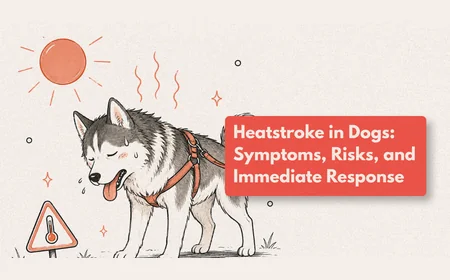
Heatstroke is the other local pattern to prepare for specifically. A flat-faced dog in Bengaluru in April does not need an unusual event to overheat; a midday walk is sufficient. Early signs are heavy panting that does not settle, bright red gums, a wobbly gait and vomiting. Core temperature above roughly 40.5 degrees Celsius is dangerous and causes organ injury that continues after the temperature comes down, which is why these animals need admission even when they look better in the car. Start cooling at home, keep cooling on the way, and tell the hospital you are coming.
What Will the Vet Need to Know?
The first few minutes of an emergency consultation are a race for information, and an owner who arrives with the answers shortens it considerably.
Have these ready:
- The timeline. When was the animal last completely normal, and what happened in order since.
- Weight, as accurately as you know it. Drug doses depend on it.
- Every medication the animal is on, with doses, including supplements and spot-on parasite products.
- Vaccination and deworming status, with dates if you have them.
- Known conditions and any previous reaction to a drug or an anaesthetic.
- What you have already given or done at home. Say it plainly, including anything you now regret. Nobody is being judged, and withheld information causes drug interactions.
- For poisonings: the product, the active ingredient, the quantity, and the time.
- For seizures, breathing problems or lameness: a video from your phone.
Bring the physical evidence where it exists. The packet, the plant, the chewed bottle, a photograph of the snake taken from a safe distance. Bring a sample if one is easy to collect, such as vomit or urine on a clean surface, but do not spend time hunting for one.
Expect to be asked about urination and defaecation, because those answers change the differential list quickly. Expect the team to stabilise before they investigate. Oxygen, a drip, pain relief and a decompression procedure may all happen before anyone discusses a diagnosis, and that order is deliberate. Consent for emergency stabilisation usually comes first, with a plan and an estimate following once the animal is out of immediate danger.
Frequently Asked Questions
How do I prepare for a pet emergency?
Preparation is mostly logistical. Decide which hospital you will use after hours, confirm a vet is physically present overnight, save the number under an obvious name, plan two routes and a way to travel without your own car, and name someone who can consent and pay in your absence. Keep a carrier, blanket, gauze, saline and a torch in one bag.
What should go in a pet first aid kit?
Sterile gauze and conforming bandage for pressure and dressings, cohesive bandage, single-use saline pods for flushing, blunt scissors, tweezers, a digital thermometer, a thick towel, a soft muzzle, a working torch, a top-opening carrier, and a printed card carrying the hospital number and your pet's medication list. Leave all human medicines out of the bag.
Should I give my dog paracetamol for pain?
Never. Human painkillers including paracetamol, ibuprofen and aspirin are directly toxic to dogs and cats, and cats are extremely sensitive to paracetamol, where small doses can be fatal. Dogs given these drugs can develop gastrointestinal ulceration and acute kidney injury. Pain is a reason to see a vet the same day and obtain a drug licensed for the species.
How do I make a dog vomit after eating something toxic?
Do not attempt this at home. Salt, mustard and hydrogen peroxide cause severe gastritis, salt toxicity or aspiration pneumonia, and some substances do more damage coming back up than staying down. Cats should never be made to vomit at home. Phone the hospital, describe the product and quantity, and travel. Vomiting can be induced safely with injectable drugs there.
What are the signs my cat needs emergency care?
Open-mouthed or laboured breathing, repeated trips to the litter tray with no urine passed, hiding with a hunched posture and crying when the belly is touched, pale or blue gums, sudden collapse, a seizure, and any string or thread visible at the mouth or anus. A male cat straining unproductively is an emergency measured in hours.
How do I move an injured dog to the car?
Keep the spine straight and slide rather than lift. Use a rigid board, a folded blanket or a firm piece of luggage as a stretcher, with one person supporting the chest and another the pelvis, moving together. Do not let a dog with a suspected spinal injury walk. Do not splint a fracture; minimise movement instead and secure the load.
Do I need to phone the clinic before I set off?
Always phone first. One call confirms a vet and surgeon are available, lets the team prepare oxygen, fluids or theatre while you travel, and may change what you do in the car. Give species, approximate weight, the single worst sign and when it began. Keep it short and save the full history for arrival.
Next Steps
If something is wrong right now, stop reading. Phone the hospital, say the species, the weight and the worst sign, and set off. Pale gums, laboured breathing, a swollen abdomen with unproductive retching, a male cat straining without passing urine, a seizure lasting over five minutes, a suspected snake bite or a dog that has overheated all need you to travel immediately. Start cooling a heat-affected dog before you leave and keep cooling in the car.
If nothing is wrong today, spend twenty minutes on the plan. Write down the after-hours hospital and its address, store the number under "Emergency vet", check that the microchip registration carries your current phone number, confirm rabies and leptospirosis vaccinations are in date, decide who can consent in your absence, and assemble the kit into one bag by the door. Leave the carrier out in the room so the cat stops treating it as a trap. Those are the twenty minutes that change outcomes.
Our emergency and critical care team is glad to walk through this with you before you need it. Book an examination at a quiet time, bring your pet's records, and we will tell you which signs matter most for your particular animal given its breed, age and existing conditions, show you how to lift and transport it safely, and check your kit. Knowing the route and the plan in advance is the single most useful thing an owner can do.