Why Does My Dog Panic When I Leave?
The first ten minutes alone tell you almost everything. How to separate real distress from boredom, what to film, and the home plan that actually works.
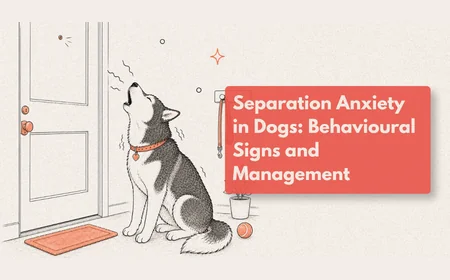
Dog separation anxiety when I leave is the phrase most owners arrive with, and the word that matters in it is panic. Your dog is not angry about being left behind, and he is not making a point about the shoes. He is having a fear response to being separated from the people he is attached to, set off by the sound of the door, and it runs on the same machinery as any other panic: a fast heart, heavy panting, an inability to lie down, a complete loss of interest in food. Behaviour that looks like spite is almost always behaviour that happened while a dog was frightened.
The most useful thing you can do before anything else is film the first fifteen minutes. A dog who is simply bored chews something at some point during a long afternoon and sleeps through the rest of it. A dog in distress starts to come apart while your footsteps are still on the stairs, fixes on the door you left by, and gets worse rather than better. Timing separates the two problems far more reliably than the mess does, and it changes the entire plan.
This article covers how to tell distress from boredom, what the recording should show you, why the problem has usually started at a particular moment in a dog's life, the home programme that rebuilds tolerance for absence, the well-meant responses that make everything worse, where medication genuinely fits, and the signs that mean you should see a vet this week rather than next month.
What to Know Separation-related distress begins early. Affected dogs usually show the first signs within minutes of the door closing, so a fifteen-minute recording is often enough to make the diagnosis. The core signs are panting in a cool room, pacing a fixed route, howling that does not settle, damage concentrated at doors and windows, refusing food while alone, and soiling in a dog who is otherwise clean. Damage spread around the house that starts hours later points to boredom instead. Punishment on your return makes the problem worse. Safety matters here: a frightened dog can break teeth and nails on doors and grilles, swallow fabric or foam, overheat in a closed flat on a hot Bengaluru afternoon, or fall while trying to escape over a balcony. Self-injury, swallowed material or an escape attempt needs veterinary attention the same day.
Is It Really Separation Anxiety, or Something Else?
Separation anxiety is a diagnosis of pattern, not of damage. Two dogs can destroy the same cushion and need completely different plans.
The pattern that counts is onset and target. A dog in separation distress begins to unravel immediately. He follows you to the door, stays at it, and his behaviour escalates over the first minutes instead of fading. Damage clusters at the exits: the door, the frame, the handle, the window grille, the mat you wipe your feet on. He pants when the room is cool. He will not touch a chew he would happily mug you for at any other hour of the day. When you come back, his chest is damp with saliva and he takes several minutes to come down.
A bored or under-occupied dog looks different on camera. He mooches about, finds something interesting an hour or two in, destroys it with obvious enjoyment, then sleeps. The damage is scattered rather than aimed at the way out. He eats whatever is left for him. He greets you, and then he lies down.
Several other problems get mistaken for separation anxiety and need excluding before you commit to weeks of behaviour work.
Noise sensitivity is the impostor we see most often. Monsoon thunder in Bengaluru tends to arrive late in the afternoon, which is exactly when many dogs are alone, and fireworks around Deepavali have the same effect. A dog who panics only on noisy days has a noise phobia, not a separation problem, although the two sit together often enough that both need treating.
Barrier frustration is the next. Some dogs have simply never learned to be alone and object loudly to a shut door without being frightened by it. The vocalisation is demanding rather than desperate, and it stops when something interesting happens.
Incomplete house training explains a surprising amount of indoor soiling. A dog who has never reliably learned where to go will use the floor whether you are there or not.
Medical disease has to be considered. House soiling in a previously clean adult dog can be a urinary tract infection, a gut problem, or anything that increases thirst. Pain lowers tolerance for everything, including being left. A dog who cannot lie down comfortably paces, and pacing looks like anxiety.
Cognitive decline matters in older dogs. Distress on being left that appears for the first time in a dog of ten or more, especially with night-time restlessness or disorientation, deserves a full examination rather than a training plan.
| What you see | Points to separation distress | Points to something else |
|---|---|---|
| Timing of the first sign | Within the first few minutes of your leaving | An hour or more in, or only at dusk |
| Where the damage is | Doors, frames, window grilles, the mat by the exit | Bin, toy basket, random rooms |
| Vocalisation | Howling and repetitive barking that does not settle | Short bursts at passing noise, then quiet |
| Food while alone | Refuses a stuffed toy or chew he normally loves | Eats everything offered, then sleeps |
| Toileting | Soiling in an otherwise clean dog, often near the door | Predictable times, or a dog never fully trained |
| On your return | Frantic, slow to settle, damp chest from drooling | Pleased, settles within a minute |
Film before you decide. A phone propped against a water bottle answers in one afternoon what guesswork never will, and it saves you from treating the wrong problem for a month.
What Does the Panic Actually Look Like on Camera?
Owners are usually shocked by the recording, because the dog they see is not the dog they know.
Watch for the first two minutes. He goes to the door. He may jump at the handle, dig at the threshold, or press his nose to the gap underneath. Then the repetitive movement starts: a fixed route between door and window, walked over and over, or tight circling in one spot. Panting begins in a room that is not warm. Some dogs drool heavily enough to leave a wet patch. You may see yawning, lip licking, a lowered tail, ears held back, trembling, and pupils that look larger than usual. These are autonomic signs, which is the point. They are not under his control, and no amount of obedience training reaches them.
Vocalisation tells you something too. A howl is a distance call, used to locate a missing group member, and it is the sound most typical of true separation distress. Repetitive barking at nothing has the same meaning. Short bursts at a passing bike or the lift door do not.
Escape attempts are the most dangerous part of the picture. Dogs chew door frames, bend window grilles, break teeth on metal, and tear nails down to the bed. In high-rise flats, some have gone over balconies. Any of that moves the case from a behaviour plan to an urgent one.
Toileting, if it happens, usually happens in the first half hour, not at the end of a long absence. Food refusal is one of the clearest markers you have. A dog who leaves a loaded food toy untouched for two hours and then eats it the moment you walk in was not full.
| Picture on camera | What it usually means | What to do first |
|---|---|---|
| Whines for a minute, then sleeps | Mild, mostly short of practice | Start graded absences this week |
| Pacing and howling for twenty minutes, settles badly | Moderate separation distress | Full home plan, book a behaviour consultation |
| Panic for the whole absence, no food, heavy drooling | Severe | Do not leave him alone while treatment starts, and discuss medication |
| Scraping until paws bleed, chewing frames, escaping | Severe with injury risk | Veterinary attention the same day, and arrange cover so he is never alone |
Record one full absence as well as a short one. The short clip makes the diagnosis. The long one tells you whether he eventually settles or stays up for hours, and that single fact changes how urgent the case is.
Why Has It Started Now?
Separation distress rarely appears out of nowhere. There is usually a point in the dog's history where being alone changed meaning.
A change in routine is the most frequent cause we see. Dogs who spent two or three years with somebody home all day, then met a full return to the office, had no practice at all. Puppies raised in a busy joint family, or in a home where house help was present through the working day, can reach adulthood having literally never been alone.
A frightening event during an absence does the same job faster. One thunderstorm, one night of fireworks, one afternoon of drilling in the flat upstairs, one lift alarm that would not stop, and a dog can learn in a single session that being alone is when bad things happen.
Rehoming and abandonment history matter. Rescued dogs, including many of the Indian street-dog-ancestry dogs rehomed across Bengaluru, arrive having already lost one set of people. Distress at the door is a reasonable response to that experience rather than a defect.
Other common triggers include a house move, the loss of a person or another dog in the household, a hospital stay for the dog, the start of adolescence, and the gradual arrival of deafness or failing sight in an old dog, which makes the world less predictable and company more important.
Illness deserves its own mention. Pain, gut disease and endocrine problems all reduce a dog's capacity to cope. A dog who has coped for years and suddenly cannot is a dog who needs examining, not just training.
One misconception needs correcting here, because owners are often told the opposite with great confidence. Letting your dog sleep on the bed, sit on the sofa, or follow you around the house does not cause separation anxiety. Attachment to people is normal canine behaviour, and the evidence that furniture access creates panic is thin. What actually matters is whether he has had practice at being alone, and whether being alone has ever frightened him. You do not have to make your dog's life colder to fix this.
What Should I Do in the First Week?
The first week is about stopping the damage and gathering information, not about training.
Stop the rehearsal if you possibly can. Every absence that ends in panic teaches your dog that his fear was justified. That is the opposite of what the treatment plan does, and it is why progress stalls in homes where the dog panics alone for eight hours on weekdays and practises calm departures at weekends. Arrange cover for a few weeks. Stagger working hours between family members, use a reliable day care, hire a sitter, ask a neighbour, or take him with you where it is genuinely safe to do so. Never leave a dog in a parked car in Bengaluru as an alternative, at any time of year. Car interiors heat quickly even in mild weather, and a panicking dog overheats faster than a calm one.
Make the space safe. Shut off balcony access and check that window grilles cannot be forced. Clear electrical cables, remove foam cushions and soft toys he could swallow if he starts chewing in fear, and take off collars and harnesses that could catch on a grille or a handle. Swallowed fabric and foam can cause obstructions, and those are surgical emergencies.
Keep him cool. A closed flat in the dry heat of April gets warm by mid-afternoon, and a dog who is pacing and panting for an hour adds his own heat load. Leave a fan running where it is safe, keep a room ventilated and shaded, and put water in two separate bowls in case one gets knocked over.
Stop all punishment, including the disappointed voice and the silent treatment. The damage happened hours before you walked in, and your dog cannot connect your reaction to it. What he learns instead is that your return is unpredictable, which raises his anxiety through the whole absence.
Keep everything else steady. Same walk times, same meals, same sleeping arrangement. This is not the week to move him out of the bedroom.
Then film one absence, and book an examination if anything on the red-flag list later in this article applies to your dog.
How Do I Rebuild His Tolerance for Being Alone?
Your dog's body has learned that a closing door predicts panic. The work is to make that prediction wrong, hundreds of times, in doses so small that nothing happens.
Start with the departure cues, because for many dogs the fear begins before you have gone anywhere. Keys, shoes, the bag, the sound of the lift, a particular alarm on your phone. Pick up the keys and sit back down with them. Put your shoes on and watch television. Open the front door and close it again without going anywhere. Do this many times a day until these actions bore him completely. You are dismantling the alarm system before you test the alarm.
Then build absence itself, one rung at a time.
Four rules make the difference between a ladder that works and one that collapses.
Progress on evidence, not on the calendar. The camera decides when you move up, not your patience. If he settles within thirty seconds and stays settled, that rung is done. If he stares at the door for the whole absence, it is not, however many days you have spent on it.
Vary the durations rather than climbing a straight staircase. Put a ten-second absence between two two-minute ones. A dog who can predict that every departure is longer than the last starts bracing from the beginning.
End before distress, never after it. Come back while he is still calm. Returning the moment he barks teaches a different lesson entirely, and pushing on through panic sets you back further than you gained.
Use the food test. Leave something he loves that takes time to finish. If he eats it while you are out, he is below his panic threshold and the step was the right size. The moment he stops eating, you have gone too far, and the next absence should be shorter.
Run independence training alongside all of this, while you are at home. Feed him on a mat a few metres away from you rather than at your feet. Teach a settle on that mat and build the duration. Close the bathroom door behind you instead of letting him come in. Practise sitting on the balcony while he stays inside. None of this is about making him less attached. It is about making distance within the house an ordinary, dull experience rather than a crisis.
Expect setbacks on particular days. Thunder, fireworks, illness, a late night, visitors, a change in your own schedule. On a bad day, drop back two rungs and bank an easy success.
Which Well-Meant Fixes Make It Worse?
Most of the advice owners are given about this problem comes from people who have never watched the camera footage.
| Well-meant response | Why it backfires |
|---|---|
| Telling him off for the mess | Adds fear to your homecoming; the damage happened hours earlier |
| Shutting a panicking dog in a crate | Removes his escape route and raises the injury risk sharply |
| Getting a second dog for company | The attachment is usually to you, and the new dog may copy the howling |
| A long run as the whole plan | A tired dog still panics; exercise helps sleep, it does not treat fear |
| Slipping out silently every time | Makes departures unpredictable, so he never relaxes while you are home |
| Anti-bark collars, citronella or shock | Punish the symptom, deepen the fear, and cause real welfare harm |
Two of those need expanding, because they are the ones that cause injuries.
Crates are not a treatment. A crate suits a dog who already likes his crate and uses it to sleep in when you are home. A dog in panic who is shut in one has nowhere to go, and the fear has to express itself somewhere. We see broken teeth, torn gums, bleeding nails and cuts from bent wire in dogs who were crated to protect the furniture. If the camera shows him trying to get out of a crate, stop using it and find another way to keep him safe.
Leaving him to cry it out does not work for fear. It works for a puppy who is mildly annoyed. A dog in genuine panic does not habituate to repeated terror; he gets more sensitive to it, and the door becomes a stronger trigger each week. If you find yourself hoping he will eventually give up, the plan needs changing.
Apartment living adds a social problem on top of the clinical one. Howling in a flat generates complaints, and complaints generate pressure to do something fast, which is how owners end up buying a shock collar. Talk to your neighbours and the association before anyone writes a notice. In our experience people tolerate a problem that is visibly being treated far better than one that is being ignored.
Never give your dog human anxiety medication, sleeping tablets, or leftovers from another animal's prescription. Several of these drugs are dangerous in dogs at ordinary human doses, some interact badly with each other, and sedating a frightened dog without treating the fear simply means he cannot move while he panics.
Does Medication Help, and When Is It Needed?
Medication for separation distress is often refused by owners who think it means sedation. It does not. The purpose is to lower the panic threshold enough that the dog can learn something from the training you are doing, because a brain in full panic does not form new associations.
There are licensed veterinary options for separation-related problems in dogs, and in practice the long-term choices are usually fluoxetine or clomipramine. Both need several weeks before you can judge them, which surprises people who expect a tablet to work like a painkiller. Both are prescription medicines, and both should follow a proper examination, because a vet needs to know about other illness, other medicines, and the dog's heart and kidneys before choosing. Shorter-acting anxiolytics can be prescribed for specific absences you cannot avoid, such as a day you must be out while the longer-term treatment is still building.
We would raise medication early rather than late in a few situations: a dog who injures himself, a dog who will not eat or drink during the whole absence, a dog whose distress is so severe that even a thirty-second absence is too much to train with, a dog with a noise phobia on top of the separation problem, and any case that has made no progress after several weeks of correct, consistent work.
Pheromone diffusers, calming supplements and dog-appeasing collars have modest evidence behind them. They are reasonable additions and poor substitutes. The same applies to music and television. A radio left on makes the flat less silent, and that is all it does.
Medication is not usually forever. Many dogs come off it once the behaviour plan has done its work, tapered under veterinary supervision rather than stopped abruptly. Some dogs, particularly those with a long history or a severe presentation, do better staying on it, and that is a legitimate outcome rather than a failure.
How Long Will This Take, and What Counts as Progress?
Give yourself weeks for a mild case and months for a severe one. Owners who expect a fortnight give up at the point where the plan is starting to work.
Judge progress on specific markers rather than on general impressions. How long does he take to settle after you leave, measured on the recording? Does he eat while you are out? Is there any soiling? Does he sleep during the absence, or only lie down facing the door? How long does he take to calm down when you return? Write these down weekly, because improvement in this condition is gradual enough that memory flatters it or hides it, depending on the kind of week you have had.
Relapse is normal and usually has a cause. A trip away, a storm, a change in your working pattern, a new baby, building work in the block. When it happens, go back several rungs, put cover in place again for a short period, and rebuild. Dogs usually recover ground faster the second time.
A minority of dogs need more than a general plan. If the distress is severe, if it is tangled up with noise phobia or generalised anxiety, or if you have worked properly for a couple of months without real change, ask for a referral to a veterinary behaviourist. That is a specialist consultation, usually an hour or more, and it produces a plan built around your dog and your actual working day rather than a generic protocol.
When Should I See a Vet About This?
Behaviour advice is the second half of this. The first half is making sure you are treating the right problem and that nothing dangerous is happening while you are out.
Book an examination promptly if your dog shows any of the following:
- Bleeding paws or nails, damaged teeth, cuts to the mouth, or any injury from scratching, chewing or escaping
- Evidence that he has swallowed fabric, foam, plastic or wood, especially with vomiting, straining or loss of appetite, which needs urgent attention
- Escape attempts from a balcony, window or grille
- Heavy panting, bright red gums, weakness or collapse after being shut in a warm room
- Soiling with straining, blood, diarrhoea or obvious increased drinking
- Distress on being left that has appeared for the first time in a dog of around ten or older
- Weight loss, reduced appetite overall, or refusing food for a full day
- Any sudden change in behaviour in a dog who previously coped well
Sudden onset in an otherwise settled adult dog is the one that most often turns out to be medical. Pain from hips, back or teeth, a gut problem, or an endocrine condition can all reduce a dog's ability to tolerate anything, including your absence. Treating that with a training plan wastes months.
If your dog is injuring himself, do not wait for a behaviour appointment. See a vet, arrange cover so that he is not left alone in the meantime, and treat the injury and the fear in parallel.
Frequently Asked Questions
Why does my dog panic when I leave?
Panic at the door means that being alone has come to predict something frightening, usually after a change in routine, a scare during an absence, or a history of being left behind. The response is a genuine fear reaction, with a racing heart, heavy panting and an inability to settle or eat. Dogs cannot plan revenge, so any damage happens while they are afraid.
How do I tell separation anxiety from plain boredom?
Watch the timing on a recording. Distress starts within the first few minutes, aims itself at the door or window you left by, and includes panting, pacing and refusal of food. Boredom starts an hour or more in, spreads damage around the house, involves eating whatever is available, and ends in sleep.
Why does he destroy things only when I am out?
Chewing at exits is an escape attempt, and the panic that drives it only happens when nobody is home. Look at where the damage sits. Door frames, handles, the threshold and window grilles point to distress. A raided bin or a shredded toy in the middle of the living room floor points to something much less serious.
Should I use a crate when I go out?
Crates help dogs who already treat them as a bed and go in willingly when you are home. Shutting a panicking dog in one takes away his escape route, and we regularly see broken teeth, torn nails and cuts from wire as a result. Check the camera. Struggling to get out means the crate must stop.
Does medication help with separation distress?
Prescribed veterinary medication helps by lowering the panic threshold enough that training can work, which a brain in full panic cannot do. Fluoxetine and clomipramine are the usual long-term choices, and both need several weeks before any judgement, after a proper examination. Never give human anxiety tablets or another animal's leftover prescription, since several are genuinely dangerous to dogs.
Will a second dog keep him company?
A second dog rarely helps, because the attachment is to you rather than to dogs in general. Plenty of dogs with a canine housemate still panic the moment their person leaves, and the new arrival sometimes learns the howling. Adding a dog to a household with an untreated anxiety problem usually produces two problems instead of one.
How long before I see real improvement?
Mild cases often change noticeably within a few weeks of consistent, correctly sized absences. Severe cases take months, and progress is measured in small markers: eating while alone, settling faster, sleeping through part of the absence. Keep a weekly note of those markers, because gradual change is easy to miss or to overestimate.
Next Steps
If your dog is injuring himself, trying to get out over a balcony or through a grille, or has swallowed part of what he destroyed, treat that as urgent. Arrange cover so he is not left alone, and see a vet today rather than waiting for a behaviour appointment. The same applies to heavy panting after being shut in a warm room, and to distress that has appeared suddenly in a dog who used to cope.
If the picture is milder, spend this week gathering evidence instead of training. Film fifteen minutes of one absence and a full absence as well. Make the space safe, keep it cool and ventilated, stop any telling off, and start working on the departure cues, since that part is useful whatever the diagnosis turns out to be.
Then bring the recording to us. Our team can examine your dog for the medical problems that mimic and worsen this condition, tell you from the footage how severe it actually is, set the first rungs of the ladder at the right height for your dog, and advise honestly on whether medication would speed things up in your case. Book an examination and bring your working week with you, because the plan has to fit the days you really have.