What Keeps a Dog Healthy Year-Round?
Six habits carry most of a dog's year-round health. What each one needs, how the Bengaluru calendar shifts the risks, and the signs that mean see a vet now.
Maintaining dog health across a full year comes down to six habits repeated without much drama: keeping the dog lean, controlling parasites every month, keeping vaccinations current, cleaning the teeth, exercising the dog daily, and having one proper physical examination a year. None of those is clever. The reason dogs still become ill is that the list is dull, and dull things slip quietly.
Most owners judge their dog's health by coat and appetite. Both are late indicators. A dog can be carrying four kilos too much, incubating tick fever, and losing bone around three tooth roots while eating enthusiastically and looking glossy in photographs.
This article covers what each of the six habits actually requires, how the Bengaluru calendar shifts the risks from month to month, and which changes mean you stop managing at home and get the dog seen.
What to Know Six habits carry most of the benefit: a lean body condition, year-round parasite control, current vaccination including rabies, daily dental care, daily exercise and one full examination a year. Body condition is the largest single factor you control, and you should be able to feel every rib under light pressure without seeing them. Rabies is endemic in India, so rabies vaccination is not optional, and municipal licensing rules in Bengaluru and most Indian cities require a current record. Parasite prevention in Bengaluru runs through all twelve months, not only the monsoon, because the winter never gets cold enough to break the tick cycle. Heatstroke is an emergency: a dog that is staggering, collapsing or breathing frantically after heat needs veterinary attention within minutes, not a cold bath at home and a wait.
What Does a Healthy Dog Actually Look Like?
Health is not a feeling you get when you look at your dog. It is a short list of measurable things, and the useful ones are easy to check at home.
Start with a baseline while the dog is well. Weigh the dog monthly and write the number down. Note how much water the bowl loses on an ordinary day. Watch the chest while the dog sleeps and count the breaths for fifteen seconds. These three numbers are worth more than any single examination finding, because disease announces itself as a change from a dog's own normal long before it looks like textbook illness.
The common misconception is that appetite is the master signal. A dog that stops eating does get brought in, so appetite works well enough as a warning when it disappears. The trouble is that many of the conditions that shorten dogs' lives, including kidney disease, Cushing's disease, early heart disease, osteoarthritis and dental disease, leave appetite intact for a long time. A dog that eats everything is not thereby a well dog.
| What to check | What healthy looks like | When to call the clinic |
|---|---|---|
| Body condition | Every rib easy to feel, visible waist from above | Weight change of more than about five per cent in a month |
| Appetite and thirst | Steady day to day, predictable water intake | Drinking noticeably more, or refusing two meals in a row |
| Stools | Formed, passed once or twice a day | Blood, mucus, or loose stools beyond twenty-four hours |
| Breathing at rest | Quiet and even while asleep, under about thirty breaths a minute | Faster or laboured breathing while resting |
| Coat and skin | No bald patches, no scratching, no smell | Persistent itch, scabs, or an odour from the skin |
| Energy | Settles quickly after exercise, keen for the next walk | Tiring sooner on the same route |
| Breath | Neutral, no strong odour | Breath that has changed and stayed changed |
Run your hands over the whole dog once a week. Start at the muzzle and work back, feeling along the jaw, under the throat, behind the shoulders, along the spine, over the belly and down each leg to the paw. You are feeling for lumps, ticks, scabs, matted fur, warm joints and sore spots. The point is repetition. A lump you have felt every week for six months is a different conversation from a lump you discovered yesterday.
Why Does Body Weight Matter More Than Anything Else?
Of everything an owner controls, keeping the dog lean has the largest effect on how long and how comfortably that dog lives. A long-running feeding study in Labrador Retrievers followed littermates on measured rations against littermates fed more generously. The lean dogs lived considerably longer, and they developed signs of osteoarthritis much later.
Excess weight is not a cosmetic problem. Fat tissue is metabolically active and produces inflammatory signals. Extra body mass loads every joint on every step. In Bengaluru the heat consequence matters as much as the joint consequence: an overweight dog has less tolerance for warm weather, cannot shed heat efficiently, and is far more likely to be carried into the clinic in April with heatstroke. Overweight dogs also carry higher anaesthetic risk, develop skin fold infections, and are harder to examine, which means problems get found later.
Judge body condition by feel, not by the number on the bag of food. Run a flat palm along the side of the chest. You should feel each rib under light pressure, the way you feel the back of your own knuckles through skin. If you have to press, there is a layer that should not be there. Look down at the dog from above: there should be a waist behind the ribs. Look from the side: the belly should slope up towards the hind legs.
Where owners go wrong is almost never the main meal. It is the arithmetic around it. A measuring cup scooped generously holds a different amount each time, so weigh the food on kitchen scales. Count the biscuits, the paneer from the kitchen, the chapati corner, the bit of chicken from the plate. Treats and extras should stay under about a tenth of daily calories, which is far less than it sounds. If the household feeds the dog from four sets of hands, nobody knows the total, and the dog gains weight that nobody can explain.
Weight loss works at a slow pace. Aim for one to two per cent of body weight a week, achieved by measuring food accurately rather than by swapping to a diet brand and hoping. If the dog is already stiff, get the joints assessed first, because pain limits the exercise that weight loss needs.
What Does Parasite Control Need to Cover in Bengaluru?
Four separate groups of parasites matter here, and a product that handles one does not handle the others. Owners often believe they are covered because something was applied in June.
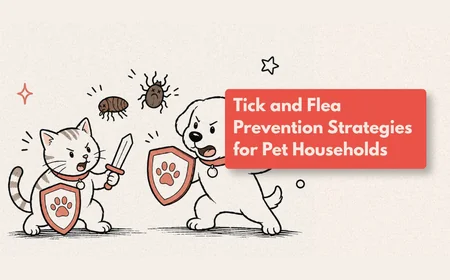
Ticks and fleas. The brown dog tick, Rhipicephalus sanguineus, is the central problem in this city. It lives happily indoors, in cracks in flooring, behind skirting, in bedding and in the gaps of concrete balconies. It transmits Ehrlichia canis, Babesia species and Anaplasma, and tick-borne disease is one of the commonest reasons dogs are admitted for intravenous treatment in Bengaluru. A dog with tick fever is often brought in for lethargy and poor appetite with no tick visible anywhere, because the tick fed and dropped off a fortnight earlier.
Intestinal worms. Roundworms, hookworms, whipworms and tapeworms. Puppies need worming every two weeks from two weeks of age until twelve weeks, then monthly to six months. Adult dogs need worming every three months as a baseline, and more often if they scavenge, hunt, eat faeces or live with small children. Roundworm and hookworm larvae can infect people, and children playing on contaminated soil are the usual route, so this is a household health measure as well as a dog one.
Heartworm. Dirofilaria immitis is transmitted by mosquitoes and is present in southern India. Prevention is a monthly tablet or spot-on. A dog that has been off prevention for months should be blood tested before starting, because giving a preventive to a dog with circulating microfilariae can cause a severe reaction.
Mites. Sarcoptic and demodectic mange, and ear mites. These need diagnosis rather than guesswork, since the treatment differs and so does the prognosis.
Prevention runs through all twelve months. There is no winter here that breaks a flea or tick life cycle. The gap owners create by stopping in December and restarting in March is exactly the gap that produces a tick infestation in the house by April, and treating the environment is slower and more expensive than preventing it.
One safety point that we see go wrong repeatedly. Never use agricultural or cattle ectoparasiticides on a dog, and never apply a dog's permethrin spot-on to a cat, which can be fatal. Products containing amitraz need care in small breeds and should not be combined with certain other drugs. If you have more than one species in the house, say so when you buy the product.
Which Vaccinations Actually Need Keeping Current?
Rabies first, because the stakes are different. Rabies is endemic across India, it is transmitted by bite from an infected animal, and it is invariably fatal once clinical signs appear in either dogs or people. Municipal rules in Bengaluru and most Indian cities also require a current rabies record for a pet licence. Annual boosters remain the standard here even though some licences elsewhere allow longer intervals, because exposure risk from free-roaming animals is high and because a current, documented record changes how a bite incident is managed.
The rest of the core course covers distemper, canine adenovirus, parvovirus and parainfluenza, usually given as a combined vaccine. Leptospirosis deserves its own mention in this city. The organism is shed in rodent urine, survives in warm standing water, and the monsoon provides both. Leptospirosis can cause acute kidney and liver failure in dogs and is transmissible to people.
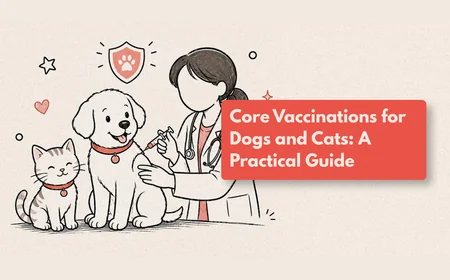
Puppies need a course rather than a single injection, because maternal antibody interferes with the vaccine until it wanes. The usual pattern is injections at six to eight weeks, then every three to four weeks until at least sixteen weeks of age, with rabies given separately. Immunity is not reliable until about two weeks after the final dose of the course, which is the window where owners take a half-vaccinated puppy to a park and come back with parvovirus.
Non-core vaccines are situational. Kennel cough vaccination makes sense before boarding, grooming stays or dog shows. Canine influenza and others depend on local circumstances and should be discussed rather than defaulted to.
Antibody titre testing can tell you whether a dog still has protection against distemper, adenovirus and parvovirus, which is useful for a dog that has had a vaccine reaction. Titres are not a substitute for rabies vaccination, both because of the exposure risk and because of the legal position.
If your dog is bitten or scratched by a street dog, a cat, a monkey or any animal of unknown vaccination status, wash the wound with soap and running water for fifteen minutes and see a vet the same day regardless of your dog's vaccine history.
How Does the Bengaluru Year Change What You Watch For?
The city's year has a shape, and the illnesses follow it. Planning around that shape is more useful than reacting to each problem as it arrives.
March to May, the hot months. Walk before seven in the morning and after eight in the evening. Test the ground with the back of your hand for five seconds; if you cannot hold it there comfortably, it will burn paw pads. Flat-faced breeds, black-coated dogs, overweight dogs, puppies and dogs over about eight years have the least heat reserve. Never leave a dog in a parked car or on an unshaded balcony. Water intake rises in this period, and a dog that suddenly drinks far more than the heat explains needs checking.
June to September, the south-west monsoon. Leptospirosis risk rises with standing water. Keep dogs out of puddles and away from drains. Dry the feet, ears and skin folds properly after every walk, because damp between the toes becomes interdigital infection and damp in a floppy ear becomes otitis within days. Gastroenteritis is common in this period, partly water quality and partly what dogs find on wet ground.
October and November, the second rains. Mosquito numbers stay high, so heartworm prevention matters most here. Skin and ear infections often peak slightly later than the rain itself.
December to February, the cool dry months. The best stretch of the year for exercise and for weight loss programmes. Older dogs with arthritis are stiffer on cool mornings and move better later in the day, so shift the longer walk accordingly. Festival periods bring two separate problems: noise phobia, which is worth preparing for in advance rather than managing on the night, and dietary indiscretion from sweets, chocolate, fried food and cooked bones.
What Should Daily Care Actually Include?
The daily list is short and the weekly list is shorter. Most of what goes wrong is a scheduling failure rather than a knowledge failure.
Teeth come first, because dental disease is the most under-treated common condition in dogs. Plaque hardens into tartar within roughly twenty-four to seventy-two hours. Brushing daily with a pet toothpaste resets that clock. Three times a week is generally treated as the minimum useful frequency. Never use human toothpaste, which is not formulated to be swallowed and may contain xylitol, which is seriously toxic to dogs.
Exercise needs to cover body and brain. Two walks a day suits most adult dogs, with time allowed for sniffing rather than a brisk march to a fixed distance. Scent work tires a dog more reliably than speed, and it suits the heat here because it can be done slowly or indoors. Build up gradually in a dog that has been sedentary, and avoid repetitive high-impact games in growing large-breed puppies.
| How often | What to do |
|---|---|
| Daily | Brush teeth, feed measured meals, refresh water, two walks with sniffing time |
| Weekly | Check ears, run hands over the whole dog for lumps and ticks, check pads and nails |
| Monthly | Weigh the dog and record it, apply tick and flea prevention, give heartworm prevention |
| Every three months | Worm adult dogs, reassess body condition honestly, check vaccine due dates |
| Every six months | Senior dogs seen, with blood and urine tests if advised |
| Yearly | Full physical examination, vaccination review, dental assessment |
Ears want a weekly look rather than a weekly clean. Over-cleaning a healthy ear causes problems of its own. Look for redness, discharge, smell and head shaking, and check after swimming or heavy rain. Nails should not click on hard floors. Overlong nails change how a dog loads its toes and contribute to foot pain in older dogs.
Food should be a measured amount of a complete diet appropriate to life stage, fed at set times. Keep the toxic list in mind for every household: onion, garlic, grapes and raisins, chocolate, xylitol, macadamia nuts, alcohol and cooked bones. Raw bones are safer than cooked ones but still fracture teeth, and hard antlers and hooves are a frequent cause of the broken molars we see.
How Often Does a Healthy Dog Need to See a Vet?
Once a year for an adult dog, twice a year once the dog is older. The visit is not about the vaccine. The vaccine is the reason the appointment gets made, which is useful, but the examination is the part that finds things.
| Life stage | How often to be seen | What should happen |
|---|---|---|
| Puppy, to sixteen weeks | Every three to four weeks | Vaccine course, worming, weight checks, socialisation and training advice |
| Four to twelve months | At six and twelve months | Neutering discussion, switch to adult diet, first dental assessment |
| Adult, one to seven years | Yearly | Full examination, weight trend, vaccination review, baseline bloods |
| Senior, seven years and over | Every six months | Examination, blood and urine tests, blood pressure, joint and dental assessment |
| Giant breeds, five years and over | Every six months | As for a senior dog, started earlier |
| Any dog on long-term medication | Every three to six months | Monitoring bloods appropriate to the drug |
A proper examination is a system, not a glance. We compare the weight against the last recorded figure rather than against an impression. We check gum colour and capillary refill. We assess each quadrant of the mouth for tartar, gingival recession, fractured teeth and masses, then palpate the lymph nodes at five sites and work through the abdomen for organ size, pain and masses. We listen to the heart on both sides for murmurs and rhythm, and to the lungs over all fields. Every joint gets flexed and extended. Skin, coat, eyes and ears get a proper look, and a rectal examination follows where the history calls for it.
Baseline blood and urine tests in a healthy middle-aged dog are worth having for one reason: you need that dog's normal to interpret the abnormal later. A creatinine value at the top of the reference range means something quite different in a dog whose value was at the bottom three years ago. Waiting until the dog is ill means comparing against a population average rather than against the animal in front of you.
What Do Owners Most Often Get Wrong?
Some of these are reasonable assumptions that happen to be untrue, and correcting them is usually more valuable than adding anything new to the routine.
The belief that an indoor dog does not need parasite prevention. Ticks arrive on shoes, on clothes, on visiting dogs and through open balconies. Mosquitoes come indoors. Fleas establish in soft furnishings. An apartment dog in Bengaluru needs the same year-round cover as a dog with a garden.
The belief that a vaccination appointment counts as a health check. If the appointment takes four minutes and the dog is not weighed, the mouth is not opened and the abdomen is not palpated, the dog has had a vaccine rather than an examination. Ask for the examination.
The belief that slowing down is simply age. Dogs do slow with age, but a dog that has become reluctant on stairs, stiff after rest, or less willing on walks usually has osteoarthritis, which is treatable. Reduced exercise tolerance can also be the first sign of heart disease. Age is a risk factor, not a diagnosis.
The belief that bad breath is normal in dogs. Halitosis is the smell of bacterial activity and periodontal disease. It is the commonest sign of a painful mouth, and dogs conceal oral pain extremely well because they keep eating.
Home remedies for ticks, including neem oil, kerosene, turpentine and various household mixtures. These do not break the life cycle, several are irritant or toxic, and kerosene applied to skin causes chemical burns. Use a licensed veterinary product.
Human painkillers. Paracetamol and ibuprofen cause liver and kidney damage in dogs at doses owners consider small, and ibuprofen also causes gastric ulceration and bleeding. There are safe veterinary anti-inflammatories, dosed by weight, on prescription. A dog in pain needs an examination.
Shaving the coat to cool the dog in summer. The coat insulates against heat as well as cold and protects skin from sun. Clipping a double-coated breed to the skin raises the risk of sunburn and can permanently alter regrowth. Brushing out the dead undercoat achieves what shaving is meant to.
When Should You Stop Managing at Home and See a Vet?
Some signs need an emergency hospital the same hour. Do not wait for the morning, and do not try a home remedy first.
- Collapse, fainting, or sudden weakness
- Laboured, noisy or open-mouthed breathing at rest
- Gums that are pale, white, blue or brick red
- Repeated unproductive retching with a swollen, tight abdomen, which suggests gastric dilatation and volvulus
- Any seizure, or a seizure that repeats within twenty-four hours
- Suspected heatstroke: panting frantically, staggering, very red gums, vomiting after heat
- Straining to urinate and producing nothing
- Bleeding that does not stop, or blood in vomit or stool in quantity
- Suspected poisoning, including rodenticide, snail bait, pesticide, chocolate, xylitol or any human medicine
- A bite or scratch from a street dog, cat, monkey or any animal of unknown status
- Being hit by a vehicle, or a fall from height, even if the dog seems unhurt
Other changes do not need an emergency visit. They should still not be watched for weeks. Book an examination within a few days for weight loss or gain, increased drinking or urination, lameness lasting more than forty-eight hours, vomiting or diarrhoea beyond a day, a new lump, persistent itching, a change in bark or breathing noise, bad breath, reduced exercise tolerance, or any shift in behaviour that the household agrees is real.
Trust the people who live with the dog. Owners who say something is different and cannot say what are right far more often than not. A dog whose routine has changed without explanation deserves veterinary attention, not reassurance.
Frequently Asked Questions
What keeps a dog healthy year-round?
Six habits carry most of the benefit: keeping the dog lean, year-round parasite control, current vaccination including rabies, daily tooth brushing, daily exercise with sniffing time, and one full veterinary examination each year. Body condition does the most work of the six. Everything else is easier to fix when found early, which is what the yearly examination exists for.
How often should a healthy dog see a vet?
Adult dogs between one and seven years need one full physical examination a year. Dogs of seven and over, and giant breeds from around five, benefit from being seen every six months, usually with blood and urine tests. Puppies need a visit every three to four weeks until the vaccine course finishes at sixteen weeks or later.
Does my dog need tick prevention in winter in Bengaluru?
Bengaluru's winter is mild and never cold enough to break the brown dog tick's life cycle, which continues indoors in floor cracks, bedding and skirting all year. Prevention runs through all twelve months here. Stopping in December and restarting in March leaves a gap that ticks fill quickly, and tick fever follows weeks later.
Is annual rabies vaccination really necessary in India?
Rabies is endemic across the country and the disease is invariably fatal once signs appear. Municipal licensing rules in Bengaluru and most Indian cities require a current rabies record, and documented vaccination changes how a bite incident involving your dog is handled. Annual boosters remain standard practice here because exposure risk from free-roaming animals stays high.
How can I tell if my dog is overweight?
Run a flat palm along the side of the chest. You should feel each rib under light pressure, much as you feel the back of your own knuckles. Looking down from above, there should be a visible waist behind the ribs. From the side, the belly should slope up towards the hind legs rather than running level.
What is the safest time to walk a dog in Bengaluru summer?
Before seven in the morning and after eight in the evening through March, April and May. Test the ground with the back of your hand for five seconds first. If you cannot hold it there comfortably, the surface will burn paw pads. Flat-faced breeds and overweight dogs need shorter walks even at those hours.
Can I give my dog paracetamol for pain?
Never give paracetamol, ibuprofen or any other human painkiller to a dog. Paracetamol and ibuprofen both cause liver and kidney damage at doses owners consider small, and ibuprofen also causes stomach ulceration and bleeding. Safe veterinary anti-inflammatories exist and are dosed by weight on prescription. A dog in pain needs an examination, not a tablet from the cupboard.
Next Steps
If your dog is showing any of the emergency signs above, stop reading and come in now, or call ahead so the team is ready. Suspected heatstroke, difficulty breathing, collapse, a seizure, a distended abdomen with retching, suspected poisoning or a bite from an unknown animal are all time-critical, and minutes change the outcome.
If your dog seems well, do three things this week. Weigh the dog and write the number in a note on your phone. Check what parasite prevention is actually due, including worming, ticks and heartworm, rather than what you think was given. Put a daily tooth brushing session into the same slot as something you already do, which is the only reliable way it survives past a fortnight.
Then book the annual examination, or the six-monthly one if your dog is seven or over. Our team can assess body condition properly, set a realistic parasite plan for the Bengaluru year, bring the vaccination record up to date, and take baseline bloods while your dog is still well, which is the only time those numbers are worth having.