Why Does My Pet Need a Routine Check-Up?
Dogs and cats conceal illness until it is advanced. A nose-to-tail examination finds heart murmurs, dental pain and kidney change years before you would.
A routine check-up for pets exists for one reason: dogs and cats conceal illness, and by the time an owner can see that something is wrong, the problem is usually well established. The appointment is not a formality wrapped around a vaccination. It is a structured search for the things that do not show at home: a weight that has drifted down over months, a heart murmur, a painful tooth, kidneys that have quietly lost function, a joint that has stopped moving properly.
Owners are at a real disadvantage here, and not through inattention. You see your animal every day, which makes gradual change almost invisible. A vet seeing your dog once a year compares today against a recorded weight, a recorded body condition score and a recorded heart sound from twelve months ago. That comparison is the most valuable thing in the room.
This article covers what a thorough examination actually involves, how often different animals need one, which screening tests earn their place at each life stage, what Bengaluru's climate and local disease picture add to the list, and the signs that mean you should not wait for the next routine visit.
What to Know Dogs and cats are poor at showing early illness, and cats are the most under-examined pets in practice. A healthy adult needs examining at least once a year, and mature or senior animals twice a year, because a year is a large slice of their remaining life. The physical examination finds more than any single test: dental disease, heart murmurs, lumps, abdominal masses, muscle loss and joint pain are all picked up by hand and stethoscope. Screening blood and urine tests add what the hands cannot reach. Do not wait for a routine appointment if your pet is struggling to breathe, straining to urinate, collapsing, bleeding, or has been bitten by an unknown animal. Those need veterinary attention the same day.
Why Does a Healthy-Looking Pet Need Examining at All?
Start with the misconception, because it is a widespread one. Most owners believe the annual visit is for the vaccinations and that the examination is a courtesy attached to them. The reverse is closer to the truth. Giving a vaccine takes under a minute. The examination is the part that changes outcomes.
Dogs and cats are built to hide weakness. An animal that looks ill attracts attention it cannot afford, and domestication has not removed that instinct. Cats show it most clearly. A cat with early kidney disease, an overactive thyroid gland or a mouth full of painful resorptive lesions will often keep eating, grooming and greeting you at the door. Cat owners regularly tell us their animal was completely well until last week, and the examination then finds a condition that has been developing for a year or longer.
The body also compensates, which is useful for the animal and inconvenient for diagnosis. Kidneys, liver and heart all carry functional reserve. Kidney function has to fall a long way before creatinine climbs above the laboratory reference range, so a result inside normal limits does not mean the kidneys are untouched. A heart can carry a murmur for years before fluid begins to collect in the lungs. The moment an owner finally notices something is usually the moment compensation has run out, and that is late.
Appetite deserves a separate warning, because it is the test most owners rely on. A pet that is eating is not a pet that is well. Dental disease severe enough to need extractions rarely stops a dog eating. Dogs with early heart disease eat. Cats with hyperthyroidism often eat more than usual, which owners read as a sign of rude health rather than the symptom it is. Weight, posture, breathing effort at rest and willingness to jump or climb are all better signals, and all of them are easier to assess against a record than from memory.
What Actually Happens During a Routine Check-Up?
A proper examination follows the same sequence every time, because a sequence is what stops things being missed. Knowing what is being done helps, because much of it looks like gentle handling and is in fact data collection.
Weight comes first, on the same scales, and goes on the record next to last year's figure. Body condition is scored on a nine-point scale so the number means something to any vet who reads the notes afterwards. Then the examination moves from the nose backwards: eyes, ears, mouth, throat, lymph nodes, chest, abdomen, skin, limbs, joints, spine, perineum and, where relevant, mammary glands and testicles. Temperature, pulse quality and respiratory rate are recorded. The whole thing takes several minutes and covers a surprising amount of ground.
| What the vet examines | What they are looking for | Why it is hard to check at home |
|---|---|---|
| Weight and body condition | Change against the last recorded figure | A few hundred grams lost by a cat is invisible to the eye |
| Mouth and teeth | Tartar, gingivitis, resorptive lesions, masses | Pets with painful mouths usually carry on eating |
| Heart | Murmurs, rhythm irregularities, rate | A murmur makes no sound you can hear without a stethoscope |
| Chest and airway | Lung sounds, breathing effort, upper airway noise | Increased effort is easily mistaken for normal panting |
| Abdomen | Kidney size and shape, bladder, liver, masses, pain | Needs trained palpation to interpret |
| Skin and lumps | New masses, measured and recorded in millimetres | Lumps hide under a coat and feel unchanged without a record |
| Joints, spine and gait | Range of motion, pain, muscle wastage | Pain is routinely read as ageing |
| Eyes, ears and lymph nodes | Cataract, retinal change, otitis, enlarged nodes | Requires an otoscope and an ophthalmoscope |
The conversation around the examination matters as much as the hands. Diet and the actual daily amount fed, treats included. Exercise and whether it has changed. Drinking and urination. Toileting. Behaviour at home and with other animals. Parasite control and when it was last given. Which vaccinations are due. That history is what tells the vet whether a borderline finding is new, and it is the reason the appointment is a conversation rather than a procedure.
The examination ends with a plan, and the plan should be explicit. Nothing to do for twelve months is a legitimate outcome and should be stated as one. So is a recommendation for bloods, a dental assessment, a weight target with a review date, or a recheck in three months to see whether a small lump has changed.
How Often Should My Pet Be Seen?
Once a year is the floor for a healthy young adult. From middle age onward it becomes twice a year, and that is not an upsell. A year of a dog's life is a large fraction of the whole, and much larger still for a giant breed. Seeing a ten-year-old Labrador annually is roughly comparable to a person having one medical examination per decade. Disease has a great deal of room to establish itself in that gap.
| Life stage | Dogs | Cats | Routine examination |
|---|---|---|---|
| Paediatric | Under 6 months | Under 6 months | Every 3 to 4 weeks until the vaccine course is complete |
| Young adult | 6 months to 6 years | 6 months to 7 years | Once a year |
| Mature | 7 years onward, earlier in giant breeds | 8 to 10 years | Twice a year |
| Senior | Final quarter of expected lifespan | 11 years onward | Twice a year, with screening tests |
| Any age, chronic condition | On long-term medication | On long-term medication | Every 3 months, or as directed |
Puppies and kittens are seen most often, and not only for vaccines. The paediatric visits are when a congenital heart murmur, an umbilical hernia, retained testicles, a poor bite or a limb deformity gets picked up, while there is still time to plan around it. Growth is plotted, worming is kept on schedule, and the socialisation conversation happens at the age when it is still useful.
The interval shortens again for animals on long-term medication. A dog on a non-steroidal anti-inflammatory for arthritis, a cat on thyroid medication, a dog on anti-epileptic treatment: each of those needs periodic examination and bloodwork to confirm the drug is still appropriate and the organs clearing it are coping. Repeat prescriptions without examination are not safe practice.
What Does the Examination Find That I Cannot?
This is the practical question, and the honest answer is a long list. Several findings appear often enough in routine appointments to name individually.
Heart murmurs are the clearest example. A murmur is turbulent blood flow, audible through a stethoscope and silent to everyone else. In a middle-aged small-breed dog it often means early mitral valve disease, which is manageable for years if it is followed. In cats the problem runs the other way: many cats with significant heart muscle disease have no murmur at all, so the vet is also listening for rate, rhythm and a gallop sound.
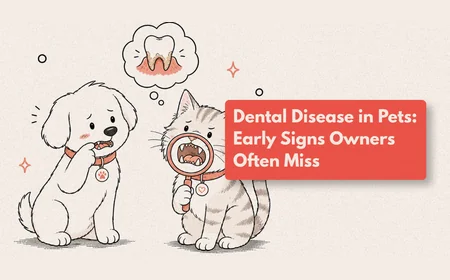
Dental disease is the condition we find most often and the one owners are most surprised by. A large proportion of dogs and cats show evidence of periodontal disease by middle age. A mouth with tartar to the gum margin, receding gums and an exposed root is painful, and the animal eating normally tells you nothing about whether it hurts.
Abdominal palpation is quietly one of the highest-value minutes of the examination. Small, firm, irregular kidneys in an older cat suggest chronic kidney disease before any owner-visible sign. A full bladder that cannot be expressed, an enlarged spleen, a loop of thickened intestine, an abdominal mass, a painful area the animal guards against: all of these are found by hand.
Weight trend is the finding that most often changes the direction of an appointment. A cat that has lost half a kilogram in a year has lost a serious proportion of its body mass, and that single number reroutes the consultation towards thyroid testing, kidney function and a careful look at the mouth. Owners almost never see it, because they are looking at the same cat they saw yesterday.
Muscle mass, joint range and gait complete the picture. Dogs do not usually limp with bilateral hip or elbow arthritis. They stop jumping into the car, they sit down halfway through a walk, they take the stairs more slowly, and the family concludes that the dog is getting old. Arthritis is treatable, and the difference proper pain management makes to an older dog is one of the most striking things in general practice.
Which Screening Tests Are Worth Doing, and When?
Tests supplement the examination and do not replace it. Which ones make sense depends on age, breed, history and what the hands found.
| Test | What it tells you | When to start |
|---|---|---|
| Haematology | Anaemia, infection, inflammation, low platelets from tick-borne disease | Baseline in adults, then yearly from middle age |
| Biochemistry and electrolytes | Kidney and liver values, protein, glucose, calcium | Baseline in adults, then yearly from middle age |
| Urine specific gravity and protein | Early kidney change, often before blood values move | From middle age, and with any increased drinking |
| Total T4 | Overactive thyroid in older cats, underactive thyroid in dogs | Cats from about 8 years, dogs if signs suggest it |
| Blood pressure | Hypertension, which damages eyes, kidneys and brain | Cats from about 9 years, or with kidney disease |
| Faecal examination | Worms and protozoa, including some that infect people | Yearly, and more often in young or outdoor animals |
| Tick-borne disease screen | Ehrlichia and Babesia exposure after tick contact | After any tick infestation, or with vague unexplained illness |
A baseline while the animal is well is the part owners most often decline and most often need later. Reference ranges are built from populations. What matters clinically is what is normal for your animal. A creatinine at the upper end of normal is unremarkable on its own and significant if it has doubled from a value recorded three years ago. That comparison only exists if somebody measured it when nothing was wrong.
Urine is undervalued. For early kidney disease, how well the kidneys concentrate urine changes before blood values do, and protein in the urine carries real prognostic weight. A urine sample costs little and frequently adds more than another blood panel would.
Not every test is worth running on every animal, and a vet who recommends everything every time is not being thorough. A healthy three-year-old indie dog with a good coat, clean teeth and a stable weight may reasonably need nothing beyond a faecal test and parasite cover. A twelve-year-old cat drinking from the bathroom tap needs bloods, urine and blood pressure the same week. Ask why a test is being recommended and what the result would change. A good answer exists for each one, and if there is not one, the test can wait.
Does Bengaluru's Climate Change What a Check-Up Looks For?
Yes, in several specific ways, and they shape the preventive plan rather than the examination itself.
Rabies sits at the top. India carries a substantial share of the world's human rabies deaths, and dog bites are the usual route. Rabies vaccination for dogs and cats is not a formality here, and the routine visit is where lapsed boosters get caught. Indoor-only cats are included, because cats escape, bats and rodents get into buildings, and an unvaccinated animal that bites someone creates a serious problem for the whole household.
Ticks are a year-round concern rather than a seasonal one in this climate. Ehrlichia canis and Babesia species are common locally, and their early presentation is frustratingly vague: a quiet dog, intermittent fever, poor appetite, sometimes nothing more. Low platelets on routine haematology are often the first objective clue. A check-up is the natural point to review whether tick prevention is being given at the correct interval, which it frequently is not.
The monsoon brings its own list. Standing water raises leptospirosis risk for dogs that swim, drink from puddles or walk through flooded streets, and the vaccination conversation should happen before the rains rather than during them. Humidity drives ear disease, particularly in Labradors, Cocker Spaniels and other dogs with heavy ear flaps, and skin infections rise across the board.
Heat matters most for flat-faced breeds. Pugs, Shih Tzus, French Bulldogs and Persian cats have compromised airways before any exercise begins, and Bengaluru's warmer months push them close to their limit. Part of a routine examination for these breeds is listening to the upper airway at rest, assessing nostril width and soft palate noise, and having a frank conversation about weight, walk timing and the signs of heat stress. Obesity makes every one of those problems worse, and weight is the single most modifiable risk factor we discuss.
Local breed patterns shape the plan too. Indian pariah dogs are generally hardy but still accumulate dental disease and tick-borne illness. Labradors and Golden Retrievers in this city are frequently overweight and prone to joint disease. Large guarding breeds need their joints and their body condition watched from a young age.
How Should I Prepare for the Appointment?
A little preparation makes the difference between a pleasant examination and a wrestling match, and between a vague history and a useful one.
For the history, bring specifics rather than impressions. The exact name of the food and the measured daily amount, including every treat and any table scraps. A written list of all medications and supplements with doses, because brand names and strengths are easy to misremember. The vaccination record and any previous test results, especially from another clinic. When parasite prevention was last given, and which product.
Phone videos are genuinely diagnostic. A cough, an intermittent limp, a collapse, an odd twitch, laboured breathing at rest: none of these reliably reproduce themselves in a consulting room, and thirty seconds of footage often settles a question that a paragraph of description cannot. If your pet has a heart condition, counting the breaths per minute while it sleeps at home and bringing those numbers is one of the most useful things an owner can do.
If a urine sample has been requested, collect it in the morning into a clean container, keep it cool, and get it to the clinic within a few hours. For cats, non-absorbent litter or a few clean plastic beads in an empty tray usually works.
Cats need the carrier to stop being an ambush. Leave it out at home days beforehand with a familiar blanket inside and feed treats in it, so travel day is not the only time it appears. Cover it in the car, keep it off the floor in the waiting area, and let the cat come out on its own in the consulting room rather than being tipped out. A synthetic facial pheromone spray applied to the bedding half an hour before leaving helps some cats.
Dogs should arrive on a lead that cannot slip, however reliable they are off it. Tell reception on arrival if your dog is nervous or reactive, so you can wait outside or in a quiet corner rather than nose to nose with a stranger's Rottweiler. A hungry dog is an easier dog to examine, so ask whether to withhold breakfast, particularly if sedation or a blood test might be needed.
When Should I Not Wait for the Routine Visit?
Routine means the animal is well. Some signs mean the appointment is today, not next month, and a few mean now.
Book an examination the same day, or ring the clinic immediately, for any of the following:
- Difficulty breathing, breathing with an open mouth in a cat, or breathing with obvious abdominal effort
- Straining to urinate or producing nothing, especially in a male cat, which is a genuine emergency
- Repeated unproductive retching with a swelling abdomen in a large deep-chested dog
- Collapse, seizures, sudden weakness, or gums that look pale, white or blue
- Suspected heatstroke: heavy distress after heat or exertion, with or without vomiting
- Suspected poisoning, including chocolate, xylitol, paracetamol in cats, rodenticide, organophosphates and lilies in cats
- A bite or scratch from an unknown or stray animal, because of the rabies implications
- Any bleeding that does not stop, or a wound that penetrates the chest or abdomen
- A cat that has not eaten for a day, or a dog that has not eaten for two
- Sudden severe pain, vocalising, or an animal that will not settle or be touched
- A lump that has appeared quickly, is growing, is ulcerated or is attached to the tissue under it
See a vet within a few days, rather than waiting for the next scheduled visit, for a cough that persists, increased drinking and urination, unexplained weight loss, a new limp, bad breath with reluctance to chew, repeated ear scratching, head shaking, or a change in behaviour or sleeping pattern in an older animal.
One more note on timing. If a routine appointment is already booked and something changes in the meantime, ring and say so rather than saving it for the day. Knowing that a dog has started drinking twice as much changes what the vet plans for the visit and which tests are ready beforehand.
Is a Routine Check-Up Worth What It Costs?
It is a fair question and deserves a direct answer rather than reassurance.
An examination plus a sensible screening panel is a real cost, repeated every year or twice a year, for an animal that will usually be found to be fine. That is the deal. What you are buying is earlier detection in the years where something is not fine, and the gap between early and late is where the money actually sits. A dental assessment with a scale, polish and one extraction is a different proposition from a mouth that has been left until half the teeth are loose and the jaw is affected. Chronic kidney disease found on a routine urine sample is managed with diet, hydration and monitoring. The same disease found when the cat has stopped eating and become dehydrated starts with hospitalisation.
There is a second return that is harder to put a figure on. Treatable pain gets treated. Arthritis in older dogs and dental pain in cats are both common, both easy to mistake for ageing, and both respond well. Owners who start pain relief for an arthritic dog often describe getting a different animal back within a fortnight, and that dog had been in pain for a long time before anyone called it pain.
If cost is the constraint, say so plainly at the appointment rather than skipping it. Screening can be staged across visits, the highest-value tests can be chosen first, and a vet who knows the budget will prioritise differently and more honestly than one who does not. An examination on its own, with no tests at all, still catches the murmurs, the masses, the mouths and the weight loss. Skipping the visit entirely is the only option with no upside.
Frequently Asked Questions
Why does my pet need a routine check-up?
Dogs and cats hide illness well, so problems are usually advanced by the time they become obvious at home. A full physical examination finds dental disease, heart murmurs, lumps, abdominal masses, joint pain and weight loss early, when treatment is simpler and cheaper. The visit also produces a recorded baseline to compare against next year.
How often should a healthy adult dog or cat be examined?
Once a year is the minimum for a healthy young adult, and twice a year from middle age onward. A year is a large proportion of a pet's life, so an annual visit for a ten-year-old dog is roughly equivalent to a person being seen once a decade. Animals on long-term medication need checking every three months.
Is a routine check-up just an excuse to give vaccinations?
Vaccination is the quickest part of the appointment and the least informative. The value sits in the physical examination, the recorded weight and body condition, the discussion about diet, behaviour and parasite control, and the decision about which screening tests are now sensible. Most clinics will happily examine a pet whose vaccinations are not due.
Does an indoor cat still need regular examinations?
Indoor cats are the most under-examined patients in practice and among the best at masking disease. Kidney disease, an overactive thyroid gland, high blood pressure, dental pain and arthritis are all common in older cats that never leave the house. Rabies vaccination still matters too, because escapes happen and bats and rodents get indoors.
Which tests are usually included for an older pet?
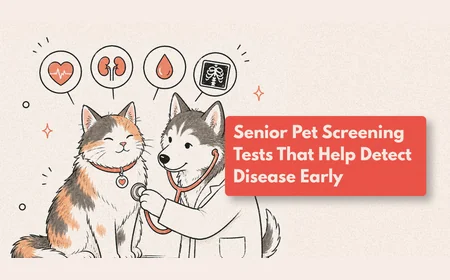
A senior panel generally means haematology, a biochemistry profile with electrolytes, and a urine sample tested for concentration and protein. Cats usually have a total T4 and a blood pressure reading added. A faecal examination is sensible in Bengaluru, and tick-borne disease screening if there has been any tick exposure.
Can I skip the visit if my pet is eating and playing normally?
Appetite is a poor guide to health. Most pets with significant dental disease keep eating, as do many with early kidney disease, heart murmurs or growing tumours. Normal behaviour at home is reassuring but is not evidence of a normal examination, and skipped years are the ones in which quiet disease gets established.
What should I bring to the appointment?
Bring the vaccination record, a written list of every medication and supplement with its dose, and the exact name and daily amount of the food, treats included. Phone videos of anything intermittent are more useful than a description. If a urine sample has been requested, collect it that morning and keep it cool.
Next Steps
If anything on the same-day list above applies to your pet, stop reading and ring us. Breathing difficulty, straining to urinate, collapse, suspected poisoning, a bite from an unknown animal and suspected heatstroke are all time-critical, and the first hour genuinely matters in each of them.
If your pet seems well, check the date of the last examination rather than the last vaccination, because the two are often confused and the examination is the one that counts. A healthy young adult that was seen within the past twelve months can wait. An animal over seven, one on long-term medication, one that has not been weighed in a year, or one whose teeth you have never had looked at should be booked now.
Our team can carry out a full nose-to-tail examination, record a weight and body condition baseline you can measure future visits against, advise which screening tests are worth running at your pet's age rather than all of them, and build a vaccination and parasite plan that fits Bengaluru's tick load, monsoon risks and heat. Book an examination with our team and bring your questions, your pet's records and any videos of behaviour that concerns you. A quiet appointment with nothing to report is the outcome we are aiming for, and it still earns its place.