What Health Problems Do Pet Birds Get?
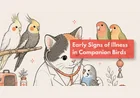
Most illness in pet birds traces back to diet and air quality rather than infection. The conditions we see most, the signs that mean today, and what an all-seed diet costs.
Most health issues in pet birds are not infections caught from somewhere. They are conditions the bird's environment has produced over months or years — an inadequate diet, air the bird should not be breathing, a cage too small to move in, or a life with nothing to do. That is an unwelcome thing for an owner to read, but it is also the useful version, because conditions with a cause you control are conditions you can prevent.
The second thing worth understanding is timing. Birds conceal illness until they can no longer compensate, so by the time a bird looks unwell it is usually further along than it appears. There is no such thing as a mildly sick bird that can safely wait a few days.
This article covers the conditions we see most often, what the droppings tell you, which presentations are same-day emergencies, and the dietary change that prevents more avian disease than anything else.
What to Know An all-seed diet is the root of a large share of avian illness. Seeds are high in fat, deficient in vitamin A and calcium, and a bird fed only seed is malnourished regardless of how well it appears. A bird sitting fluffed up, quiet and low in the cage needs veterinary attention the same day — this is a late sign, not an early one. Non-stick cookware heated to high temperatures releases fumes that kill birds rapidly; never use it in a home with birds. Never use a dog or cat medication, and never give a bird an antibiotic left over from anything else.
Why Is Diet the Biggest Problem?
Because seed is what birds like, and liking it is not the same as being nourished by it.
A diet of sunflower seed and millet is comparable to a child raised on crisps and chocolate. It supplies energy and very little else. Specifically, it is deficient in vitamin A, deficient in calcium, excessive in fat, and lacking in the range of amino acids a bird needs. The consequences are not subtle once you know what to look for:
| Deficiency | What it causes |
|---|---|
| Vitamin A | Blunted, swollen choanal papillae; recurrent respiratory and sinus infections; poor feather quality |
| Calcium | Weak bones, seizures in African grey parrots, egg binding in females, soft-shelled eggs |
| Overall fat excess | Obesity, fatty liver disease, lipomas, atherosclerosis |
| Amino acid imbalance | Poor feather structure, dull colour, abnormal moult |
Vitamin A deficiency deserves particular attention, because it damages the lining of the respiratory tract. A bird with recurrent "colds" that keep coming back is very often a bird whose respiratory defences have been compromised by years of seed, and treating each infection without changing the diet is treating the same problem repeatedly.
Converting a seed-addicted bird
This is the part owners find hard, and it needs to be done carefully rather than abruptly. A bird that stops eating is in danger within a day or two, so starving one onto pellets is not an option.
The approach that works: offer formulated pellets alongside the usual seed, gradually reduce the seed portion over weeks, offer vegetables repeatedly even when refused, and eat in front of the bird — flock species copy what they see being eaten. Dark leafy greens, carrot, sweet potato and capsicum are all worth persisting with. Monitor weight throughout, and if weight drops, slow down.
Avocado, chocolate, caffeine, alcohol, onion and salt should never be offered.
What Do the Droppings Tell Me?
More than almost any other single observation, which is why it is worth knowing what normal looks like for your own bird.
A normal dropping has three distinguishable parts: the dark faecal portion, the white or cream urates, and clear liquid urine. Changes in any of them are informative.
Two practical notes. Line the cage floor with plain white paper rather than wood shavings or sand, so that changes are visible at all. And rule out diet first — a bird that has eaten beetroot or dark berries can produce alarming colours that mean nothing.
Which Respiratory Signs Matter?
Birds have an unusual and efficient respiratory system, with air sacs extending through the body cavity and into some bones. It makes them superb flyers and extremely vulnerable to anything airborne.
Signs that need attention:
- Tail bobbing at rest. The tail moving rhythmically while the bird is not exerting itself indicates increased respiratory effort. It is one of the earliest reliable signs.
- Open-mouth breathing, or breathing with an audible click or wheeze
- Discharge from the nostrils, or staining of the feathers around them
- Sneezing, particularly if repeated
- A change in voice, which can indicate disease in the trachea or syrinx
- Swelling around the eyes or above the beak, suggesting sinus involvement
The environmental causes are worth auditing in any bird with recurrent respiratory problems:
| Hazard | Note |
|---|---|
| Non-stick cookware overheated | Releases fumes lethal to birds within minutes — the single most dangerous item in a kitchen |
| Cigarette smoke | Both inhaled smoke and nicotine residue on hands and surfaces |
| Aerosols, air fresheners, scented candles | Birds have no tolerance for airborne irritants |
| Cleaning products, particularly bleach and ammonia | Never use in the same room |
| Dust from substrate, or from powder-down species | Consider air filtration in rooms with cockatoos or African greys |
| Poor ventilation combined with damp | Encourages fungal growth, notably Aspergillus |
Why Is My Bird Plucking Its Feathers?
Feather destructive behaviour is common, distressing to watch, and frequently misattributed. The instinct is to assume it is psychological, and sometimes it is, but medical causes must be excluded first because they are entirely treatable.
Medical causes to rule out include skin disease, external parasites, bacterial or fungal infection, nutritional deficiency affecting feather quality, liver disease causing itching, pain in an underlying area, and reproductive hormonal drive.
Only once those are excluded does the behavioural picture come into focus, and the common contributors are consistent:
- Boredom, in a highly intelligent animal kept with nothing to do
- Insufficient sleep — most species need 10–12 hours of genuine darkness and quiet
- A cage too small to allow full wing extension
- Isolation in a flock species, or conversely the loss of a companion
- Chronic stress from a noisy or high-traffic location
- Frustrated reproductive behaviour, especially in a bird with a human pair-bond
Enrichment is the intervention with the best returns: foraging toys that require work to extract food, destructible items that are meant to be destroyed, rotation so novelty is maintained, and out-of-cage time. A bird that spends twenty minutes extracting a nut from a puzzle is a bird not plucking for those twenty minutes.
What Reproductive Problems Do Female Birds Get?
This catches owners out badly, partly because it happens in birds kept alone with no male anywhere.
A single female bird can and will lay eggs. Light cycle, diet, the presence of a nest-like space, and a strong pair-bond with a person or a mirror all stimulate reproductive behaviour. The result is a bird repeatedly producing eggs, and each egg draws heavily on her calcium reserves.
Two problems follow:
Chronic egg laying depletes calcium and body condition over months. The bird becomes thin, her bones weaken, and the risk of the next problem rises with each clutch.
Egg binding is when an egg becomes stuck. It is a genuine emergency. The bird strains, sits with a wide stance low in the cage, may have a swollen abdomen, and can deteriorate within hours. A calcium-deficient bird on a seed diet is far more likely to bind, because the muscular contractions needed to pass an egg depend on calcium.
Reducing the drive is largely about removing the cues:
| Change | Why it helps |
|---|---|
| Shorten daylight to 10–12 hours | Long days signal breeding season |
| Remove nest-like spaces, huts and dark enclosed beds | These are direct nesting cues |
| Stop stroking along the back and under the tail | This is courtship contact, not affection |
| Rearrange the cage furniture | Disrupts territory establishment |
| Remove mirrors | A mirror can serve as a mate |
| Correct the diet | Formulated pellets provide the calcium she is spending |
Do not remove eggs she has already laid immediately — a bird whose clutch keeps vanishing often simply lays more to replace it. Allowing her to sit on a completed clutch until she loses interest usually ends the cycle sooner.
How Do I Keep a Bird Healthy Long-Term?
The preventive list is short and almost entirely environmental.
- Formulated pellets as the base of the diet, with vegetables, and seed as an occasional treat rather than a staple
- 10–12 hours of genuine darkness, which means covered or in a dark room, not simply a quiet corner of a lit room
- A cage that permits full wing extension, with the long dimension horizontal — birds fly sideways, not upward
- Foraging enrichment, rotated, so that getting food requires work
- No aerosols, scented candles, smoke or non-stick cookware anywhere in the home
- Weekly weighing, recorded, on scales reading to the gram
- Plain paper cage lining, so droppings are visible
- An annual examination, with any new bird seen shortly after acquisition
That weighing habit is worth repeating because it is the one that finds problems early. A cockatiel weighs around 90 grams; losing eight of them is a serious change that no amount of looking will reveal, and a kitchen scale will show it in seconds.
What Are the Emergencies?
Contact a vet the same day for any of these:
| Emergency | Note |
|---|---|
| Fluffed, quiet, sitting low or on the cage floor | The classic presentation of serious illness |
| Laboured or open-mouth breathing | Respiratory compromise |
| Straining, or sitting with a wide stance in a female | Possible egg binding; rapidly fatal |
| Bleeding, including a broken blood feather | Birds have a small total blood volume |
| Any cat or dog bite | Bacteria from a cat's mouth cause rapidly fatal infection, even from a tiny puncture |
| Seizures, falling from the perch, or inability to perch | Neurological, or hypocalcaemia in African greys |
| Not eating for 24 hours | Small birds have very little metabolic reserve |
| Exposure to overheated non-stick cookware | Fumes act within minutes |
For transport, keep the bird warm, covered and quiet. A small carrier is better than a large cage, because a bird that is weak and flapping in a large space can injure itself further.
Frequently Asked Questions
What are the most common health issues in pet birds?
Most are environmental rather than infectious: malnutrition from an all-seed diet, respiratory disease from airborne irritants, obesity and fatty liver disease, feather destructive behaviour, and reproductive problems including egg binding. Vitamin A and calcium deficiency underlie a large share of what we see.
Why is an all-seed diet bad for birds?
Seed is high in fat and deficient in vitamin A, calcium and several amino acids. A seed-fed bird is malnourished however well it looks. Vitamin A deficiency damages the respiratory lining, which is why some birds get infection after infection until the diet changes.
How do I switch my bird off seed onto pellets?
Gradually, never abruptly, because a bird that stops eating is in danger within a day or two. Offer pellets alongside seed, reduce the seed portion over weeks, keep offering vegetables even when refused, and eat in front of the bird. Weigh weekly and slow down if weight falls.
What does it mean if my bird is fluffed up and quiet?
That it is seriously unwell and needs same-day attention. Fluffing conserves heat, and a bird doing it persistently while sitting low with partly closed eyes has stopped compensating. Because birds hide illness until they cannot, this is a late sign rather than an early warning.
Is non-stick cookware really dangerous to birds?
Yes. Overheated non-stick coatings release fumes that kill birds within minutes, and the bird can die before any smell is apparent to a person. Do not use non-stick pans in a home with birds at all, and keep birds well away from the kitchen regardless.
Why is my bird plucking its feathers?
Medical causes must be excluded first — skin disease, parasites, infection, nutritional deficiency, liver disease, pain and hormonal drive are all treatable. If those are clear, the usual contributors are boredom, too little genuine darkness for sleep, a cage that is too small, isolation, or frustrated reproductive behaviour.
How often should my bird see a vet?
Annually when well, because birds hide illness so effectively that routine examination is one of the few ways to find problems early. A new bird should be examined shortly after acquisition, and any bird showing signs at all should be seen the same day rather than monitored.
Next Steps
If your bird is fluffed and quiet, breathing with effort, straining, bleeding, or has been bitten by a cat or dog, contact us today. Those do not wait.
If your bird is well, the highest-value things you can do are to move it off an all-seed diet, line the cage with plain paper so you can see the droppings, weigh it weekly, and remove non-stick cookware and aerosols from the house. For anything you are unsure about — a change in droppings, recurrent sneezing, feather damage, or simply a bird that has never had a check-up — book an examination. Our team sees avian patients regularly and can review the diet and setup alongside the bird itself, which is usually where the answer is.