When Does My Pet Need a Veterinary Specialist?
Most pets never need one. The specific signs that change that, how referral differs from a second opinion, and what counts as a specialist in India.
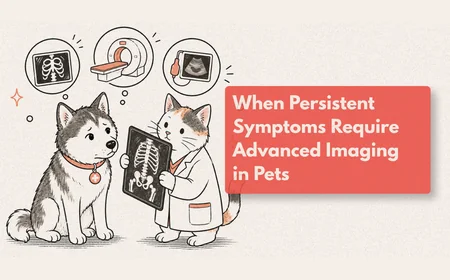
A veterinary specialist referral is the right step when the next useful decision needs equipment, training or caseload volume that a general practice does not have. Most pets never reach that point. The ones who do usually fall into one of four groups: a problem that has not improved after sensible first-line treatment, a diagnosis that cannot be confirmed without advanced imaging or endoscopy, a known diagnosis whose treatment carries enough risk to want practised hands, or a sudden neurological, urinary or respiratory event where hours change the outcome.
The misconception worth clearing first is that referral is a verdict on your own vet. It is closer to the opposite. Knowing precisely where your limits are, and saying so early, is one of the harder clinical skills to acquire.
This article covers what a specialist actually does differently, which disciplines exist, the signs that justify referral and the signs that should go straight to an emergency hospital instead, what happens at the appointment, how referral works in India where the title is not protected, and when a specialist is the wrong answer.
What to Know A veterinary specialist is a clinician who has completed structured postgraduate training in one discipline and works almost exclusively within it. Referral buys three things a general practice cannot always provide: equipment such as CT, MRI, echocardiography and endoscopy; a caseload large enough to recognise rare presentations; and medical or surgical experience in high-risk procedures. Referral is not a verdict on your own vet, and most cases return to them for ongoing care. Some signs should never wait for a referral appointment. Sudden hind-limb paralysis, a male cat straining unproductively to urinate, breathing difficulty at rest, repeated seizures or a distended abdomen with unproductive retching all need veterinary attention within hours, at the nearest open hospital.
What Does a Veterinary Specialist Actually Do?
A specialist is a veterinary surgeon who has completed structured postgraduate training in a single discipline, passed examinations in it, and then spent their working life inside that discipline rather than across the whole of medicine. A general practitioner is trained to recognise everything and manage most of it. A specialist is trained to resolve a narrow slice of it in depth.
Three things change when a case moves to a referral service, and only one of them is equipment.
The first is the kit. Cross-sectional imaging, meaning CT and MRI, along with fluoroscopy, echocardiography, endoscopy of the stomach and airways, arthroscopy, and an intensive care unit with overnight nursing, is expensive to buy and harder to staff. A practice that sees two cases a year needing an MRI cannot justify owning one. A referral hospital that sees several a week can.
The second is volume, and it matters more than owners expect. Clinical judgement is pattern recognition built from repetition. A busy generalist might encounter immune-mediated haemolytic anaemia a handful of times in a career. An internal medicine specialist may manage several cases a month, including the ones that behaved strangely. That accumulated experience is what allows someone to say, early and with confidence, that a presentation does not fit the obvious diagnosis.
The third is the team around the procedure. Much of what makes complex surgery survivable happens outside the surgeon's hands: a dedicated anaesthetist watching a patient with a failing heart and doing nothing else, nurses trained in post-operative pain scoring, the ability to take a patient back to theatre at two in the morning if a drain stops working. A single pair of skilled hands in a practice without that support produces worse results than the same hands in a hospital that has it.
What a specialist does not do is take over. In almost every case the referral is a defined episode with a beginning and an end. Your own vet keeps the relationship, the vaccination record, the long-term medication review and the knowledge of how your household works. The specialist answers a question, performs a procedure, or stabilises a crisis, then writes back with a plan your vet continues. Owners who arrive expecting to be told they must change practice are usually relieved to hear this.
Which Specialities Exist, and What Does Each One Handle?
The disciplines below are the ones an owner is most likely to meet. Not every speciality is represented in every city, and some of the most useful people in the chain are ones you never meet in person.
| Speciality | Typically handles | Common referral trigger |
|---|---|---|
| Internal medicine | Chronic vomiting, weight loss, liver and kidney disease, hormonal and immune disease | Signs persisting after sensible treatment and basic bloodwork |
| Soft tissue surgery | Chest and abdominal surgery, airway surgery, reconstruction, liver and vascular anomalies | A procedure outside routine practice, or one with a high complication rate |
| Orthopaedic surgery | Cruciate disease, fracture repair, patellar luxation, hip and elbow disease | Lameness needing implants, arthroscopy or corrective osteotomy |
| Neurology | Seizures, spinal pain and paralysis, head tilt, altered behaviour with neurological signs | Any sudden inability to walk, or seizures that cluster |
| Cardiology | Murmurs, arrhythmias, congestive heart failure, congenital defects | A murmur with clinical signs, or a murmur in a breed at risk |
| Oncology | Staging and treating tumours, chemotherapy, radiation planning | A confirmed malignancy, or a mass before deciding on surgery |
| Ophthalmology | Corneal disease, glaucoma, cataracts, sudden blindness, retinal disease | An ulcer that is deepening, a painful red eye, or vision loss |
| Dermatology | Allergic skin disease, recurrent ear disease, immune-mediated skin disease | Itching that returns every time treatment stops |
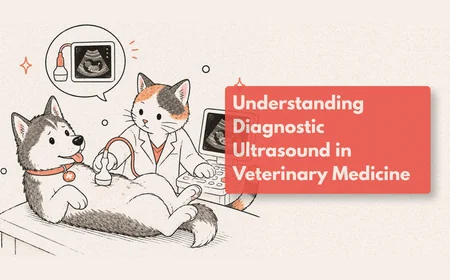
| Diagnostic imaging | CT, MRI, ultrasound, interpretation of difficult radiographs | Imaging that needs cross-sectional detail or expert reporting |
| Anaesthesia and critical care | High-risk anaesthesia, ventilation, intensive care | A patient whose instability makes routine anaesthesia unsafe |
Internal medicine sits at the centre of this map and is the service most cases are routed through first. A dog losing weight with intermittent vomiting could have a gut problem, a liver problem, a hormonal problem or an abdominal tumour, and the internal medicine workup exists to separate those before anyone commits to surgery or chemotherapy.
Diagnostic imaging specialists are the people owners almost never meet, and they frequently change the answer. A radiologist reading a CT study has read thousands of them, and the difference between a confident report and a cautious one often decides whether an operation goes ahead at all.
Do not choose the speciality yourself based on the sign. The mapping is unreliable, and this is where self-referral goes wrong. A head tilt in an older dog can come from an ear infection, a brain lesion, high blood pressure, or a vestibular episode that settles on its own. Circling and confusion can be neurological, or they can be liver disease. Straining to pass faeces in a cat is sometimes a colon problem and sometimes a spinal one. Your own vet's examination and basic bloodwork narrow the field before anyone needs to pick a door. Booking directly into the wrong speciality costs you a consultation fee and a fortnight.
When Does My Pet Need a Veterinary Specialist Rather Than a Generalist?
Four situations account for most appropriate referrals. Knowing which one you are in is useful, because they carry very different urgency.
The treatment has not worked. One course of sensible first-line treatment failing is normal medicine. Two is a signal. If a cough, a skin problem, a diarrhoea or a lameness has been treated reasonably twice and has not improved, the useful next step is usually a diagnosis rather than a third drug. The exception is a problem that is clearly worsening while on treatment, which should not wait for a second failure.
The diagnosis is blocked by equipment. Some questions cannot be answered by examination and blood tests, however carefully they are done. Whether a dog's gut inflammation is lymphoma or inflammatory bowel disease needs biopsies, taken endoscopically or surgically. Whether a murmur is mitral valve disease or something congenital needs echocardiography. Whether a weak back end is a disc, a tumour or a nerve disease needs an MRI. In these cases referral is simply where the test lives.
The diagnosis is known and the treatment carries real risk. A splenic mass, a liver lobe tumour, a cruciate rupture in a large dog, airway surgery in a flat-faced breed: these are operations with measurably better outcomes in hands that do them weekly, supported by an anaesthesia team used to the complications. Many general practices refer these on principle. That is good practice rather than timidity.
Something has happened suddenly and hours matter. Acute hind-limb paralysis from a disc extrusion has a far better surgical outcome when decompression happens early, and the useful window is measured in hours to a day or two rather than weeks. Repeated seizures, sudden loss of vision, a rapidly swelling abdomen and a cat straining unproductively to urinate belong in the same category. These do not go onto a referral waiting list. They go to the nearest hospital that is open and equipped, and specialist input is arranged from there.
There is a fifth trigger that is less clinical and entirely legitimate. Some decisions are large enough that an owner needs certainty before making them. If you are being asked to consent to a limb amputation, a course of chemotherapy, or euthanasia, and you do not feel you have enough information to agree, a specialist opinion is a reasonable thing to ask for. Say that is what you want. Most vets will arrange it without hesitation, and the ones who take offence have told you something useful.
Which Signs Should Go Straight to an Emergency Hospital?
Referral appointments are scheduled. Emergencies are not. Confusing the two is the most damaging mistake in this whole subject, because the conditions where delay changes the outcome are precisely the ones that look dramatic and feel like they need an expert rather than a nearby hospital.
Stabilisation comes before sophistication. A dog in respiratory distress needs oxygen and sedation before it needs a CT scan. A cat with a blocked bladder needs a catheter and intravenous fluids before anyone discusses why the blockage happened. Any competent emergency service can do the first part, and the first part is what saves the life.
| Presenting sign | Go where first | Why |
|---|---|---|
| Sudden inability to use the hind legs | Emergency hospital, same day | Spinal cord compression; surgical outcome falls with delay |
| Male cat straining to urinate without passing urine | Emergency hospital, immediately | Urinary obstruction becomes fatal within a day or two |
| Breathing difficulty at rest, or a cat breathing open-mouthed | Emergency hospital, immediately | Oxygen and stabilisation come before any diagnosis |
| Unproductive retching with a swelling abdomen | Emergency hospital, immediately | Gastric dilatation and volvulus; surgical within hours |
| Seizures in clusters, or one lasting beyond five minutes | Emergency hospital, same day | Prolonged seizures cause brain injury and dangerous overheating |
| Firm lump that has grown over weeks | Own vet, then referral | Sampling and staging decide whether surgery helps |
| Itching that returns whenever treatment stops | Own vet, then dermatology | Needs a structured workup rather than another steroid course |
Sudden hind-limb weakness deserves a specific warning, because owners so often wait. A dachshund, a French bulldog or a pug that was walking in the morning and is dragging its back legs by evening has, in all likelihood, a disc pressing on the spinal cord. Whether surgery is worthwhile depends on how much sensation remains, and sensation disappears in stages. A dog that can still feel a firm toe pinch has a good prognosis with prompt decompression. One that has lost deep pain sensation for more than a day or two has a far worse one, and in some cases surgery is no longer offered. Do not wait for a morning appointment. See a vet the same day and ask specifically whether neurological referral is indicated.
The same logic applies to eyes. A painful, cloudy, screwed-up eye can lose the structural integrity of its cornea within days, and in flat-faced breeds living with Bengaluru's dust and dry season heat this happens faster than owners expect. Any eye that is being held shut, or that has changed colour, needs looking at that day rather than that week.
Does a Referral Mean My Vet Missed Something?
Almost never, and the belief that it does stops owners accepting help they actually want.
Recognising the limit of what you can offer is a clinical skill, and it is one of the things that distinguishes a good generalist from a dangerous one. A vet who refers a cruciate rupture to an orthopaedic surgeon is not admitting incompetence. They are telling you the outcome is better where the procedure is done weekly. That same vet is managing diabetes, thyroid disease, chronic kidney disease and a dozen other conditions perfectly well, in-house, without referring any of them.
Two things owners often merge are worth separating. A second opinion means asking another general practitioner to look again at the same problem with broadly the same tools. It is the right move when you doubt the interpretation: the diagnosis does not fit what you are seeing at home, or the plan has been explained in a way you cannot follow. A referral means sending the case to someone with different tools and a much narrower caseload. It is the right move when the obstacle is capability rather than opinion.
Both are reasonable requests and neither should cause offence. If you want a second opinion, say so plainly and ask for copies of your records, including the original imaging files. A practice that resists handing over records is telling you something useful about itself.
A good referral is a piece of work in its own right. The letter that travels with your pet should set out the history, what has been treated and with what response, the results of everything done so far, and a specific question. Specialists work far better with a question than with a general invitation to investigate. If the referral is arranged in a hurry and the letter is thin, the first appointment gets spent reconstructing a history you already know, and you pay for that time.
Ask your vet to send the records ahead rather than handing you a folder on the day. Most referral hospitals would much rather read the case before they meet it, and a clinician who has studied the file overnight asks sharper questions in the room.
What Actually Happens at a Referral Appointment?
Expect it to be longer and slower than a routine consultation. A first specialist appointment commonly runs to forty-five minutes or an hour, because the history is taken again from the beginning. Owners sometimes find the repetition frustrating. It is usually where the diagnosis comes from.
The clinician will have read the referral letter and the imaging before you arrive. They will take the history themselves, examine your pet fully rather than only the affected part, and then do something more valuable than any single test: tell you what they think the possibilities are, in order of likelihood, and what each one would require to confirm or exclude.
From there the plan is usually staged. A sensible first stage is the cheapest test that would most change the answer. If imaging under anaesthesia is needed, many hospitals will admit your pet the same day, which is why you may be asked to withhold food beforehand. Water is normally allowed. Follow the specific instructions you are given rather than general advice, because they vary with the procedure and with any medication your pet is on, particularly insulin.
You should leave with three things: a written summary of the findings, a plan with named decision points, and a cost estimate. If any of the three is missing, ask for it before you go home.
| Bring | Why it matters |
|---|---|
| Full clinical history and discharge notes | Avoids repeating investigations already done and paid for |
| Original imaging files, not photographs of a screen | Specialists re-read the images themselves |
| Every blood and urine result, with dates | Trends carry more information than single values |
| A written list of medicines, doses and start dates | Some signs turn out to be drug effects |
| A short video of the problem at home | Lameness, seizures and coughing rarely perform on demand |
| A clear budget range | Allows the plan to be built around what is actually possible |
Two practical points make a disproportionate difference. Bring the actual imaging files, on a disc or a drive, rather than photographs of a screen, because a phone picture of a radiograph is close to useless for re-interpretation. And bring video. Lameness, coughing, collapse episodes, seizures and strange breathing almost never appear to order in a consulting room, and a short clip filmed at home often answers the question an examination in the room cannot.
Send one person who knows the pet well and can make decisions. Appointments where the attending person has to telephone someone else about every choice take much longer and often end with nothing agreed.
What Does Specialist Care Cost, and When Is It Worth It?
Specialist care costs more per appointment than general practice, and the equipment is the reason. A CT scanner, an MRI, an echocardiography machine and a twenty-four-hour nursing rota all have to be paid for by the cases that use them. That is the honest starting point.
The less obvious point is that not knowing also costs money. Months of empirical treatment, repeated courses of medication, repeated short consultations and repeated courses of antibiotics or steroids add up, and at the end of them you often still have no diagnosis. For some conditions a single well-chosen investigation is cheaper than six months of educated guessing, and considerably kinder to the animal.
The question to ask is therefore not what a test costs. It is what the result would change. Ask it directly, about every item on the estimate: if this comes back normal, what do we do next, and if it comes back abnormal, what do we do next. When both answers are the same, the test is not earning its place, and a good specialist will say so without being pushed.
State your budget at the start, as a range. Clinicians are not offended by this and cannot plan around a number they have not been given. A plan built for a defined budget is nearly always better than an ambitious plan abandoned halfway through. The worst outcome in referral medicine is a diagnosis reached with no funds left to treat it, and that happens more often than it should.
Pet insurance is still uncommon in India, which means most families are paying from savings and the sequencing matters. Reasonable things to ask: whether the diagnostics and the treatment can be staged over weeks rather than days, whether a cheaper test answers most of the question, and if the recommended treatment is unaffordable, whether there is a palliative plan that keeps the animal comfortable for a reasonable time.
That last question is not a failure of nerve. A clearly explained comfort-care plan, with proper analgesia and defined review points, is legitimate veterinary medicine, and it is a better choice than an investigation you cannot afford to act on.
How Does Specialist Referral Work in India?
India has no statutory specialist register. The Veterinary Council of India regulates who may practise, but there is no board-certification system equivalent to the American or European veterinary colleges, and the word specialist is not a protected title here, so it carries no common standard behind it.
Specialist expertise is not absent. It means you have to ask about it rather than assume it. Expertise here is usually built through a postgraduate degree, most commonly an MVSc and sometimes a PhD, in a defined discipline such as veterinary surgery and radiology, veterinary medicine, or veterinary gynaecology and obstetrics. Some clinicians add overseas residencies, fellowships or college membership examinations. Many have simply done one thing intensively, in a high-volume hospital, for fifteen years, and are extremely good at it.
Reasonable questions to ask, without embarrassment:
- What postgraduate qualification do you hold, and in which discipline?
- How many of these cases or procedures do you handle in a month?
- Who provides the anaesthesia, and are they doing nothing else during the procedure?
- What are your complication and mortality figures for this operation?
- Who looks after my pet overnight, and are they awake and on the premises?
The last two separate a genuine referral hospital from a general practice that has bought a CT scanner.
Geography matters more here than in many countries. Referral-level imaging, dedicated intensive care and overnight nursing are concentrated in a small number of hospitals in the larger cities, and Bengaluru is one of the places families travel to from several hours away. Plan the journey as part of the clinical decision. A dog in pain or respiratory difficulty travelling a long distance in heat is at real risk, and a flat-faced breed in a car without air conditioning in April is a heatstroke case waiting to happen. Travel early in the morning, keep the animal cool and offer water, and tell the hospital your expected arrival time so a patient in distress is not left sitting in a waiting room.
Two local patterns are worth naming. The monsoon brings a rise in tick-borne disease and leptospirosis, and both commonly present as vague illness with abnormal bloodwork that ends up in an internal medicine clinic. And any bite wound from an unknown or unvaccinated animal is a rabies question before it is anything else. That is urgent, and it concerns the people in the household as much as the animal. You should see a vet and your own doctor the same day rather than booking a referral appointment three weeks out.
When Is a Specialist the Wrong Answer?
Referral is not always right, and three situations stand out.
The first is when the investigation would not change the plan. An eighteen-year-old cat with chronic kidney disease, a poor appetite and gradual weight loss does not automatically need an abdominal ultrasound and a biopsy. If the realistic outcome of every possible finding is the same supportive care she is already receiving, the kind thing is to improve the supportive care. Ask the question from the previous section and accept the answer you get.
The second is when the patient is too fragile for the process. Investigation is not free of harm. Anaesthesia, repeated blood sampling, car journeys in heat, days away from home and an unfamiliar hospital all cost the animal something, and in a very frail or very anxious patient that cost can outweigh the information gained. A specialist worth consulting will tell you this unprompted. If you are being urged towards more procedures while your animal is visibly deteriorating, slow down and ask what the plan for comfort is.
The third is when the generalist plan has not actually been tried. Chronic itching is the standard example. Allergic skin disease is diagnosed largely by excluding other causes, which means treating thoroughly for parasites, running a strict elimination diet for eight to twelve weeks without lapses, and clearing secondary bacterial and yeast infection. Owners frequently want to skip to a dermatology referral and an allergy test. Allergy tests do not diagnose allergy. They help choose an immunotherapy formulation once the diagnosis is already established. Skipping the groundwork wastes the appointment and the fee.
A more delicate situation is worth naming too. Sometimes an owner is looking for a different answer rather than a better-informed one. Hoping a specialist will overturn a diagnosis of a large, invasive tumour is entirely human, and anyone who has sat on the owner's side of that conversation understands it. Be honest with yourself about which you are seeking, because a better-informed answer is worth paying for and a different one rarely arrives.
How Do I Get the Most Out of a Specialist Visit?
Preparation changes the value of the appointment more than anything else within your control.
Write your questions down before you go, in order of what matters most to you. Appointments cover a great deal of ground quickly, and the question you most wanted answered is the one most often forgotten in the car park afterwards. Take notes, or ask whether you may record the explanation. Most clinicians are happy to agree.
Ask for the plan in plain terms, containing three specific things: what happens next, what would make you call sooner, and when the review is. The middle one is the most useful sentence in veterinary medicine. Knowing precisely which change in your pet should trigger a phone call makes you part of the monitoring team rather than someone waiting passively for the next appointment.
Make sure everything goes back to your own vet. The discharge summary, the imaging report, the histopathology and the medication plan should all reach the practice that will be looking after your pet for the next decade. Ask the referral hospital to send them, and confirm with your own vet that they arrived, because this is where continuity most often breaks.
Expect prognosis in ranges rather than certainties, and be a little suspicious of precision. Honest veterinary medicine contains a lot of "most dogs with this do well for a good while" and relatively little arithmetic. A clinician who tells you exactly how long your pet has, to the month, is claiming to know more than anyone does.
If something is not clear, say so before you leave the room. Clinicians slip into shorthand without noticing, and no reasonable specialist minds explaining again. If you get home and realise the plan has not landed, telephone the hospital. Book an examination with your own vet to go through it in person if that is easier, and bring the written summary with you.
Frequently Asked Questions
When does my pet need a veterinary specialist?
Referral makes sense when a problem has not responded to sensible first-line treatment, when confirming the diagnosis needs advanced imaging or endoscopy, when the treatment itself carries real risk, or when a sudden neurological, urinary or respiratory event means hours matter. Most pets never reach that point. Your own vet is usually the best person to judge the timing.
What is the difference between a veterinary specialist referral and a second opinion?
A second opinion asks another generalist to look again at the same question with broadly the same tools. A referral sends the case to someone with different tools and a narrower caseload, usually with your vet's records and imaging attached. Both are reasonable requests. Referral is the better choice when the obstacle is equipment or experience rather than interpretation.
Does my vet have to refer me, or can I book directly?
Most referral centres accept direct bookings, but going through your own vet is better. The specialist then starts with your pet's history, bloodwork and radiographs already in hand, which avoids repeating tests and shortens the appointment. Emergencies are the exception. Collapse, breathing difficulty or suspected poisoning should go straight to the nearest hospital that is open.
What should I bring to a referral appointment?
Bring the full clinical history, every blood result and imaging study already done, the actual radiograph or scan files rather than photographs of a screen, a written list of all current medicines with doses, and a short note of what has changed and when. One person who knows the pet well should attend and be able to decide.
Are there board-certified veterinary specialists in India?
India has no statutory board-certification system comparable to the American or European veterinary colleges, so the title is not protected here. Clinicians build expertise through postgraduate degrees such as an MVSc or PhD in a discipline, overseas training, and years of focused caseload. Ask what qualification the clinician holds and how often they see your pet's condition.
Will my pet need a general anaesthetic for a CT or MRI scan?
Cross-sectional imaging requires complete stillness, so dogs and cats are anaesthetised or heavily sedated for CT and almost always anaesthetised for MRI, which takes much longer. Expect a fasting period beforehand and pre-anaesthetic bloodwork. The risk in a stable patient is low, and the team should discuss it against the value of the information gained.
Is specialist care worth the cost for an older pet?
Age alone is a poor reason to decline specialist input, and an equally poor reason to pursue it. The real question is whether the likely findings would change what you do next. If a diagnosis would open a treatment the pet could tolerate and benefit from, investigate. If the plan would be comfort care regardless, say so early and plan that well.
Next Steps
If your pet cannot use its back legs, is struggling to breathe, is straining to pass urine without success, is having repeated seizures, has a swelling abdomen with unproductive retching, or has collapsed, do not wait for a referral appointment. Go to the nearest veterinary hospital that is open and equipped, now. Specialist input is arranged from a stabilised patient, and the hours spent travelling to the perfect building are hours the spinal cord or the bladder does not have.
If the problem is chronic and your pet is otherwise stable, start with your own vet and a specific question. Ask what has been ruled out so far, what the next test would change, and whether referral is indicated yet. Collect your records, including the original imaging files, and keep a short video of whatever is worrying you. Those three things make a first specialist appointment considerably more productive.
Our team in Bengaluru works as a referral service alongside general practices across the city and from much further afield, and we are glad to discuss a case with your vet before anyone commits to an appointment. If you would like your pet assessed, book an examination and bring the history with you. If you are not certain whether referral is the right step at all, that is a perfectly reasonable thing to ask us.