Pancreatitis in Dogs: Early Recognition and Treatment Guide
Pancreatitis kills 27–58% of severe cases in dogs, but early care dramatically improves outcomes. Learn to recognize symptoms of pancreatitis in dogs.
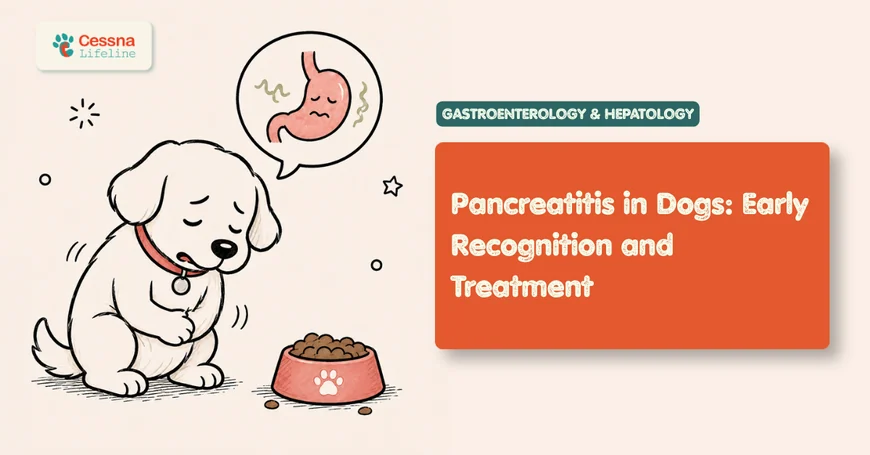
The smell reaches you first. Roast chicken scraps, the edge of a butter wrapper your dog found when no one was watching, a plate someone left on the counter. Then comes the quiet: the dog who won't eat dinner, the tucked posture, a hesitant walk toward the water bowl that stops halfway and doesn't finish. By morning there's vomiting. The dog that was fine yesterday is lying very still.
Pancreatitis is one of the most common gastrointestinal emergencies in dogs, and one of the most misread in its early hours. Reported mortality at referral centers ranges from 27% to 58% in severe cases, though the true figure across all severity levels is likely lower (Veterinary World, 2025). That range reflects something important: the outcome gap between mild and severe disease is enormous, and where on that spectrum a dog lands often depends on how quickly the problem is recognized and treated.
What to Know Pancreatitis in dogs spans from mild, self-limiting inflammation treatable with a day or two of supportive care to a systemic crisis involving acute kidney injury with mortality rates above 60%. The symptoms of pancreatitis in dogs, particularly the abdominal pain and vomiting combination, overlap with many other conditions, which makes early diagnostic testing essential. Most dogs who receive prompt treatment recover well. The dogs who struggle are typically those whose illness was managed at home until the window for easy intervention had closed.
What Is Pancreatitis in Dogs?
The pancreas is a small, pale gland tucked against the first section of the small intestine. It has two distinct jobs. Its endocrine function produces insulin and glucagon to regulate blood sugar. Its exocrine function produces digestive enzymes, including lipase, amylase, and proteases, that it delivers via a duct into the duodenum to break down food.
Under normal conditions, those digestive enzymes travel to the duodenum before they activate. Pancreatitis happens when they activate prematurely, inside the pancreas itself. Essentially, the organ begins digesting its own tissue. That triggers an inflammatory cascade that can remain localized to the pancreas or, in severe cases, spread to surrounding tissues, the liver, the kidneys, and the systemic circulation.
Clinically, pancreatitis is divided into acute and chronic forms. Acute pancreatitis develops rapidly and ranges from mild edematous disease to severe necrotizing inflammation. Chronic pancreatitis is a low-grade, smoldering condition that often goes undiagnosed for months because the signs are subtle: occasional loose stools, mild intermittent nausea, modest weight loss. Some dogs develop recurrent acute episodes on a background of chronic disease, which tends to be harder to manage than either form alone.
Worth noting: Chronic pancreatitis in dogs is substantially underdiagnosed because the clinical threshold for testing is typically an obvious acute presentation. Many dogs with intermittent nausea and mildly variable stool consistency that owners attribute to "sensitive stomach" are showing signs of low-grade pancreatic inflammation. By the time an acute flare occurs, they've often had subclinical disease for months.
differences between acute and chronic pancreatitis in dogs
How Do You Recognize Symptoms of Pancreatitis in Dogs?
The textbook presentation is familiar to most veterinary professionals: acute vomiting, abdominal pain, anorexia, and lethargy in a dog that recently ate a fatty meal. The reality is that presentations vary considerably, and the textbook version represents only a fraction of actual cases.
Vomiting is the most consistent sign, present in roughly 90% of dogs with confirmed pancreatitis. It's often repeated, sometimes frantic in the first hours, and doesn't reliably produce bile or food: many affected dogs vomit even when the stomach is empty. What accompanies the vomiting distinguishes pancreatitis from simple dietary indiscretion. In garden-variety dietary upset, a dog vomits once or twice and then wants breakfast. In pancreatitis, the vomiting tends to persist or return, the dog refuses food even after the acute vomiting subsides, and lethargy deepens rather than lifting.
Abdominal pain is the second hallmark. Dogs can't describe pain verbally, but they communicate it through behavior: reluctance to move, a hunched or tucked posture, resistance when you try to lift them, and sometimes guarding when the abdomen is touched. Some dogs show what veterinarians call the "prayer position": front legs and chest flat on the ground, hindquarters elevated, a posture that relieves pressure on the inflamed cranial abdomen.
Diarrhea appears in roughly 30 to 50% of cases. It's not universal, which is why its absence doesn't rule anything out. Low-grade fever, increased respiratory rate, and pale gums can appear in moderate to severe disease. In the most severe cases, dogs deteriorate rapidly: they stop drinking, become painful to touch anywhere on the abdomen, and develop signs of shock.
distinguishing pancreatitis from other causes of vomiting in dogs
Why Does Abdominal Pain Look Different in Dogs?
This is worth its own discussion, because abdominal pain is the symptom owners most commonly miss, and it's clinically one of the most important. Dogs don't cry out with visceral pain the way humans often do. They go quiet. They self-limit: they don't jump on the furniture, they don't initiate play, they stand at the bottom of stairs instead of bounding up. Owners interpret this as the dog "being off" or "not quite right" without recognizing it as pain behavior.
A 2024 study monitoring dogs with suspected pancreatitis noted that clinical signs consistent with abdominal pain, including reduced interactivity and decreased appetite, often preceded the more obvious gastrointestinal signs by several hours (JVIM, 2024). That window represents an opportunity: a dog showing behavioral changes and anorexia after a fatty meal deserves a veterinary call before the vomiting begins, not after.
The prayer position, while evocative and diagnostic when present, appears in a minority of pancreatitis cases and shouldn't be treated as a prerequisite. Most dogs with genuine pancreatic pain adopt subtler postures: slightly rounded backs, reluctance to lie flat on their sides, preference for sprawling with front legs extended. These are easy to miss in a relaxed home environment.
From the clinic: The most commonly missed early sign we see is the dog that stops jumping onto the couch the evening after a dietary indiscretion. Owners assume the dog is tired. In retrospect, after a diagnosis, they often realize the pain behavior started 12 to 18 hours before vomiting.
<figcaption>Approximate frequency of clinical signs in dogs with pancreatitis. Vomiting and anorexia are the most consistent; the "prayer position" (often cited as a hallmark) appears in only about a quarter of cases.</figcaption> </figure>
What Puts a Dog at Higher Risk?
Pancreatitis doesn't strike randomly, and understanding the risk landscape helps owners make better decisions about prevention and early action. The most established risk factors involve diet, body condition, breed, and concurrent disease.
The classic trigger is a high-fat meal, particularly a single large exposure after a period of normal eating. The Thanksgiving dinner scenario, where a dog receives rich table scraps or finds the turkey carcass, is genuinely common in emergency caseloads. A 2026 analysis in the Journal of the American Veterinary Medical Association offered a more nuanced view, suggesting the relationship between dietary fat and pancreatitis is more complex than a simple dose-response, with individual metabolic factors modulating risk (JAVMA, 2026). That said, abrupt high-fat exposure in a dog with pre-existing hyperlipidemia remains a consistent precipitating factor.
Obesity compounds the risk. One retrospective study found that 39 out of 101 dogs with confirmed acute pancreatitis were overweight, representing an estimated 1.3-fold increased risk in dogs with excess body condition. Adipose tissue isn't metabolically inert: it contributes to chronic low-grade inflammation that primes the pancreas for more severe responses to dietary triggers.
Certain breeds carry substantially elevated baseline risk. Miniature Schnauzers are the most studied: approximately 32.8% carry idiopathic hypertriglyceridemia, and those with a history of pancreatitis are 5 times more likely to have elevated triglycerides and nearly 15 times more likely to have moderate-to-severe elevations than age-matched controls (JVIM, 2011). Cocker Spaniels, Yorkshire Terriers, Dachshunds, and Poodles also appear in breed-predisposed lists consistently across studies.
Concurrent endocrine disease matters, too. Dogs with diabetes mellitus, hyperadrenocorticism (Cushing's disease), and hypothyroidism all carry elevated pancreatitis risk, likely through shared mechanisms involving lipid dysregulation. Certain medications, including potassium bromide, phenobarbital, and prolonged corticosteroid use, have also been associated with pancreatic inflammation in susceptible dogs.
How Do Vets Diagnose Canine Pancreatitis?
No single test confirms pancreatitis with complete accuracy, which is why diagnosis relies on combining clinical signs, laboratory markers, and imaging. Getting the combination right is more important than any individual result.
The Spec cPL (specific canine pancreatic lipase) assay is the current diagnostic standard. It measures the concentration of pancreatic lipase in serum with species-specific precision, making it more sensitive than total lipase activity, which can be elevated by many non-pancreatic conditions. Reference intervals place normal values below 200 µg/L; concentrations above 400 µg/L are consistent with pancreatitis, while the 200–400 µg/L zone is diagnostically ambiguous and requires clinical correlation. One major study found Spec cPL had approximately 75% overall diagnostic accuracy, better than the in-house SNAP cPL format (66%) but still imperfect (PMC5866996, 2018).
A 2025 study evaluated point-of-care quantitative cPL testing as an alternative to laboratory submission and found promising results for time-sensitive clinical decision-making (Frontiers in Veterinary Science, 2025). Rapid in-clinic testing matters: pancreatitis management benefits from early initiation, and waiting overnight for laboratory results delays treatment in acute presentations.
Abdominal ultrasound is the standard imaging modality. It can reveal a swollen, hypoechoic pancreas surrounded by hyperechoic mesenteric fat, which is a strong imaging signal. But sensitivity varies significantly with technique and disease severity: when all three ultrasound criteria must be present simultaneously, sensitivity drops to around 43% while specificity rises to 92% (PMC7096629, 2020). Mild pancreatitis frequently shows a completely normal ultrasound. The practical implication is that a normal abdominal ultrasound does not rule out pancreatitis.
Standard bloodwork fills in the clinical picture. Elevated liver enzymes (ALT, ALP) are common due to the pancreas's proximity to the liver and hepatic blood supply. Complete blood count and chemistry help identify concurrent disease, assess renal function as a prognostic indicator, and guide fluid therapy decisions.
<figcaption>Spec cPL and abdominal ultrasound have complementary diagnostic strengths. Neither test performs well enough alone; combining both improves diagnostic confidence.</figcaption> </figure>
What Does Treatment for Pancreatitis in Dogs Look Like?
For most cases, treatment is supportive rather than targeted: there's no drug that turns off pancreatic inflammation directly. The goals are to control pain, prevent dehydration, manage nausea, and create the metabolic conditions under which the pancreas can recover.
Intravenous fluid therapy is the cornerstone of acute pancreatitis management. It corrects dehydration, supports renal perfusion (critical given the AKI risk), and maintains effective circulating volume during the period when a dog may be losing fluid through vomiting and third-spacing. The fluid type, rate, and electrolyte supplementation are tailored to the individual dog's blood values and clinical status, which is why hospitalization is often required for anything beyond the mildest presentations.
Pain management is non-negotiable. Pancreatitis is genuinely painful, and uncontrolled pain has physiological consequences beyond discomfort: it increases stress hormone release, depresses immune function, and increases metabolic demand. Opioids (typically buprenorphine or methadone in hospital settings) are the standard of care for moderate to severe pain. Anti-nausea medication, most commonly maropitant (Cerenia), is given early and consistently in most cases.
The old guideline of strict food and water withholding for 24–72 hours ("nil per os" or NPO) has been substantially revised by current evidence. Early enteral nutrition, ideally within 48 hours of admission, is now recommended for all but the most severely ill dogs (PMC13011048, 2025). Enteral feeding maintains gut barrier integrity, prevents bacterial translocation, and is better tolerated than previously assumed. In one study, dogs receiving early enteral nutrition via esophagostomy tube showed fewer complications than those managed with parenteral nutrition. The practical shift: small, frequent feedings of a low-fat, highly digestible food start sooner than they did a decade ago.
A clinical shift worth knowing: The instinct to "rest the pancreas" by withholding food persists among many owners and some clinicians. Current evidence suggests the opposite: the gut needs nutrition to maintain its mucosal barrier, and starvation in a hospitalized pancreatitis patient accelerates intestinal compromise. Early feeding doesn't stimulate pancreatic secretion to a dangerous degree when the diet is appropriate. Feeding should restart as soon as vomiting is controlled, not after an arbitrary fasting period.
The Nutrition Question: What to Feed After Pancreatitis
The dietary management of pancreatitis is where the most persistent myths live. The key principle is fat restriction, and that principle is well-supported. A 2024 JAVMA review on nutritional management of pancreatitis confirmed that a permanently low-fat diet reduces recurrence risk, particularly in breeds with underlying hyperlipidemia (JAVMA, 2024).
What "low fat" means in practice: under 10% fat on a dry matter basis for dogs with a history of pancreatitis, and ideally under 8% for Miniature Schnauzers or dogs with documented hypertriglyceridemia. Commercial low-fat veterinary diets meet this threshold reliably. Home-cooked options require nutritional calculation to avoid inadvertently feeding a diet that's higher in fat than it appears. Plain boiled chicken, white rice, and sweet potato are low-fat and commonly used during early recovery, but they're nutritionally incomplete for long-term feeding.
Meal frequency matters as much as fat content. Four to six small meals daily reduces the pancreatic secretory burden at any given time compared to one or two large meals. This matters most in the recovery phase and in dogs with chronic pancreatitis prone to recurrence.
What doesn't matter as much as commonly thought: the protein source. There's no evidence that specific protein types (fish vs. chicken vs. beef) affect pancreatitis risk independently of fat content. Owners sometimes restrict protein unnecessarily while overlooking fat, which inverts the clinical priority.
choosing a low-fat diet for dogs with pancreatitis
When Does Pancreatitis Become a Crisis?
Most dogs with pancreatitis recover. But a meaningful subset deteriorates into multi-organ involvement, and knowing which signs indicate that escalation is happening can be the difference between timely intervention and a catastrophic outcome.
Acute kidney injury is the most dangerous complication. In a 2025 retrospective cohort study of 146 pancreatitis patients, overall mortality was 39.72%. When AKI was present, that figure climbed to 64.28%. When AKI coincided with other concurrent systemic diseases, mortality reached 70.58%, with median survival of just 4 to 7 days (PMC12668752, 2025). AKI in pancreatitis occurs through a combination of mechanisms: systemic inflammation, hypotension from fluid losses, and direct toxicity from circulating pancreatic enzymes. The clinical signs that flag impending renal compromise include reduced urination, progressive weakness, and a dog that stops responding to treatment after initial improvement.
Beyond AKI, severe pancreatitis can produce a systemic inflammatory response syndrome (SIRS) affecting multiple organ systems simultaneously. Pulmonary edema, disseminated intravascular coagulation, and septic peritonitis from pancreatic necrosis are rare but reported complications. A 2023 severity scoring study found that dogs with disease severity scores above 36 carried 85.5% mortality, while dogs scoring below 26 all survived, illustrating how steeply outcome diverges with disease severity.
Signs that a dog's pancreatitis is escalating beyond manageable outpatient disease: persistent vomiting that doesn't respond to anti-nausea medication, progressive abdominal pain despite analgesic treatment, worsening lethargy over 12 to 24 hours, reduced urination, pale or muddy gums, and a dog that seems to be declining despite treatment. Any of these in a dog already diagnosed with or suspected to have pancreatitis represents a specialist-level emergency, not a wait-and-see situation.
recognizing systemic inflammatory response syndrome in dogs
Frequently Asked Questions
What are the first signs of pancreatitis in dogs?
The earliest signs of pancreatitis in dogs typically appear within hours of a dietary trigger: sudden reluctance to eat, quieter-than-usual behavior, and a slightly hunched posture. Vomiting often follows within 12 to 24 hours, and abdominal pain becomes more apparent. A 2024 monitoring study noted that behavioral changes and anorexia frequently preceded the classic GI signs, making these early behavioral shifts important to recognize (JVIM, 2024).
Can dogs recover from pancreatitis at home?
Mild cases can be managed at home with dietary restriction, small meals, and close monitoring, but this requires veterinary guidance and a confirmed mild presentation. Dogs with repeated vomiting, clear signs of abdominal pain, lethargy that deepens over several hours, or any signs of dehydration need inpatient care. Home management without a diagnosis is risky because pancreatitis can escalate quickly, and the early phase, when fluid therapy is most impactful, is the least painful to the owner financially and the least risky for the dog.
How long does pancreatitis in dogs take to resolve?
Mild pancreatitis typically resolves in 3 to 5 days with appropriate treatment. Moderate disease may require 5 to 10 days of hospitalization. Severe pancreatitis, particularly with complications like acute kidney injury or necrosis, can require weeks of intensive care, and some dogs don't achieve full resolution. Dogs with chronic pancreatitis may experience recurrent acute episodes throughout their lives, managed through permanent dietary modification and early treatment of flares.
Is pancreatitis in dogs preventable?
Prevention focuses on controlling the main modifiable risk factors. Keeping a dog at a healthy body weight, maintaining a consistently low-fat diet, avoiding table scraps and dietary indiscretion, and managing concurrent endocrine diseases reduce risk substantially. In high-risk breeds, particularly Miniature Schnauzers, routine triglyceride testing can identify hyperlipidemia before it precipitates a pancreatitis episode. Approximately one-third of Miniature Schnauzers have idiopathic hypertriglyceridemia, and managing this with diet or medication reduces their pancreatitis risk meaningfully (JVIM, 2011).
Can pancreatitis cause diabetes in dogs?
Yes, though it's not the most common outcome. The endocrine cells of the pancreas that produce insulin sit adjacent to the exocrine tissue that becomes inflamed in pancreatitis. Severe or recurrent inflammation can damage enough endocrine tissue to impair insulin production, resulting in diabetes mellitus. Dogs that develop both chronic pancreatitis and diabetes are described as having "pancreatogenic diabetes" and tend to be difficult to regulate because ongoing pancreatic inflammation affects insulin requirements unpredictably. Regular blood glucose monitoring during and after severe pancreatitis episodes is warranted. diabetes in dogs: causes, signs, and management
The Hours That Matter
Pancreatitis in dogs is ultimately a race between recognition and deterioration. The disease has a wide outcome range, from the dog who misses dinner and feels better by tomorrow to the dog whose abdominal inflammation cascades into kidney failure within 72 hours. What separates those trajectories, more often than any other single variable, is how quickly the right care began.
The symptoms of pancreatitis in dogs are easy to underweight in their early, ambiguous phase. A dog who doesn't want dinner and moves a little slowly might just be tired. But a dog who ate something rich, hasn't eaten in 12 hours, is reluctant to jump up or lie flat, and feels subtly "off" is presenting a recognizable pre-vomiting pattern that warrants a call to the vet that evening, not a check-in the next afternoon.
Early treatment doesn't guarantee a good outcome in severe disease. But it gives the best possible foundation for one, and in pancreatitis, the foundation matters more than almost anything else.