Best Deshedding Tools for Dogs and Cats
Deshedding tools for dogs and cats only work if they match the coat. A vet's guide to undercoat rakes, slickers, and the shedding that signals disease.
Most deshedding tools for dogs fail for one reason: they were bought for a shedding problem rather than for a coat. A rake that strips a Husky's undercoat in ten minutes will do almost nothing on a Dachshund, and a blade-style dematting tool used on a thin single coat shaves hair the dog needed. The tool is not the variable that matters most. The coat is.
This guide covers what each category of deshedding tool physically does, which coat type it belongs on, how often to use it, and the point at which heavy shedding stops being a grooming question and becomes a reason to see a vet.
What to Know Shedding is driven largely by daylight hours, not temperature, which is why indoor dogs and cats under artificial light often shed moderately all year instead of in two defined seasonal moults. A deshedding tool removes loose dead hair that has already detached from the follicle. It cannot reduce how much a healthy pet sheds overall. If shedding has genuinely increased, or it comes with itching, odour, scaling, or bald patches, the cause is usually medical and a brush is the wrong intervention.
Why Do Dogs and Cats Shed So Much?
Hair grows in cycles. Each follicle has a growth phase, a transitional phase, and a resting phase, after which the hair detaches and is pushed out as a new shaft grows beneath it. Shedding is simply the visible end of that cycle, and in most dogs and cats it runs continuously across the body rather than in unison.
The size of the seasonal peaks depends on coat architecture. Double-coated breeds such as Huskies, Malamutes, German Shepherds, Samoyeds, and Golden Retrievers carry a dense woolly undercoat beneath a coarser outer guard coat. That undercoat is what gets released in large volumes during a moult, and it is the entire target of a deshedding tool. Single-coated breeds, including Poodles, Maltese, Yorkshire Terriers, and Bichons, have no undercoat to release, so they shed far less visibly, and a deshedding rake has nothing useful to remove from them.
Day length is the main trigger. Photoperiod changes drive the hormonal signalling that pushes a large proportion of follicles into the resting phase at once, which is why outdoor-housed pets in temperate climates moult hard in spring and autumn. Pets living mainly indoors under stable artificial lighting lose that signal, so their follicles cycle out of step with each other. The practical result is a pet that sheds a moderate amount every week of the year, which many owners misread as abnormal.
In clinical practice the most common "sudden shedding" complaint in India is not a disease at all. It is a double-coated pet that was kept indoors under air conditioning through a hot season, had its moult signal blunted, and then released a backlog of undercoat over a few weeks once it spent more time outdoors or the household cooled down. The giveaway is that the hair coming out is soft, pale undercoat with no broken shafts, the skin underneath is normal, and the pet is comfortable. A medical shedding problem almost always brings a skin change with it.
Which Deshedding Tools for Dogs Actually Work?
Each tool does one mechanical job. Matching that job to the coat is the whole decision. The same logic applies to cat deshedding tools, with one adjustment covered further down: feline skin is thinner, so the same tool gets used with less pressure.
| Tool | What it physically does | Belongs on | Avoid on | Frequency |
|---|---|---|---|---|
| Undercoat rake | Long rounded pins reach through the guard coat and pull out detached undercoat | Double coats: Husky, Malamute, GSD, Samoyed, Golden Retriever | Single coats; thin or sparse coats | 2 to 3 times weekly; daily in a moult |
| Slicker brush | Fine angled wires lift loose hair and break up early tangles near the surface | Medium and long coats, feathering, Doodle-type coats | Short smooth coats; bare bellies | 2 to 4 times weekly |
| Deshedding blade tool | A fine-toothed metal edge that strips and cuts some undercoat as it pulls | Heavy double coats, short sessions only | Single coats; puppies; any thin coat | Every 1 to 2 weeks maximum |
| Rubber curry or grooming mitt | Grips and lifts short loose hair by friction, and stimulates skin oils | Short smooth coats: Labrador, Beagle, Boxer, Indie dogs | Long coats, where it tangles | 2 to 3 times weekly |
| Wide-tooth metal comb | Finds and separates mats before any brush touches them | All medium and long coats, as the first pass | Nothing, if used gently | Before every grooming session |
| Pin brush | Finishes and smooths without stripping bulk | Long single coats, silky coats | As a primary deshedding tool, it removes little | 2 to 3 times weekly |
Two things in that table matter more than the rest. The wide-tooth comb should be the first tool that touches a long coat every single time, because a slicker dragged over an existing mat tightens it against the skin. And the blade-style deshedding tool, the category most aggressively marketed for shedding control, is the one with real potential to cause harm. It cuts as well as pulls. On a correct coat, used briefly, it is effective. Used weekly on a dog that does not have a heavy undercoat, it thins the coat the pet relies on for insulation and sun protection.
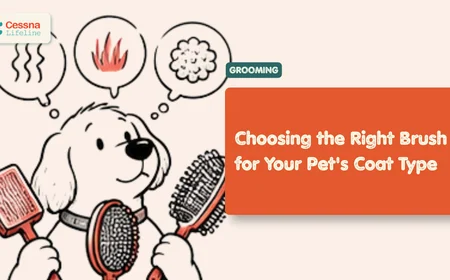
If you want one purchase to cover a double-coated dog, an undercoat brush of the rake type does more useful work than any dog deshedding brush sold on surface area alone. Width looks impressive in a product photo and matters far less than tooth length.
How Is an Undercoat Rake Different From a Slicker Brush?
They work at different depths, and that is the only distinction worth remembering.
A slicker brush has dense, fine, slightly bent wires set in a flat pad. It works close to the surface, lifting hair that has already worked loose and catching tangles while they are still soft. On a Golden Retriever's tail feathering or a Doodle's leg hair, a slicker is the right tool. Pressed hard against skin, those same fine wires cause the friction irritation groomers call brush burn, so the technique is light, repeated passes rather than force.
An undercoat rake has fewer teeth, set much longer and usually rounded at the tip. It is designed to pass through the guard coat without catching it and pull detached undercoat out from underneath. That is why it transforms a moulting Husky and does nothing for a Yorkshire Terrier: the Yorkie has no undercoat for the rake to find.
For a double-coated dog in a heavy moult the sequence is rake first to take out bulk, then slicker to tidy the surface and the feathering. Reversing that order means the slicker just mats the undercoat you were trying to remove.
Which Tool Suits Your Pet's Coat Type?
| Coat type | Examples | Primary tool | Supporting tools | Realistic goal |
|---|---|---|---|---|
| Heavy double coat | Husky, Malamute, Samoyed | Undercoat rake | Slicker for feathering; comb for mats | Large volume of undercoat removed in moult season |
| Moderate double coat | German Shepherd, Golden Retriever, Labrador | Undercoat rake | Rubber curry on the short areas | Steady weekly control, visible reduction in house hair |
| Long single coat | Maltese, Shih Tzu, Yorkshire Terrier | Wide-tooth comb | Slicker, then pin brush | Mat prevention, not shedding reduction |
| Curly or wool coat | Poodle, Doodle crosses | Wide-tooth comb | Slicker, professional clipping | Mat prevention; this coat traps shed hair instead of dropping it |
| Short smooth coat | Beagle, Boxer, Indie dogs | Rubber curry or mitt | Soft bristle finish | Lifts loose hair, spreads skin oils |
| Long-haired cat | Persian, Maine Coon | Wide-tooth comb | Fine slicker, used briefly | Mat prevention, fewer hairballs |
| Short-haired cat | Indian domestic shorthair | Grooming mitt or soft rubber brush | Fine comb for flea checks | Reduces ingested hair |
Curly coats deserve a note because they are consistently misunderstood. Poodles and Doodle crosses are often sold as non-shedding. They shed at a normal rate, but the curl holds the dead hair inside the coat instead of releasing it onto your sofa. Nothing lands on the floor and nothing looks wrong, right up to the point where the retained hair felts into a mat against the skin. These coats need combing more often than a Labrador needs brushing, not less.
How Often Should You Deshed a Dog or Cat?
Frequency follows the coat and the season rather than a fixed schedule.
A double-coated dog outside a moult does well on two or three rake sessions a week. During a moult, short daily sessions beat one long weekly session, because you are removing hair as it detaches instead of fighting an accumulated backlog. Ten focused minutes daily is more effective and far more comfortable for the dog than an hour on a Sunday.
Long single coats need combing at least every other day regardless of season, because their problem is matting rather than volume. Short smooth coats are fine with a curry twice a week. Cats that groom themselves well still benefit from brushing, since the hair they swallow is the hair that returns as hairballs.
The practical message in that pattern is that an indoor pet shedding a little every week is usually normal, and its owner needs a sustainable weekly routine rather than a seasonal blitz. That is really the answer to how to reduce dog shedding at home: not a better product, but a short routine you actually keep to. skin and coat health in pets
Can Deshedding Tools Damage Your Pet's Skin?
Yes, and it is a routine presentation in grooming-related consultations.
Three mechanisms cause most of it. Pressure is the first: a slicker held firmly and dragged repeatedly over the same area produces a red, tender, sometimes weeping patch of superficial skin trauma. Bony areas take the worst of it, so hips, elbows, and the base of the tail are where it shows up. The second is over-stripping, where a blade-style tool is used often enough to thin a coat that was not dense to begin with, leaving skin exposed to sun and losing the insulating layer that keeps the pet cool as well as warm. The third is working over an existing problem, where brushing an inflamed or infected area makes the pet painful and teaches it to fight grooming altogether.
Three habits prevent nearly all of it. Keep the tool nearly flat against the coat rather than digging the tips in, stop at the first sign of pink skin and do not return to that area in the same session, and run your free hand over the body before you start so that lumps, scabs, and mats are found by fingers rather than by wire.
When a dog that used to tolerate brushing starts objecting to it, owners generally assume a behavioural change. More often the sequence runs the other way. Something made the skin sore first, often flea allergy dermatitis or early atopic disease, and the brush then became the thing that hurt. Checking the skin before assuming stubbornness catches a fair number of dermatology cases at a stage where they are still easy to treat.
When Is Heavy Shedding a Medical Problem?
This is the distinction that matters most, and no brush addresses it.
Normal shedding leaves an even coat. The hair that comes out is whole, the skin beneath looks and smells normal, and the pet is comfortable throughout. Abnormal shedding usually brings a visible skin change with it.
Take these seriously:
- Bald or clearly thinning patches, especially if symmetrical on both flanks
- Hair that breaks mid-shaft rather than pulling out from the root
- Scaling, crusting, greasiness, or a noticeable odour
- Redness, spots, or darkened thickened skin
- Scratching, licking, or chewing that interrupts rest
- Shedding that increased sharply with no change in season, housing, or diet
- Any shedding alongside weight change, lethargy, or increased thirst
Several common conditions present first as a coat complaint. Flea allergy dermatitis remains the most frequent itch-and-shed cause in Indian households and is often missed because a single flea bite can drive weeks of reaction in a sensitised dog. Atopic dermatitis follows a seasonal or year-round itch pattern depending on the allergen. Hypothyroidism in dogs and hyperadrenocorticism both change coat quality and cause symmetrical hair loss without much itch, and both are diagnosed on bloodwork rather than examination alone. Demodicosis and dermatophytosis produce patchy loss that a brush will spread rather than resolve. Poor-quality nutrition or malabsorption shows up in a dull, brittle coat.
The practical rule: a grooming tool manages hair that has already died and detached. If the follicle itself is being damaged, or the skin is inflamed, or a hormone is driving the change, grooming only removes the evidence. persistent itching in pets
Does Professional Deshedding Do Anything You Cannot Do at Home?
For most coats a committed owner with the right two tools matches a salon result. Three situations are genuinely different.
A heavy moult on a large double-coated dog is the clearest case. A high-velocity dryer blows loose undercoat out of the coat in a way no hand tool reproduces, and it does it without the repeated mechanical pulling that makes long home sessions uncomfortable. The volume removed in one session is not something a rake achieves in a week.
Matted coats are the second. Once a mat sits tight against skin, brushing it out hurts and risks tearing. The correct answer is clipping beneath the mat, which needs clippers, restraint skill, and a look at the skin underneath, where moisture and infection often hide.
The third is the pet that has already learned to dread grooming. Rebuilding that takes short, low-stress, positively reinforced sessions, and for some pets sedation for one reset groom is kinder than months of a fight at home.
A professional session also functions as a skin examination. Groomers working through a coat systematically find lumps, ticks, ear discharge, and hot spots early, and that incidental finding rate is a real part of the value. Our grooming team works in the same building as our clinical team, so anything found during a groom gets looked at the same day rather than becoming next month's problem.
Frequently Asked Questions
What is the best deshedding brush for dogs?
It depends entirely on coat type. An undercoat rake is the most effective choice for double-coated breeds such as Huskies, German Shepherds, and Golden Retrievers. A rubber curry suits short smooth coats, and a wide-tooth comb followed by a slicker is correct for long single coats. Buy by coat, not by marketing claim.
How do I reduce dog shedding at home?
You cannot reduce how much a healthy dog sheds, only where the hair ends up. Frequent short brushing with the correct undercoat brush captures hair before it reaches your furniture, and a complete balanced diet supports normal coat quality. Treat any product promising to stop shedding with suspicion. If shedding has genuinely increased, the useful step is a veterinary skin examination, not a different brush.
What is the best brush for heavy shedding cats?
A fine-toothed metal comb suits most cats, including Persians and Maine Coons. It lifts loose hair and finds early mats without the irritation a firmly used slicker causes on thin feline skin. Keep sessions short. Brushing also cuts the hair a cat swallows while self-grooming, which means fewer hairballs.
Do cat deshedding tools differ from dog tools?
The tool categories are the same, but the technique is not. Feline skin is thinner and tears more easily, so cats need lighter pressure, shorter sessions, and finer teeth. Most cats do better with a comb or a soft rubber brush than with an aggressive rake, and blade-style deshedding tools are best avoided on cats entirely.
Can I use a deshedding tool on a puppy or kitten?
Use only soft tools, such as a grooming mitt or soft bristle brush, and keep sessions very short. Puppy and kitten coats have no significant undercoat to remove, so a rake or blade tool has nothing to do and simply risks the skin. The real goal at this age is habituation, teaching a young animal that handling and brushing are unremarkable, which makes every groom for the next decade easier.
Is shedding control possible with diet alone?
No. A complete, balanced diet supports normal coat quality, and correcting a genuine deficiency can improve a dull or brittle coat. Neither reduces the volume a healthy pet sheds, because that is set by the hair cycle. Supplements marketed for shedding control are treating a normal process.
Is it normal for my dog to shed all year round?
For a pet living mainly indoors, yes. Shedding is driven by changes in daylight rather than temperature, and steady artificial lighting desynchronises the hair cycle so follicles shed at different times instead of together. The result is continuous moderate shedding rather than two defined moults. What is not normal is a sudden increase, bald patches, or shedding with itching or skin changes.
When should I see a vet about shedding instead of buying a brush?
Book an appointment if you see thinning or bald patches, broken hairs, scaling, crusting, odour, redness, or scratching that disturbs sleep, or if shedding changed abruptly without a change in season or environment. Shedding alongside weight change, lethargy, or increased thirst suggests a hormonal cause such as hypothyroidism or Cushing's disease, both of which need bloodwork. In all of those cases grooming removes the evidence without treating the cause.
Next Steps
If your pet is a double-coated breed in a heavy moult, or you are fighting mats you cannot comb out, a professional deshedding session will clear in one visit what weeks of home brushing will not. Our groomers work alongside the clinical team, so if anything turns up in the coat or skin during the session, a vet can assess it the same day.
Book a professional deshedding or grooming session with the Cessna Lifeline grooming team, or arrange a consultation if the shedding pattern itself is what concerns you.
If you have already noticed bald patches, scaling, or persistent scratching, start with the clinical side rather than the grooming side. Those signs point to a skin or hormonal condition that needs a diagnosis before any grooming plan will help.