Dog Anal Gland Problems: Signs, Causes and Care
Dog anal gland problems cause scooting, licking and a fishy smell. Why glands fail to empty, when expression helps, and when scooting means something else.
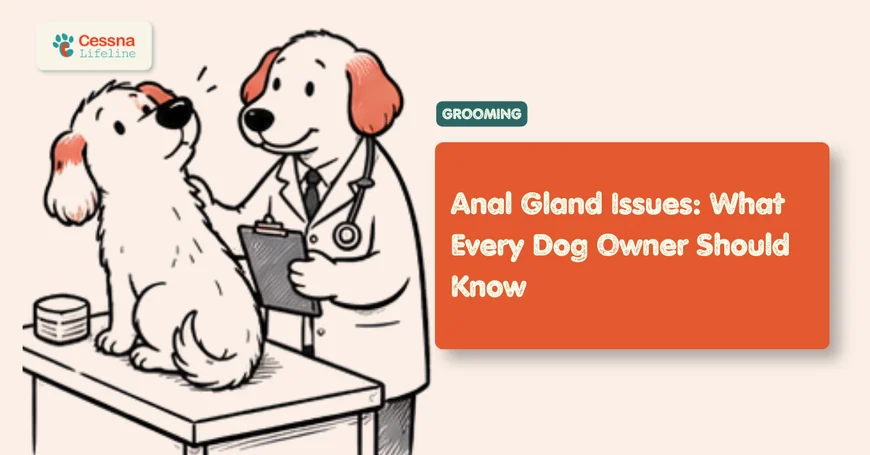
Dog anal gland problems are among the most common reasons a dog suddenly starts scooting across the floor, and among the most commonly mismanaged. The glands are two small sacs either side of the anus that normally empty on their own during defecation. When they do not, the contents thicken, the sac becomes uncomfortable, and the dog does exactly what you would expect: it drags its bottom along the ground trying to relieve the pressure.
The part owners most often get wrong is the response. Routine expression of healthy glands is not preventive care, and for some dogs it makes the problem worse. This guide covers what the glands actually do, why they fail, what the signs look like, when expression genuinely helps, and the other conditions that cause identical scooting.
What to Know Anal glands that empty normally need no intervention at all. Expressing healthy glands on a schedule is not maintenance and can contribute to recurrence, because repeated handling irritates the duct and the sac stops emptying naturally. Scooting also has several causes that have nothing to do with the glands, including tapeworm, flea allergy, perianal dermatitis, and food-responsive itch. A dog that keeps scooting after expression has usually been treated for the wrong problem.
What Do a Dog's Anal Glands Actually Do?
The anal sacs sit just inside the anus at roughly the four and eight o'clock positions. Each one holds a brownish, oily, strongly scented fluid that drains through a short duct onto the surface of the anus. The smell is distinctive, metallic and fishy, and most owners recognise it instantly once they know what they are smelling.
Their function is scent marking. The fluid carries individual identity information, which is why dogs are so interested in each other's rear ends and why the glands empty when a dog is frightened. That sudden sharp smell when a dog is startled at the vet is the anal sacs discharging, and it is normal.
Under normal conditions, the pressure of a firm stool passing the sacs compresses them and squeezes the contents out through the ducts. The whole system depends on that mechanical squeeze. Anything that reduces it, most obviously persistently soft stool, removes the mechanism that keeps the sacs empty.
Cats have anal glands too, and they get the same problems, just much less often. Feline anal gland disease is genuinely uncommon but does occur, and it presents as over-grooming at the base of the tail rather than scooting.
Why Is My Dog Scooting on the Floor?
Scooting in dogs means irritation or pressure in the perianal area. Full anal sacs are the most common cause, but assuming that without checking is how dogs end up having healthy glands squeezed repeatedly while the real problem continues.
| Cause | What points to it | What it needs |
|---|---|---|
| Full or impacted anal sacs | Fishy smell, licking at the rear, scooting relieved briefly by pressure | Expression, then address why they are not emptying |
| Anal sacculitis or abscess | Swelling, heat, pain, sometimes a discharging hole beside the anus | Veterinary care; antibiotics, drainage, pain relief |
| Tapeworm | Rice-grain segments around the anus or in bedding | Deworming, plus flea control since fleas transmit it |
| Flea allergy dermatitis | Itch concentrated over the rump and tail base, flea dirt in the coat | Flea treatment for all pets plus the environment |
| Perianal dermatitis | Red, inflamed skin around the anus, often with matted coat | Clip, clean, treat the inflammation and its cause |
| Food-responsive or atopic itch | Itch elsewhere too: feet, ears, belly. Scooting is one site among several | Dermatology workup, diet trial where indicated |
| Soft stool or chronic diarrhoea | Glands refill quickly because stool never compresses them | Fix the GI problem; the glands follow |
| Perianal mass | Visible lump, bleeding, straining, older dog | Urgent assessment; some are malignant |
The pattern that should prompt a rethink is the dog that is expressed, improves for a few days, and then scoots again. That cycle usually means either the glands are refilling abnormally fast because of soft stool, or the glands were never the problem.
The single most useful question in a recurrent anal gland case is about stool consistency, not about the glands. A dog with persistently soft stool has lost the mechanical squeeze that empties the sacs, so no amount of expression fixes the underlying mechanism. Resolve the stool consistency, often through a diet change or by treating a low-grade GI problem, and a large share of "chronic anal gland dogs" stop needing expression entirely. Treating the glands while ignoring the stool is treating the symptom.
What Are the Signs of Anal Gland Problems in Dogs?
The early signs are behavioural and easy to misread as a general itch.
- Scooting or dragging the rear along floor, carpet, or grass
- Licking or biting at the anus and base of the tail
- A sudden strong fishy or metallic smell, sometimes left on bedding
- Sitting down abruptly or seeming uncomfortable when seated
- Chasing or spinning toward the tail
- Reluctance to sit, or yelping on sitting
- Straining or discomfort when passing stool
- Visible swelling, redness, or a small wound beside the anus
- A brown oily residue on furniture or bedding
Scooting plus the smell makes full sacs very likely. Scooting without any smell widens the differential considerably, and tapeworm and flea allergy move up the list.
The signs that change the urgency are swelling, heat, obvious pain, a hole discharging pus or blood beside the anus, or a dog that is subdued, off its food, or feverish. Those indicate sacculitis or an abscess rather than simple fullness, and they need treatment the same day. An abscess that bursts leaves an open wound in a heavily contaminated area, and it hurts a great deal.
How Does a Vet Treat Impacted Anal Glands?
Assessment comes first, before any gland expression. A vet or trained nurse examines the perianal skin, then performs an internal expression, placing a finger inside the rectum to compress each sac against the thumb outside. That technique empties the sac properly and allows the contents to be assessed: normal fluid is thin and brown, impacted material is thick and pasty, and infected material is often yellow, green, or blood-tinged.
Internal expression is the reason this is worth having done properly rather than attempted at home. External squeezing, the method most home videos demonstrate, empties the superficial part of the sac at best and frequently leaves impacted material behind while bruising the tissue. It also misses the assessment, which is where the diagnosis comes from.
Treatment then follows what was found. Simple fullness needs expression and a plan for why it happened. Sacculitis needs expression plus anti-inflammatory and often antibiotic treatment, sometimes with material flushed into the sac directly. An abscess needs drainage, pain relief, and antibiotics. Repeated, well-documented problems that do not respond to management can be treated surgically by removing the sacs, which is effective but reserved for genuinely refractory cases because the surgery sits close to the nerves controlling continence.
Should I Express My Dog's Anal Glands at Home?
For most dogs, no, and the reasoning is worth understanding rather than just following.
Routine expression of glands that are emptying normally is not preventive care. Repeated handling irritates the duct and surrounding tissue, and there is a real pattern of dogs becoming dependent on expression after a period of unnecessary squeezing. If the glands work, leave them alone.
External expression done at home is also technically poor. Squeezing from the outside typically fails to empty the deeper part of the sac, which is where impacted material sits, and bruises the tissue in the attempt. Done forcefully it can rupture a sac, which converts a minor problem into an abscess and a wound.
Home expression also skips assessment. The useful information in an anal gland consultation is what came out, how much, and whether it was infected. That information is what distinguishes simple fullness from sacculitis and tells you whether antibiotics are needed.
The sensible position: if your dog genuinely has recurrent anal gland issues, confirmed by examination, and your vet has shown you the internal technique and judged your dog suitable, home expression at a sensible interval is reasonable. Otherwise this belongs with a professional, and the real work is finding out why the glands are not emptying.
How Do I Prevent Recurring Dog Anal Gland Problems?
Prevention targets the mechanism rather than the sacs.
Stool consistency does most of the work. A firm, well-formed stool compresses the sacs as it passes, which is the natural emptying mechanism. Persistently soft stool removes it. Getting consistency right, usually through an appropriate complete diet and sometimes added fibre, resolves a surprising number of recurrent cases on its own. Fibre should be introduced deliberately and reviewed, not added indefinitely on guesswork.
Body weight matters next. Overweight dogs carry more fat around the perianal region, which alters the anatomy and makes natural emptying less efficient. Weight reduction genuinely reduces recurrence. pet weight management
Then the contributing conditions. Allergic skin disease causes perianal inflammation that narrows the duct, so controlling the allergy improves gland drainage. Reliable year-round flea control removes both flea allergy and tapeworm from the picture. Keeping the coat around the anus clipped short in long-haired dogs prevents matting that traps fluid against the skin.
Dog anal gland care is therefore mostly not about the glands. It is stool, weight, skin, and parasites, with expression reserved for when the sacs genuinely need emptying.
When Is Scooting an Emergency?
Most scooting is uncomfortable rather than urgent. These change that:
- Obvious swelling beside the anus, especially if hot or very painful
- A hole beside the anus discharging pus or blood, which indicates a ruptured abscess
- A dog that is lethargic, off food, or feverish alongside perianal signs
- Straining to pass stool without success
- Significant bleeding from the anus
- A visible mass, particularly in an older dog
- Severe pain on sitting or on any contact with the area
Do not try to manage any of those at home. Expression will not drain an abscess, and squeezing an infected sac is painful and can rupture it. Those are red flag signs: see a vet the same day rather than waiting to see whether it settles. how to recognize a veterinary emergency early
Perianal abscesses are genuinely painful and deteriorate quickly in a contaminated area. In older dogs, perianal masses include tumours of the anal sacs that can behave aggressively, and a lump near the anus in a senior dog warrants prompt assessment rather than a watch-and-wait approach.
Frequently Asked Questions
Why is my dog scooting on the floor?
Most often the anal sacs are full and uncomfortable, especially if you notice a strong fishy smell. Scooting without that smell is just as likely to be tapeworm, flea allergy, perianal skin inflammation, or allergic itch affecting several sites. A dog that keeps scooting after expression has usually been treated for the wrong problem.
What are the signs of anal gland problems in dogs?
Scooting, licking or biting at the rear, a sudden fishy or metallic smell, discomfort on sitting, and a brown oily residue on bedding. Swelling, heat, obvious pain, or a discharging hole beside the anus indicate infection or an abscess rather than simple fullness, and those need same-day veterinary care.
How often should dog anal glands be expressed?
Only when they need it. Glands that empty normally during defecation should be left alone, because routine squeezing irritates the duct and some dogs become dependent on expression afterwards. Dogs with confirmed recurrent anal gland problems may need a regular interval, set by their vet based on examination rather than a fixed schedule.
Can I express my dog's anal glands myself?
It is best avoided unless your vet has examined your dog, confirmed recurrent anal gland issues, and shown you the internal technique. External squeezing usually fails to empty the deeper part of the sac, bruises the tissue, and can rupture a sac, which turns a minor problem into an abscess. It also skips the assessment that tells you whether infection is present.
Does fibre help with dog anal gland problems?
Often, because the mechanism depends on a firm stool compressing the sacs as it passes. Added fibre can improve stool consistency and restore natural emptying, which addresses the cause rather than the symptom. It should be introduced deliberately and reviewed with your vet, not added indefinitely, and it will not help if the real problem is allergic or infectious.
Is dog itching around the tail always the anal glands?
No. Itch concentrated over the rump and tail base is a classic flea allergy pattern, and tapeworm causes perianal irritation too. Dogs with atopic or food-responsive itch scratch several sites, so check the feet, ears, and belly as well. If the rear is the only itchy area and there is a fishy smell, the glands are the more likely answer.
Do cats get anal gland problems?
Yes, though far less often than dogs. Cats present differently, usually with over-grooming at the base of the tail or around the anus rather than scooting, and sometimes with a small swelling beside the anus. Because it is uncommon, feline perianal signs deserve examination rather than an assumption that the glands are responsible.
Next Steps
Keeping the coat around the anus clipped short, catching matting early, and spotting perianal redness are all part of a hygiene groom, and they remove several of the contributing factors in recurrent anal gland disease. Our groomers flag anything that looks inflamed so a vet can check it the same day.
Book a hygiene and grooming session with the Cessna Lifeline grooming team.
If your dog is scooting now, or you have seen swelling, a discharging wound, or a lump beside the anus, start clinically rather than with grooming. Expression without assessment treats a symptom and can miss an infection or a mass. Arrange a consultation, and treat swelling, pain, fever, or bleeding as same-day urgent.