Epilepsy in Dogs: Diagnosis and Long-Term Management (2026)
Idiopathic epilepsy affects 0.75% of dogs and is their most common chronic neurological disorder. Learn diagnosis, treatment options, and management in 2026.
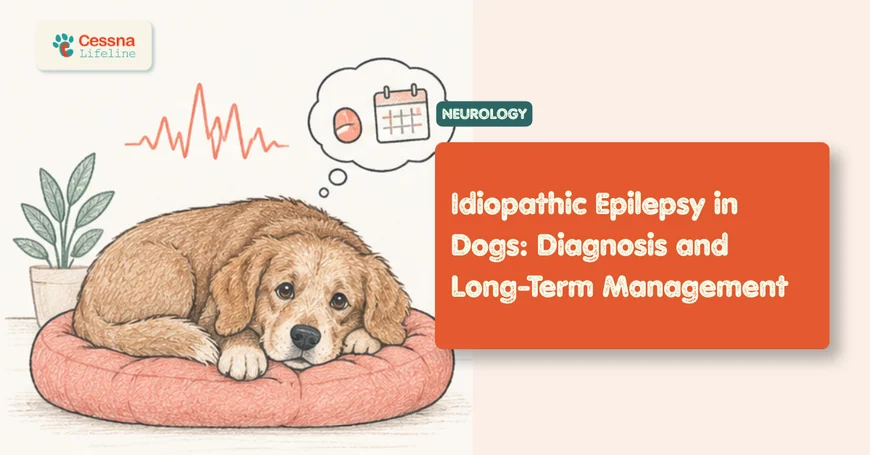
Watching your dog have a seizure is one of the most frightening experiences a pet owner can face. Your dog may collapse, paddle their legs, lose consciousness, or foam at the mouth. It's over in minutes. But the fear doesn't leave with it.
Epilepsy is the most prevalent chronic neurological disorder in dogs, affecting an estimated 0.6% to 0.75% of the canine population (Frontiers in Veterinary Science, 2024). The most common form, idiopathic epilepsy, has no identifiable structural cause. It's a diagnosis made by exclusion, supported by brain imaging and bloodwork, and managed with lifelong medication for most dogs.
The good news: with the right diagnosis and a consistent treatment plan, 60% to 70% of dogs with idiopathic epilepsy achieve good long-term seizure control (University of Missouri Veterinary Health Center). This guide covers everything you need to know. What epilepsy in dogs actually is. Why seizures start when they do. How the diagnosis is made. What medications work, and how to manage this condition day to day without losing your mind in the process.
Key Takeaways
- Epilepsy affects 0.6%-0.75% of dogs and is their most common chronic neurological disorder (Frontiers in Veterinary Science, 2024)
- Phenobarbital controls seizures in roughly 82% of dogs; combined with potassium bromide, control rates reach approximately 95%
- With proper treatment and monitoring, 60%-70% of IE dogs achieve good long-term seizure control (University of Missouri Veterinary Health Center)
- Status epilepticus carries a short-term mortality rate of 25%-38% and requires immediate emergency treatment (ACVIM Consensus, 2024)
Table of Contents
- What Is Idiopathic Epilepsy in Dogs?
- Why Is My Dog Suddenly Having Seizures?
- How to Recognize a Dog Seizure
- Which Dog Breeds Are Prone to Epilepsy?
- How Is Idiopathic Epilepsy Diagnosed?
- What Are the Treatment Options for Dogs with Epilepsy?
- Long-Term Management: What Every Owner Should Know
- What to Do During a Dog Seizure
- Life Expectancy and Prognosis for Dogs with Epilepsy
- Frequently Asked Questions
What Is Idiopathic Epilepsy in Dogs?
Idiopathic epilepsy (IE) accounts for approximately 69.8% of all seizure cases in dogs, making it the dominant form of seizure disorder in the species (ScienceDirect, 2024). "Idiopathic" simply means no identifiable cause. The brain itself looks structurally normal on MRI. There's no tumor, no inflammatory lesion, no vascular injury. The seizures originate from abnormal electrical firing patterns that current imaging cannot pinpoint.
This distinguishes IE from two other categories. Structural epilepsy is driven by a physical brain lesion. Reactive seizures are provoked by a metabolic crisis happening outside the brain, such as low blood sugar or liver disease.
The International Veterinary Epilepsy Task Force (IVETF) uses a three-tier confidence system for diagnosing IE:
- Tier I: Two or more unprovoked seizures at least 24 hours apart in an otherwise healthy dog aged 6 months to 6 years
- Tier II: Tier I criteria plus a normal interictal neurological examination, normal brain MRI, and normal cerebrospinal fluid analysis
- Tier III: Tier I and II criteria plus identification of electroencephalographic (EEG) abnormalities characteristic of a seizure disorder (IVETF Diagnostic Consensus, BMC Veterinary Research)
Most clinical diagnoses land at Tier II. EEG capability in veterinary settings remains limited, so Tier III is largely a research-level distinction.
What this means in practice: A dog diagnosed with "presumptive idiopathic epilepsy" at Tier I has not yet had imaging to rule out structural causes. Pushing for MRI before committing to lifelong medication is not overreach. It's how you confirm the diagnosis. Owners who secure MRI before starting medication consistently report greater confidence in the long-term management plan, because they know what they're treating.
<figcaption>Source: ScienceDirect, 2024 — Retrospective Study on Canine Epilepsy in Southern Brazil (n=116 dogs with seizures)</figcaption> </figure>
Why Is My Dog Suddenly Having Seizures?
Seizures appear without warning, but their underlying causes follow distinct patterns, and age is the most predictive variable. Idiopathic epilepsy is the most common cause of seizures in dogs, typically emerging between 6 months and 6 years of age, with a median diagnosis age of 3.3 years (Frontiers in Veterinary Science, 2026). A young, otherwise healthy dog who has a first seizure is far more likely to have IE than a structural brain problem.
The picture shifts with age. When a dog aged 7 or 8 has a first-ever seizure, the differential diagnosis expands significantly. Brain tumors, inflammatory brain disease, and metabolic conditions all move to the top of the list.
The four main causes of seizures in dogs:
- Idiopathic/genetic epilepsy: The most common form. No structural brain lesion. Often heritable. Appears in otherwise healthy dogs, usually under age 6.
- Structural epilepsy: Caused by a physical brain lesion, including tumors, inflammatory disease, infarcts, trauma, or developmental malformations.
- Reactive seizures: Triggered by metabolic crises outside the brain. Common causes include hypoglycemia, hepatic encephalopathy, electrolyte imbalances, renal failure, and toxin exposure (xylitol, certain pesticides, and chocolate).
- Unknown etiology: In some cases, despite a full workup, the cause remains unidentified.
Why does a seizure happen at all? A seizure is a sudden, uncontrolled burst of electrical activity across brain neurons. It's not a disease itself but a symptom of disrupted neurological function. When too many neurons fire simultaneously, normal brain activity is overwhelmed, and the body loses voluntary control.
Worth noting: Owners frequently describe the first seizure as coming out of nowhere. In retrospect, many report subtle behavioral changes in the hours beforehand: restlessness, clinginess, or apparent anxiety. These pre-ictal signals are worth logging in a seizure diary once management begins. They don't always precede a seizure, but when they do, they give owners a brief window to prepare.
In a large US primary care retrospective covering nearly 3 million dog visits over 4 years, only 0.03% of dogs carried an active idiopathic epilepsy diagnosis, far below the estimated true population prevalence of 0.6%-0.75%, indicating substantial underdiagnosis at the community practice level (Frontiers in Veterinary Science, 2026). When an owner reports a suspicious episode their vet never witnessed, formal seizure evaluation rather than reassurance is the more defensible clinical choice.
reactive seizures in dogs
How to Recognize a Dog Seizure
Generalized tonic-clonic seizures (the classic "grand mal") are what most owners picture, but they represent just one category of canine seizure events. A 2025 retrospective analysis of 254 dogs found that among referred epileptic patients, 47.2% presented with cluster seizures, 26.8% with single generalized seizures, and 26.0% with status epilepticus (MDPI Animals, 2025). Focal seizures, which involve only one brain hemisphere, can look far more subtle and are frequently mistaken for behavioral episodes.
The three phases of a seizure:
Pre-ictal phase (aura): Minutes to hours before the seizure itself, some dogs show behavioral changes: seeking the owner's attention, appearing anxious, hiding, or acting confused. Not every dog shows this.
Ictal phase (the seizure itself): This is the active seizure. It typically lasts 1 to 3 minutes. Generalized seizures involve loss of consciousness, rigid limb extension, rhythmic paddling, jaw chomping, salivation, and loss of bladder or bowel control. Focal seizures look different: facial twitching, repetitive blinking, localized limb jerking, or unexplained behavioral changes.
Post-ictal phase: After the seizure ends, the brain needs recovery time. Dogs may seem disoriented, temporarily blind, excessively hungry or thirsty, exhausted, or unusually clingy. This phase can last minutes to hours. It's distressing to watch but expected.
Two types requiring immediate emergency action:
- Cluster seizures: Two or more discrete seizures within 24 hours. Distinct from a prolonged single seizure.
- Status epilepticus (SE): A single seizure lasting more than 5 minutes, or recurrent seizures without full recovery between them. SE carries a short-term mortality rate of 25.3% to 38.5% in dogs and is a true veterinary emergency (ACVIM Consensus Statement, 2024).
If a seizure has not stopped after 5 minutes, don't wait. Call an emergency veterinary clinic immediately.
when to go to an emergency vet
<figcaption>Source: MDPI Animals, 2025 — Extended Analysis of Status Epilepticus and Cluster Seizures in Dogs (n=254 cases)</figcaption> </figure>
Which Dog Breeds Are Prone to Epilepsy?
Genetics drive a large share of idiopathic epilepsy cases, with some breed lines showing epilepsy incidence as high as 20% within affected families (IVETF Breed Consensus, BMC Veterinary Research). The Italian Spinone carries one of the highest documented breed-specific prevalences at 5.3% (95% CI: 4.0%-6.6%), based on a breed-wide survey of 1,192 UK dogs (PMC Genome-Wide Study, 2025). That's more than seven times the general population rate.
Breeds with well-documented IE predisposition:
| Breed | Key Notes |
|---|---|
| Beagle | Among the highest-risk breeds for IE |
| Belgian Shepherd (Tervuren, Malinois) | Identified genetic locus for epilepsy |
| Border Collie | IE common; quality of life often more affected than other breeds |
| Labrador Retriever | Most represented in US primary care epilepsy studies |
| Golden Retriever | Frequently seen in epilepsy referral populations |
| German Shepherd | Long-documented IE susceptibility |
| Boxer | Frequently idiopathic with no identifiable cause found on workup |
| Bernese Mountain Dog | Susceptible to both IE and structural epilepsy |
| Keeshond | High-risk breed with suspected polygenic inheritance |
| Dachshund | Seizure susceptibility linked to chondrodystrophy genetics |
| Siberian Husky | High representation in US primary care epilepsy data |
Does this mean mixed-breed dogs don't develop epilepsy? No. But they're less likely to carry the concentrated genetic load that purebred lines accumulate through generations of selective breeding. If you own a high-risk breed and your dog has its first seizure at age 2 or 3, that warrants a prompt veterinary workup rather than a wait-and-see approach.
Genetic epilepsy in purebred dogs can reach family-level incidence rates of 20%, far above the 0.6%-0.75% seen in the general canine population (IVETF Breed Consensus, BMC Veterinary Research). For high-risk breeds such as the Beagle, Border Collie, and Belgian Shepherd, epilepsy evaluation should be part of any neurological workup rather than a diagnosis of exclusion reached after years of unmanaged seizures.
canine genetic testing breed-specific health conditions
How Is Idiopathic Epilepsy Diagnosed?
The diagnostic workup for a dog presenting with seizures is designed to systematically exclude other causes before attributing events to idiopathic epilepsy. Reaching Tier II confidence, which most veterinary neurologists target before starting long-term medication, requires three normal results: interictal neurological exam, brain MRI, and cerebrospinal fluid (CSF) analysis. That process doesn't happen quickly, and it isn't cheap. But skipping it has consequences.
Step-by-step diagnostic approach:
1. Full history and physical examination The veterinarian needs to know the dog's age at first seizure, seizure frequency and duration, any family history of epilepsy, vaccination status, and potential toxin exposure. This context alone narrows the differential significantly.
2. Baseline bloodwork and urinalysis Complete blood count, serum biochemistry panel, and urinalysis rule out reactive seizures from metabolic causes: liver disease, kidney disease, hypoglycemia, electrolyte abnormalities, and infectious diseases.
3. Brain MRI MRI is the gold standard for detecting structural brain lesions. Conventional 1.5T MRI is the standard of care in veterinary neurology; advanced techniques including diffusion-weighted imaging and voxel-based morphometry are increasingly available at academic referral centers (Frontiers in Veterinary Science, 2024). Typical cost falls between $2,500 and $3,500, with some specialty clinics charging up to $6,000 (PetMD, Pawlicy Advisor).
The IVETF specifically recommends MRI before a presumptive IE diagnosis for dogs with:
- Seizure onset before 6 months or after 6 years of age
- Neurological abnormalities on interictal exam
- Status epilepticus or cluster seizures as the presenting event
- Drug-resistant epilepsy despite appropriate monotherapy
4. Cerebrospinal fluid (CSF) analysis CSF is collected under the same anesthesia as MRI. Analysis looks for inflammatory, infectious, or neoplastic changes that imaging alone may miss.
5. Additional testing when indicated Infectious disease titers (distemper, neosporosis, toxoplasmosis), bile acids testing for suspected hepatic disease, or genetic testing for breed-specific mutations may be added based on initial findings.
The International Veterinary Epilepsy Task Force recommends MRI and CSF analysis before diagnosing idiopathic epilepsy in any dog with seizure onset before 6 months or after 6 years, inter-ictal neurological deficits, or drug-resistant seizures (IVETF Diagnostic Consensus, BMC Veterinary Research). Treating a brain tumor or inflammatory disease as idiopathic epilepsy delays interventions that could meaningfully extend the dog's life.
dog MRI explained veterinary neurology referral
What Are the Treatment Options for Dogs with Epilepsy?
Phenobarbital remains the most widely used first-line antiepileptic drug in dogs, achieving greater than 50% seizure reduction in approximately 82% of treated dogs, with 31% becoming fully seizure-free (PMC Systematic Review, IVETF). It's inexpensive, well-studied, and given orally twice daily. The tradeoffs are hepatotoxicity risk with long-term use and sedation during the initial titration period.
First-line options (per ACVIM/IVETF consensus):
- Phenobarbital: ~82% of dogs achieve at least 50% seizure reduction. Requires serum level monitoring and liver enzyme panels every 6 months.
- Potassium bromide (KBr): Controls seizures in 70%-80% of dogs. Used as monotherapy in dogs who can't tolerate phenobarbital, or added on for dogs with inadequate response to phenobarbital alone.
- Imepitoin: A partial benzodiazepine receptor agonist with a favorable side-effect profile. More commonly used in Europe as a first-line option.
Second and third-line options:
- Levetiracetam: As a third-line drug after phenobarbital and KBr failure, approximately 38.5% of dogs respond with at least 50% seizure reduction (ScienceDirect). Earlier use in the treatment sequence typically produces better results. Three-times-daily dosing is a practical challenge for some owners.
- Zonisamide: A 2024 prospective study of 56 dogs with newly diagnosed IE found that 76% achieved at least 50% seizure reduction and 55% reached complete seizure freedom with zonisamide monotherapy. Side effects were mild and temporary in only 13% of dogs (PMC Zonisamide Study, 2024). This makes it an increasingly compelling option for dogs where phenobarbital's liver risk is a concern.
Combination therapy: When phenobarbital alone doesn't provide adequate control, adding KBr can raise seizure control rates to approximately 95% (PMC Management Study). This combination remains the most established two-drug protocol in canine epilepsy.
When should treatment start? The ACVIM recommends initiating antiepileptic therapy when seizures occur more than once per month, when cluster seizures or SE have already occurred, or when the post-ictal period is severe and prolonged.
In a study evaluating phenobarbital and potassium bromide as add-on therapy for dogs refractory to imepitoin, phenobarbital achieved a responder rate of 79% versus 69% for potassium bromide, reinforcing phenobarbital's position as the preferred escalation agent when first-line monotherapy fails (PubMed, Add-On Therapy Study). Dogs whose seizures fail to respond to imepitoin benefit most from phenobarbital rather than bromide as the next treatment step.
<figcaption>Sources: PMC IVETF Systematic Review; PMC Zonisamide Monotherapy Study, 2024; ScienceDirect Levetiracetam Study</figcaption> </figure>
Long-Term Management: What Every Owner Should Know
Approximately 60%-70% of dogs with idiopathic epilepsy achieve good seizure control with properly monitored antiepileptic therapy (University of Missouri Veterinary Health Center). "Good control" doesn't always mean zero seizures. For many dogs, the realistic target is reducing seizure frequency and severity to a level that preserves quality of life. What does day-to-day management actually require?
Keep a seizure diary. Record the date, time, duration, seizure type, and any potential triggers for every episode. Most veterinary neurologists now provide an app or template for this. The diary is the most useful single tool your vet has for adjusting dosing and evaluating whether the current medication is working.
Understand the monitoring schedule. Dogs on phenobarbital need serum drug level checks 2 weeks after starting and after every dose change, then every 6 months once stable. Liver enzyme panels (ALT, ALP, albumin) should accompany those checks, since long-term phenobarbital carries hepatotoxicity risk. Dogs on potassium bromide need bromide level testing at similar intervals.
Watch for medication side effects. Early phenobarbital side effects, including sedation, increased thirst, appetite, and urination, typically resolve within 2 to 4 weeks. Persistent sedation beyond 4 to 6 weeks suggests the dose may be too high. Potassium bromide can cause sedation, ataxia (a wobbly gait), and, in some dogs, increased pancreatitis risk.
Have an emergency protocol ready before you need it. Work with your vet to obtain rectal or intranasal diazepam or midazolam for home use. If your dog has a history of cluster seizures, an at-home benzodiazepine can stop a cluster before it escalates to SE. The 2024 ACVIM Consensus Statement recommends intranasal midazolam as the preferred first-line home intervention for prolonged seizures and cluster events, replacing older rectal diazepam protocols in many clinical settings (ACVIM Consensus Statement, 2024).
Never abruptly stop antiepileptic medication. Sudden discontinuation can trigger rebound seizures or status epilepticus. Any dosing change must be gradual and supervised by your veterinarian.
The 2024 ACVIM Consensus Statement recommends intranasal midazolam as the preferred home rescue drug for cluster seizures and prolonged seizures, replacing older rectal diazepam protocols in many clinical settings (ACVIM Consensus Statement, 2024). Dogs on phenobarbital should have serum drug levels and liver enzyme panels checked every 6 months to monitor for hepatotoxicity before clinical signs develop.
home care for dogs with chronic illness
What to Do During a Dog Seizure
The most important action during your dog's seizure is: stay calm and keep your dog safe. Resist the instinct to restrain. A seizing dog doesn't know you're there, and physical restraint can cause injury to both of you.
During the seizure:
- Clear the area of hard furniture, stairs, or sharp objects
- Gently cushion the head with a folded towel or your hand (don't grip)
- Do not put anything in the dog's mouth. Dogs don't swallow their tongues. Fingers in a seizing mouth will be bitten.
- Time the seizure from start to finish
- Record a video if it's safe to do so. This footage is invaluable for your veterinarian.
- Dim the lights and reduce noise if you can do so quickly
- Stay close and speak calmly when the seizure ends
When to go to an emergency vet immediately:
- The seizure lasts more than 5 minutes (status epilepticus)
- Two or more seizures occur within 24 hours (cluster seizures)
- Your dog doesn't return to near-normal within 30 minutes after the seizure ends
- This is your dog's first-ever seizure
- Your dog's body temperature is elevated during the post-ictal period
Status epilepticus kills. The short-term mortality rate is 25.3% to 38.5%, with 29.8% of affected dogs dying or being euthanized during the hospitalization period in which the SE episode occurred (ACVIM Consensus Statement, 2024). Time to treatment is the critical variable. Every minute of uncontrolled SE increases the risk of permanent neurological damage.
Risk factors independently associated with short-term mortality in canine status epilepticus include increased patient age, SE developing before hospital arrival, and an underlying potentially fatal etiology (ACVIM Consensus Statement, 2024). Dogs who receive benzodiazepines at home before transport arrive in a pharmacologically more favorable state, reducing the window of uncontrolled seizure activity and its neurological sequelae.
dog emergency guide home emergency kit for pets
Life Expectancy and Prognosis for Dogs with Epilepsy
Dogs with well-controlled idiopathic epilepsy live lives comparable to the general dog population, with an average life expectancy of approximately 9.2 years (PMC Risk Factors Survival Study, Journal of Veterinary Internal Medicine). Well-managed IE dogs can reach 11 years. The disease itself doesn't shorten life when seizures are controlled. What determines prognosis is how the disease behaves and responds to treatment.
Prognosis modifiers:
| Factor | Impact on Prognosis |
|---|---|
| Seizure type at first presentation | Cluster or SE at onset carries a poorer prognosis |
| Age at onset | Middle-aged onset typically better than very early or very late |
| Response to first drug | Good responders have significantly better long-term outcomes |
| Breed | Border Collies show lower quality-of-life scores even with seizure control |
| Owner compliance | The largest modifiable factor in long-term outcomes |
Dogs with structural epilepsy fare measurably worse, averaging approximately 5.8 years of survival after diagnosis. Those who develop complications, including frequent cluster events or recurrent SE, average around 8 years (PMC Risk Factors Study).
Quality of life research is encouraging. A survey study of owners of epileptic dogs found most owners rated their dog's quality of life positively, with seizure frequency and severity identified as the strongest drivers of treatment satisfaction (PMC Quality of Life Pilot Study, 2023). The condition is manageable. The emotional and financial burden on owners is real. But most families who engage consistently with the management process describe their dogs as living full lives between episodes.
Quality-of-life research on epileptic dogs shows most owners rate their dog's life positively, with seizure frequency and severity as the primary drivers of treatment satisfaction (PMC Quality of Life Study, 2023). Dogs with well-controlled idiopathic epilepsy have a mean life expectancy of approximately 9.2 years, comparable to the general dog population, provided cluster seizures and status epilepticus are effectively prevented or rapidly treated.
quality of life for dogs with chronic illness
Frequently Asked Questions
What is idiopathic epilepsy in dogs, and how common is it?
Idiopathic epilepsy is the most common chronic neurological disorder in dogs, affecting an estimated 0.6% to 0.75% of the canine population (Frontiers in Veterinary Science, 2024). It's defined as recurrent, unprovoked seizures with no identifiable structural brain cause. Diagnosis is made by excluding other causes through MRI, bloodwork, and CSF analysis. Some breeds, including Beagles, Border Collies, and Labrador Retrievers, carry significantly higher risk than the general dog population.
When should I start medication for my dog's epilepsy?
The ACVIM recommends starting antiepileptic drug therapy when your dog has more than one seizure per month, when cluster seizures or status epilepticus has occurred, or when the post-ictal period is severe and prolonged. A single isolated seizure in an otherwise healthy young dog may not immediately require medication. With early, appropriate treatment, 60%-70% of IE dogs achieve good long-term seizure control (University of Missouri Veterinary Health Center). Your veterinarian will weigh seizure frequency, severity, and the risks of starting lifelong treatment against the risk of waiting.
antiepileptic drugs for dogs
Can a dog with epilepsy live a normal life?
Yes, most can. Dogs with well-controlled idiopathic epilepsy have a life expectancy comparable to the general dog population, around 9.2 years, and well-managed cases can reach 11 years. With appropriate medication and regular monitoring, 60%-70% of IE dogs achieve good seizure control. Quality-of-life research consistently shows that owners of well-managed epileptic dogs report positive outcomes for their pets.
What are the side effects of phenobarbital in dogs?
Common early side effects include sedation, increased thirst, increased appetite, and increased urination. These typically resolve within 2 to 4 weeks. Long-term use carries hepatotoxicity risk, which is why serum drug levels and liver enzyme panels are checked every 6 months. If liver values become significantly elevated, your vet may taper phenobarbital and add a different antiepileptic drug. Phenobarbital should never be stopped abruptly, as sudden discontinuation can trigger severe rebound seizures.
What does status epilepticus look like, and why is it dangerous?
Status epilepticus is either a single seizure lasting more than 5 minutes or a series of seizures without full recovery between them. The dog may be continuously convulsing or cycling through rapid successive episodes. It's a neurological emergency. Short-term mortality is 25.3% to 38.5%, with nearly 30% of affected dogs dying or being euthanized during the hospitalization episode (ACVIM Consensus Statement, 2024). If your dog's seizure doesn't stop within 5 minutes, go to an emergency clinic immediately.
Are there newer or alternative treatment options for refractory canine epilepsy?
Evidence for alternatives is limited but growing. A 2025 exploratory study found cannabidiol (CBD) as an adjunct treatment reduced seizure frequency in some dogs with refractory epilepsy (PMC CBD Study, 2025). Zonisamide monotherapy has shown strong results in newly diagnosed IE (76% achieved at least 50% reduction; 55% became seizure-free) and offers a favorable side-effect profile compared to phenobarbital. Dietary medium-chain triglyceride (MCT) oil supplementation is under active investigation. None of these approaches have displaced established first-line drugs in any current veterinary consensus guideline. Always discuss any supplement or alternative treatment with your veterinarian before adding it alongside prescription medication.
Conclusion
Idiopathic epilepsy in dogs is manageable, not curable. The diagnostic process requires ruling out structural and metabolic causes before attributing seizures to a genetic epilepsy syndrome. Treatment, typically beginning with phenobarbital, achieves meaningful seizure control in the majority of dogs. The long-term commitment is real: twice-daily medication, regular bloodwork, emergency protocols, and careful record-keeping.
But the payoff is a dog who lives a full life. Research on life expectancy and quality of life consistently shows that owners who engage with the management process report positive outcomes. Epilepsy in dogs is better understood now than at any point in veterinary history, and research continues to advance treatment options. For most dog owners, the immediate priority is securing a proper diagnosis, choosing the right first medication with their vet, and building an emergency plan before the next seizure happens.