What Happens During an Emergency Vet Visit?
Triage decides the order of care, so arrival time matters less than how sick your pet is. What the first ten minutes involve, which tests get run, and what you will be asked.
The answer to what to expect emergency vet visit begins with one thing that surprises almost every owner: you will not be seen in the order you arrived. Within a minute or two of walking through the door, a nurse or vet will look at your pet, check a handful of specific things, and sort your pet into a priority category. That sorting decision governs everything that follows. The sickest animal in the building is seen first, every time, regardless of who parked first.
Understanding that one rule removes most of the distress from an emergency visit. The hardest part of the experience is rarely the diagnosis. It is the stretch of time where nobody has explained what is happening, your pet has been carried through a door you cannot follow them through, and the room is full of other people's worry. None of that is a sign that things are going badly. It is what a functioning emergency service looks like from the waiting room.
This article covers the sequence a real emergency visit follows, from the triage assessment at the door through to the admission conversation, including what the vet is checking during those first few minutes, which tests get run and why, what you should bring, what you will be asked, how long it all takes, and the signs that mean you should stop reading and leave for the hospital now.
What to Know Emergency patients are seen in order of clinical urgency, not arrival time. Triage takes under two minutes and checks gum colour, pulse quality, breathing effort, temperature and consciousness. Critical patients are taken straight to the treatment area for oxygen and intravenous access before any paperwork. Stabilisation comes before diagnosis, so pain relief and fluids often start before anyone knows the cause. Do not give human painkillers, do not attempt to induce vomiting, and do not delay for a suspected snake bite, breathing difficulty, a straining male cat, bloating with unproductive retching, seizures, heatstroke or a bite wound from an unknown animal. Those need veterinary attention immediately.
What Happens in the First Few Minutes After You Arrive?
The moment you reach the desk, someone will stop what they are doing and look at your pet rather than at your form. Three questions usually come first: what happened, when did it happen, and is your pet breathing normally. Answer them briefly. Detail comes later.
While you talk, a nurse is carrying out a triage examination. It takes well under two minutes and covers a small set of findings that reliably separate an animal who can wait from one who cannot:
- Mucous membrane colour. The gums should be pink. Pale or white suggests blood loss or poor circulation. Blue or grey suggests the blood is not carrying enough oxygen. Brick red appears in sepsis and heatstroke. Yellow suggests jaundice.
- Capillary refill time. Press the gum, release, and watch the colour return. Slow refill points to shock.
- Pulse quality. The femoral pulse is felt on the inside of the thigh. Weak, thready or absent pulses are an emergency on their own.
- Respiratory rate and effort. Rate matters less than effort. Open-mouth breathing in a cat, a stretched-out neck, flared nostrils or abdominal heaving all signal respiratory distress.
- Temperature. Both ends of the range are dangerous. Heatstroke and sepsis push it up; shock and collapse push it down.
- Level of consciousness. Alert, dull, non-responsive, or actively seizing.
If those findings are reassuring, you will be asked to take a seat and complete a registration form while the case ahead of you is finished. If they are not, your pet will be taken through to the treatment area immediately and the paperwork will happen afterwards or alongside.
Why do they take your pet away from you?
This is the part owners find hardest, so it deserves a direct explanation. The treatment area is where the oxygen supply, the intravenous catheters, the monitoring equipment, the warming devices and the drug cupboard are. A critical patient needs all of them within seconds of each other, and often needs three pairs of hands working at once. There is no version of that room that accommodates an owner safely.
Being taken straight through is not a signal that your pet is dying. It is a signal that the team has decided minutes matter. A cat in respiratory distress, a dog in shock after a road accident, an unvaccinated puppy collapsed with suspected parvovirus and a pet mid-seizure all go through that door. Many of them walk out again.
You will be asked for consent to begin emergency stabilisation before a diagnosis exists. Saying yes to that is normal and sensible. It covers oxygen, a catheter, fluids, pain relief and the first round of bedside tests, not major procedures.
How Does Triage Decide Who Gets Seen First?
Veterinary emergency rooms run a priority system similar to a human A and E department. The categories differ slightly between hospitals, but the logic does not.
| Priority | Typical presentation | What happens on arrival |
|---|---|---|
| Immediate | Not breathing, no pulse, active severe bleeding, mid-seizure, blocked male cat, bloat with retching, snake bite | Carried straight to the treatment area; stabilisation starts within seconds |
| Urgent | Respiratory difficulty, suspected poisoning, heatstroke, collapse, pale gums, severe pain, dystocia | Assessed within minutes, ahead of anyone stable |
| Prompt | Repeated vomiting, open wounds, lameness with trauma, bloody diarrhoea in a puppy, eye injury | Seen after the above, usually with a short wait |
| Stable | Single episode of vomiting, mild lameness, skin problem, worried owner with a well animal | May wait while sicker patients are stabilised |
| Non-urgent | Vaccination, nail trim, long-standing problem that has not changed | Often redirected to a routine appointment |
Two things about this system need saying plainly. The first is that triage is dynamic. Your pet is not sorted once and forgotten. If a stable patient starts to deteriorate in the waiting room, their priority changes. Tell the desk if anything changes while you wait, including vomiting, worsening breathing, or your pet becoming quieter.
The second is that a long wait is usually good news about your own pet and bad news about someone else's. Owners sometimes read a two-hour wait as neglect. In an emergency room, it almost always means your animal is the most stable one in the building.
Which Signs Mean You Should Leave for the Hospital Right Now?
Some presentations do not tolerate a wait-and-see approach. If any of the following apply, stop assessing and travel.
- Difficulty breathing, open-mouth breathing in a cat, or gums that look blue, grey, white or brick red
- Collapse, inability to stand, or non-responsiveness
- A seizure lasting more than two or three minutes, or more than one seizure in a day
- A male cat straining in the litter tray, crying, or producing nothing. Urethral obstruction becomes life-threatening within hours
- A large or deep-chested dog with a swollen, tight abdomen, retching without bringing anything up, and restlessness. This pattern suggests gastric dilatation and volvulus
- Suspected snake bite, including a sudden painful swelling on the face or a limb during the monsoon months
- Heatstroke signs after exertion or time outdoors in the Bengaluru summer: frantic panting, bright red gums, staggering, vomiting, collapse
- Any bite wound from an unknown dog, cat or monkey, and any contact with a bat. Rabies remains present across India, and exposure is a medical emergency for your pet and for you
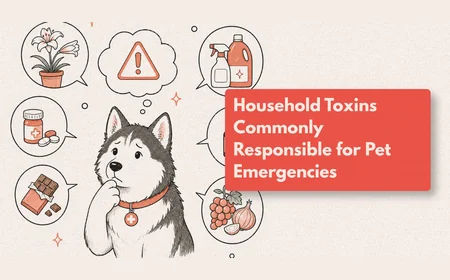
- Known or suspected ingestion of rat poison, organophosphate insecticide, paracetamol, chocolate, grapes, onion, xylitol or lilies
- Bleeding that does not stop with five minutes of firm pressure
- A straining, unproductive labour, or more than about half an hour of hard contractions with no puppy or kitten delivered
- Pale gums with weakness, which can accompany internal bleeding or the severe anaemia seen with tick-borne disease
- A puppy with bloody diarrhoea and vomiting, particularly if vaccinations are incomplete
- An eye that is suddenly painful, cloudy, bulging or has visible injury
- Pain severe enough to change behaviour: crying out, hiding, refusing to be touched, or an arched back
If you are unsure, telephone the hospital and describe what you are seeing. A short call costs nothing and the person answering it does this all day. Err towards going in. Owners almost never regret arriving at a hospital with a pet who turns out to be fine.
How Should I Get My Pet There Safely?
The journey matters, and a few decisions made in the first five minutes change how the patient arrives.
Telephone ahead if you can, even if you leave immediately after hanging up. A hospital told that a blocked cat or a suspected bloat is ten minutes away will have a kennel, oxygen, a catheter and a drawn-up drug tray waiting. In Bengaluru traffic that call is often worth more than the time saved by not making it.
Keep the car cool and the windows closed with the air conditioning on, particularly for a suspected heatstroke case, a brachycephalic breed such as a Pug or a Shih Tzu, or any animal in respiratory distress. Heat and anxiety compound each other quickly.
Transport cats in a carrier, never in arms. A frightened cat in a car is a bite and escape risk, and a carrier with a towel over it is calmer than a lap. Carry a large dog on a blanket used as a stretcher with one person at each end if the dog cannot walk, and support the spine in a line if there has been a fall or a road accident.
What not to do deserves as much space:
- Do not give human painkillers. Paracetamol is lethal to cats and unsafe for dogs at guessed doses. Ibuprofen and aspirin can cause gastric ulceration and kidney injury in pets. These are among the commonest ways a manageable problem becomes two problems.
- Do not make your pet vomit unless a vet has told you to over the phone. It is dangerous after caustics and petroleum products, and in any animal who is drowsy, seizing or struggling to breathe.
- Do not apply a tourniquet, cut, suck or ice a snake bite. Keep the animal as still as you can and get to the hospital. Movement is thought to speed the spread of venom through the tissues.
- Do not offer food or water to an animal who is vomiting, collapsed or may need sedation shortly.
- Do not muzzle an animal who is struggling to breathe or vomiting, even if they are snapping from pain. Tell the team instead so they can handle safely.
- Do not try to remove an embedded object, including fish hooks, sticks and shards of glass. They often tamponade the bleeding they caused.
Bring whatever caused the problem. The pesticide bottle, the medicine strip, the plant, the packet of chocolate. Knowing the active ingredient and the strength changes treatment completely, and a photograph of the label is enough if the container is gone.
What Will the Vet Do During the Initial Examination?
Once your pet is in the treatment area, the assessment follows a deliberate order. The first pass is a primary survey, and it looks at systems in the sequence in which failure kills fastest.
Airway and breathing. Is air moving, and is it moving well enough. Oxygen goes on early, by mask, flow-by or an oxygen kennel. A cat with fluid around the lungs may have it drained within minutes of arrival, before any imaging, because drainage is both the test and the treatment.
Circulation. Heart rate and rhythm, pulse quality, gum colour, extremity temperature, blood pressure. An intravenous catheter is placed in a front leg. This is the single most useful thing done to most emergency patients, because it provides a route for fluids, pain relief, anaesthetic drugs and emergency medication without a further struggle later.
Disability. A brief neurological assessment: consciousness, pupil size and response, limb movement and reflexes, pain sensation. This matters enormously after a road accident or a fall, and it dictates whether the spine is handled as unstable.
Everything else. A nose-to-tail examination follows once the patient is stable enough for it. Abdominal palpation, chest auscultation, skin and wound survey, rectal temperature, a look in the mouth and ears, and a check for the distended bladder that confirms a urinary obstruction.
Pain relief usually comes before the diagnosis, and owners occasionally query this. The reasoning is sound. Pain drives up heart rate and oxygen demand, worsens shock, and makes a reliable examination impossible. An animal in severe pain cannot be assessed properly, so relieving it is part of the diagnostic process rather than a delay to it. Opioids are used in preference to anti-inflammatories at this stage, because anti-inflammatories are unsafe in a dehydrated patient with uncertain kidney function.
Expect the vet to tell you what they think is going on in terms of likelihood rather than certainty. Early in an emergency the honest answer is often a list of three possibilities and a plan for separating them.
Which Tests Are Run in an Emergency, and Why?
Emergency diagnostics are chosen for speed and for how much they change the next decision. A test that takes a day to come back does not help a patient who needs a decision in ten minutes.
| Test | What it answers | Usual turnaround |
|---|---|---|
| Packed cell volume and total solids | Anaemia, blood loss, hydration | Minutes, at the bedside |
| Blood glucose | Hypoglycaemia in puppies, toxicity, sepsis, diabetes | Immediate |
| Lactate | How badly tissues are oxygen-starved, and whether shock is improving | Immediate |
| Electrolytes and kidney values | Blocked cats, vomiting, dehydration, obstruction | Minutes to an hour |
| Blood smear | Tick-borne disease, platelet numbers, parasites | Minutes |
| Point-of-care ultrasound | Free fluid in the abdomen or chest, bladder size, heart filling | Minutes, at the kennel |
| Radiographs | Fractures, foreign bodies, gastric position in bloat, lung patterns | Under an hour |
| Blood pressure and ECG | Shock severity, arrhythmias after trauma or in collapse | Continuous monitoring |
| Clotting times | Rat poison ingestion, unexplained bleeding | Minutes to an hour |
The staging matters more than the list. A stable patient can be worked up thoroughly before treatment begins. An unstable patient is stabilised first and investigated second, which is why fluids, oxygen and analgesia frequently start before a single result is back. Chasing a diagnosis in a patient who is still in shock is how patients are lost.
You may be asked to consent to tests in batches as the picture develops. That is deliberate. Authorising everything up front is usually more expensive and often unnecessary, and a result from the first batch regularly removes the need for half of what might have come next.
What Should I Bring, and What Will I Be Asked?
Bring less than you think and more of the right things.
| Bring | Why it changes the plan |
|---|---|
| Every medicine your pet takes, in its packaging | Drug interactions, and recent doses affect anaesthesia and dosing |
| The container or a photograph of anything swallowed | Active ingredient and concentration determine the antidote and the risk |
| Vaccination and deworming record | Decides whether parvovirus, distemper or rabies exposure sits on the differential list |
| Previous test results or discharge notes | Avoids repeating tests and reveals known disease |
| A video of the event, if there was one | Seizure versus collapse versus syncope often cannot be distinguished any other way |
| A sample of vomit, stool or urine | Immediate bedside testing, especially with diarrhoea or straining |
| A second adult, where possible | One person answers questions while the other stays with the pet |
The history questions follow a predictable pattern, and thinking about them on the journey is time well spent:
- When was your pet last completely normal? Precision here is more valuable than almost anything else. An hour is a different problem from a week.
- What exactly did you see, in order? Describe the event rather than interpreting it. "He fell over and his legs went stiff for a minute" is far more useful than "he had a fit".
- Is your pet eating, drinking, urinating and passing stools normally, and when did each last happen?
- Any vomiting or diarrhoea, how many times, and what did it look like?
- Could your pet have reached anything toxic, including bins, medication, pesticides, garden plants or a neighbour's rat bait?
- What medications, supplements or spot-on products has your pet had in the last month?
- Any chance of access to bones, toys, cloth, thread or a corn cob?
- For female animals, is she spayed, and when was her last season?
- Any previous illness, surgery, or known heart, kidney or liver disease?
- Does your pet have a bite history or need particular handling?
Say so if you do not know. Guessing to be helpful is genuinely unhelpful. "I do not know how much was in the bottle" is a usable answer; a confident wrong number sends treatment in the wrong direction.
How Long Does an Emergency Visit Take, and What Does It Cost?
A straightforward emergency visit, assessed and treated as an outpatient, commonly occupies a couple of hours from arrival to discharge. Most of that is not the consultation. It is waiting for results, waiting for a sedated radiograph, waiting for a drip to run, and waiting for the team to finish with someone sicker. Bring a phone charger and expect to be there longer than feels reasonable.
Cost is the question owners most dread asking, and asking it early is both normal and sensible. A reasonable hospital will give you a written estimate before significant spending begins, usually as a range rather than a figure, because the cause is still uncertain. Ask for the estimate in stages, and ask to be told before the plan moves beyond it.
Five things drive the number:
- Time of day. Out-of-hours staffing costs more than daytime staffing, everywhere.
- Diagnostics. Imaging and bedside blood panels form a large share of the first few hours.
- Admission. A night of hospitalisation with fluids and monitoring costs substantially more than outpatient treatment, because it buys continuous nursing.
- Procedures. Anaesthesia, surgery, urinary catheterisation, chest drainage, blood transfusion or antivenom each step the total up.
- Duration. A parvovirus puppy or a recovering blocked cat may need several days of intensive support.
Pet insurance remains uncommon in India, so most of this is paid directly. Say so if cost is a constraint. It is not an awkward conversation for a vet. There is often a defensible middle path, and a clinician who knows your ceiling can plan towards it rather than presenting a single expensive option. What does not work is silence, because a team that does not know your limits will keep recommending the ideal.
Ask these three questions and you will be well informed: what is the estimate for the next twelve hours, what is the realistic chance of a good outcome, and what happens if we do less than the full plan.
What Happens If My Pet Has to Be Admitted?
Admission means your pet needs treatment or monitoring that cannot be delivered at home. The common reasons are intravenous fluids, injectable medication, oxygen support, pain control that needs supervision, repeated blood testing, recovery from anaesthesia, or simply the need for someone to notice a deterioration quickly.
The handover conversation should cover five things, and if it does not, ask:
- The working diagnosis, and how confident the team is in it
- The treatment plan for the next twelve to twenty-four hours
- Who is physically present overnight, and whether that is a nurse, a vet or neither
- When you will be telephoned with an update, and the number to call for one
- The resuscitation decision
That last point lands hard on owners who were not expecting it, so it helps to have thought about it. You will be asked whether you want cardiopulmonary resuscitation attempted if your pet's heart stops. The honest clinical context is that success rates for CPR in animals who arrest in hospital are low, and lower still in a patient with advanced disease. There is no wrong answer, and the question is asked precisely so that nobody has to guess your wishes at three in the morning.
Visiting policies vary. Many hospitals welcome short visits once a patient is stable, and many discourage them in the first hours while treatment is being established. Ask rather than assume. For some anxious patients a visit genuinely helps; for others it unsettles them for an hour afterwards, and the team will tell you which category your pet is in.
Discharge brings its own set of instructions, and this is the point at which the most avoidable problems happen. Before you leave, confirm the medication names, doses and times in writing, what your pet may eat and when, what activity is allowed, which specific signs mean you should return immediately, and the date of the recheck. Repeat the plan back. An exhausted owner at midnight retains about half of what is said, which is nobody's fault.
What If the News Is Bad?
Sometimes the assessment ends somewhere nobody wanted. A road accident with an unsurvivable spinal injury, a splenic mass that has ruptured, advanced kidney failure, or a patient who is not responding to stabilisation. A good emergency clinician will tell you this plainly, give you the realistic range of outcomes, and then give you room.
You are entitled to ask three things directly: what would you do if this were your own animal, how much suffering is involved in continuing, and how much time would treatment realistically buy. Those questions are fair, and the answers tend to be more useful than a list of options.
If euthanasia is the right decision, it does not have to be rushed. You can take a few minutes alone with your pet. You can ask about pain relief and sedation first, so that the time you spend together is comfortable. You can ask what the procedure involves, and whether you want to be present, and either choice is respected. Owners who stay and owners who cannot both grieve the same amount.
Where the situation is uncertain rather than hopeless, a reasonable option is to treat for a defined period and reassess. Twelve hours of intensive support with an agreed review point is a legitimate plan, and it gives both you and the clinical team real information rather than a guess.
Frequently Asked Questions
What happens during an emergency vet visit?
A nurse triages your pet within a couple of minutes of arrival, checking gum colour, pulse, breathing effort, temperature and consciousness. Critical patients go straight to the treatment area for oxygen and an intravenous catheter. Stabilisation comes first, then bedside blood tests and imaging, then a written estimate and a decision about outpatient treatment or admission.
Why was another pet seen before mine when we arrived first?
Emergency rooms work by clinical priority rather than arrival order, exactly as a human casualty department does. A patient who cannot breathe, is bleeding heavily or is seizing takes precedence over a stable animal, however long the stable animal has waited. A long wait usually means your own pet is among the least unwell in the building.
Why did they take my pet away from me straight away?
The treatment area holds the oxygen supply, catheters, monitors and emergency drugs, and a critical patient often needs several people working simultaneously. There is no safe way to accommodate an owner in that space. Being taken through quickly reflects a decision that minutes matter, and plenty of patients who go through that door walk back out.
How much does an emergency vet visit cost?
Costs vary widely with the time of day, the diagnostics needed and whether admission follows, so hospitals quote a range rather than a figure while the cause is still uncertain. Ask for a written estimate in stages, ask to be told before the plan exceeds it, and say openly if there is a ceiling you cannot pass.
Should I try first aid at home before leaving for the hospital?
Apply firm pressure to heavy bleeding, keep a snake bite victim completely still, and move a suspected heatstroke case into air conditioning. Beyond that, travel. Never give human painkillers such as paracetamol or ibuprofen, and never induce vomiting without being told to by a vet, because both regularly turn one problem into two.
What should I bring to the emergency vet?
Take every medicine your pet is on in its original packaging, the container or a photograph of anything swallowed, the vaccination record, any previous test results, and a video of the event if someone captured one. A sample of vomit, urine or stool helps where those are the problem. Bring a second adult if you can.
Will my pet be kept in overnight?
Admission depends on whether treatment can be delivered at home. Intravenous fluids, injectable medication, oxygen support, supervised pain control and repeated blood testing all require hospitalisation. Ask who is physically present overnight, when you will be telephoned with an update, and what specifically needs to improve before your pet can be discharged.
Next Steps
If your pet is showing any of the signs listed above, including breathing difficulty, collapse, seizures, a straining male cat, a swollen abdomen with unproductive retching, suspected poisoning, snake bite, heatstroke or a bite from an unknown animal, leave for the hospital now and telephone on the way. Do not give any human medication. Keep the car cool, transport cats in a carrier, and bring the packaging of anything that was swallowed.
If the problem is milder and your pet is bright, eating and breathing comfortably, note down when they were last completely normal, what you have seen since, and anything they could have reached. Then book an examination at the next available slot rather than waiting for the weekend. Problems that are easy to treat early become expensive and difficult once an animal has stopped eating or drinking.
Our emergency and critical care team is set up for exactly this, from triage at the door through to overnight hospitalisation, and we are happy to talk through a situation on the phone before you travel. If you would rather prepare in advance, bring your pet in for a routine check and ask us to walk you through what to do in an emergency and what to keep in a first aid kit at home. That conversation takes ten minutes and is considerably easier to have before you need it.