Pet Post Surgery Care: Healing at Home
Pet post surgery care is mostly restriction, wound checks and pain control. What to expect day by day in dog surgery recovery and which signs need a call.
Good pet post surgery care is unglamorous. It is mostly confinement, twice-daily wound inspection, giving medication on time, and resisting the urge to let a pet that seems fine behave as though it is. Most complications after routine surgery are not surgical failures. They are the consequence of a patient that felt well enough to jump three days before the tissue was strong enough to take it.
This guide covers what normal healing looks like, the signs that need a phone call, how long restriction actually needs to last, and why effective pain relief makes recovery faster rather than masking problems.
What to Know The riskiest period is days three to seven, and it is risky precisely because the pet feels better. Pain relief is working, the initial soreness has settled, and tissue strength is still only a fraction of normal. Sutures hold the wound closed; collagen remodelling is what actually gives it strength, and that takes weeks. A single jump onto a sofa in that window can open an incision that was healing perfectly.
What to Expect After Pet Surgery: The First Week
Post operative care pets receive at home starts the evening of surgery, which is the part owners find most alarming, and most of what happens is normal.
An animal coming home the same day as a general anaesthetic is usually subdued, wobbly on its feet, and may be uninterested in food. Some shiver or seem cold, some whine or seem disorientated, and some are nauseous and vomit once. Those are anaesthetic effects rather than problems. A quiet, warm, dim space and no visitors is the whole management plan for that evening.
By the following morning most pets are noticeably brighter, interested in food, and moving more normally. By day two or three the surgical soreness has usually begun to settle, which is exactly when restriction becomes hardest to enforce.
| Stage | What is normal | What is not |
|---|---|---|
| First 12 hours | Sleepy, wobbly, uninterested in food, may vomit once | Repeated vomiting, unable to rouse, pale gums, bleeding through the dressing |
| Day 1 | Brighter, eating a little, quiet, mild wound swelling | No interest in food at all, continued severe lethargy, swelling increasing fast |
| Days 2 to 4 | Pain settling, more normal behaviour, slight redness at the wound edge | Discharge, heat, increasing pain, licking damage, gaping edges |
| Days 3 to 7 | Feels well, wants activity. Highest risk of self-inflicted breakdown | Any sudden swelling or wound opening after activity |
| Days 7 to 14 | Wound closed and dry, suture removal around day 10 to 14 | New discharge, a lump developing, persistent lameness |
| Weeks 2 to 6 | Gradual return to activity as directed | Returning to full exercise early, which is where orthopaedic repairs fail |
Orthopaedic surgery runs on a longer clock entirely. A cruciate repair or fracture fixation involves weeks of strict restriction and a staged return to activity over months, not a two-week wound check. dog CCL tear recovery
How Do I Approach Pet Post Surgery Care at Home?
Five things, in order of how often they go wrong.
Confine properly. A room is not confinement for most dogs. Restriction means a crate or a small pen for the periods you cannot supervise directly, lead-only toilet breaks in the garden, no stairs, no jumping on or off furniture, no running, and no play with other animals in the house. Carry small dogs up and down steps. Put down non-slip mats on smooth flooring, because a slip undoes more than a week of careful rest.
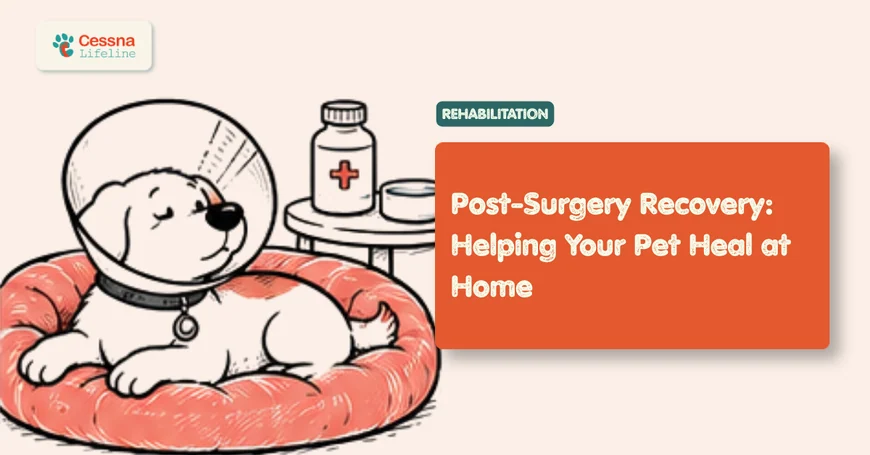
Protect the wound. Licking is the single commonest cause of wound breakdown and infection. A protective collar or a surgical suit should stay on whenever the pet is unsupervised, including overnight, and the usual failure is an owner removing it because the pet seems sad. A pet that looks miserable in a collar is far better off than one returning to theatre.
Give medication exactly as prescribed. Finish the course even if the pet appears recovered. Never add human painkillers: paracetamol and ibuprofen are both dangerous to pets, and paracetamol can kill a cat with a single tablet.
Inspect the wound twice daily. Look rather than touch, in good light. You are checking for discharge, increasing swelling, heat, gaping, or missing sutures. Photograph it daily, which makes gradual change obvious in a way memory does not.
Keep it dry. No bathing, swimming, or wet grass until cleared, usually after suture removal. If the wound gets wet, pat it dry rather than rubbing.
Among the questions about how to care for a dog after surgery, the one owners ask least and need most is how long. Ask for the restriction period in writing before you leave the clinic, because it varies enormously by procedure and almost nobody remembers it correctly from a verbal discharge.
What Does Normal Surgical Recovery Look Like at the Wound?
Knowing normal makes the abnormal obvious.
A healthy incision is closed with its edges meeting neatly, slightly pink along the line, and mildly swollen for the first two to three days. A small amount of clear or very slightly blood-tinged fluid in the first day or two is normal. A firm ridge developing under the skin along the incision over the first couple of weeks is usually scar tissue and expected. Mild bruising spreading around the site is common, particularly in pale-skinned pets, and often looks worse than it is.
What is not normal: yellow, green, or thick discharge; a bad smell; skin that is hot to touch; swelling that increases rather than decreasing after day three; edges that have separated so you can see tissue beneath; sutures that have come out early; or an incision that is becoming more painful rather than less.
How Is Cat Recovery After Surgery Different?
Cat surgery recovery is harder to manage than a dog's for three reasons, and the last one catches most owners.
They hide pain exceptionally well. A cat in significant discomfort often just sits still and quiet, which reads as a well-behaved patient. The signs are subtler: a hunched posture, reluctance to jump, sitting with the feet tucked, not grooming, hiding more than usual, a tense face with narrowed eyes, and reduced interest in food. A cat that stops eating after surgery needs a call rather than patience.
They climb. Confinement that works for a dog does not contain a cat, which will get onto a wardrobe given the opportunity. Cat recovery after surgery usually means a single room with high surfaces made inaccessible, or a large pen, rather than a closed door and hope.
And they groom obsessively. A cat will remove sutures with real efficiency, and a protective collar makes some cats unable to eat or use a litter tray comfortably, so a surgical suit is often the better option. Check that a collared cat is actually managing to eat and drink.
Two feline specifics worth knowing. Switch to paper-based or shredded litter after abdominal or paw surgery, because clay and clumping litter sticks to incisions. And never give a cat any human pain relief: paracetamol in particular is lethal to cats at ordinary doses.
The complication we see most often has a single, consistent cause: the owner removed the protective collar for a few minutes out of sympathy, usually around day four when the pet seemed comfortable and the collar seemed cruel. A dog can dismantle a closed incision in well under a minute of determined licking, and the damage is frequently discovered hours later. If you take the collar off at all, it is while you are watching with your hands free, not while you make dinner. Framing it for owners as "this collar is the thing preventing a second anaesthetic" changes compliance far more effectively than explaining infection risk.
Why Does Pain Relief Matter for Recovery Speed?
Because unrelieved pain is not merely unpleasant, it measurably slows healing.
A painful animal moves abnormally, which loads other joints and muscles and creates secondary problems. It eats less, and reduced nutritional intake slows tissue repair. It sleeps badly, and rest is when healing happens. It is also harder to handle, which makes wound checks and physiotherapy difficult. In orthopaedic cases, pain prevents the controlled early movement that rehabilitation depends on.
Modern practice uses multimodal analgesia, combining drugs that act by different mechanisms so each can be given at a lower dose with fewer side effects. That often means an anti-inflammatory alongside another analgesic, and sometimes local anaesthetic techniques used during surgery whose benefit continues afterwards.
The old idea that pain keeps a pet quiet and therefore safe has been abandoned, and for good reason. Pain does not reliably restrict activity, it just makes the animal miserable while it does whatever it was going to do. Restriction is achieved with crates, leads, and doors, not with discomfort.
Two rules. Give analgesia on schedule rather than waiting for signs, because staying ahead of pain works better than chasing it. And never supplement with human medication, which is one of the more common causes of serious toxicity in pets.
When Should I Call the Vet After Surgery?
Call the same day for any of these:
- Discharge from the wound that is yellow, green, thick, or smells
- Wound edges separating, or tissue visible through the incision
- Swelling that is increasing after day three, or is hot and painful
- Bleeding that soaks through a dressing or does not stop
- Sutures or staples missing earlier than expected
- Refusing all food for more than 24 hours after coming home, or any cat not eating
- Repeated vomiting, or diarrhoea with blood
- Unable to pass urine, or straining without producing any
- Pain that is worsening rather than improving
- Lethargy that deepens instead of lifting, or difficulty rousing the pet
- Pale, white, or blue-tinged gums
- Laboured or rapid breathing
- A sudden deterioration after activity, which may indicate internal breakdown
- New lameness, or an orthopaedic patient unwilling to bear weight at all
Pale gums, laboured breathing, a pet that cannot be roused, or inability to urinate are emergencies and need immediate attention rather than a morning appointment. how to recognize a veterinary emergency early
If you are unsure, phone. Clinics would far rather answer a question at the point where it is simple than see the result of a day's wait.
Frequently Asked Questions
How do I care for a dog after surgery?
Confine properly with a crate or pen and lead-only toilet breaks, keep a protective collar on whenever unsupervised, give all medication exactly as prescribed, inspect the wound twice daily in good light, and keep it dry until cleared. Get the restriction period in writing before leaving the clinic, because it varies widely by procedure.
What should I expect after pet surgery on the first night?
Sleepiness, wobbliness, little interest in food, and sometimes shivering, whining, or a single episode of vomiting. Those are anaesthetic effects rather than complications. Provide a warm, quiet, dim space with no visitors. Call the same evening if there is repeated vomiting, bleeding through a dressing, pale gums, or a pet you cannot rouse.
How long does dog surgery recovery take?
Soft tissue surgery such as a spay usually means ten to fourteen days of restriction until suture removal, with normal activity resuming after that. Orthopaedic surgery is far longer, with weeks of strict confinement and a staged return over months. Ask for your specific procedure's timeline in writing rather than assuming two weeks.
Can I take the cone off my pet?
Only while you are actively watching with your hands free, never while you are occupied or asleep. A determined dog can open a healing incision in under a minute, and the damage is often found hours later. A pet that looks unhappy in a collar is in a far better position than one needing a second anaesthetic to repair the wound.
What is different about cat recovery after surgery?
Cats hide pain, so look for hunching, tucked feet, hiding, not grooming, and reduced appetite rather than vocalising. They climb, so confinement needs high surfaces blocked rather than a closed door. A surgical suit often suits cats better than a collar. Switch to paper-based litter, and never give a cat human pain relief.
Is it normal for the incision to look lumpy?
A firm ridge forming under the skin along the incision over the first couple of weeks is usually scar tissue and expected. Mild bruising around the site is also common. What is not normal is a soft fluid-filled swelling, a lump that is growing, heat, or any discharge, and those warrant a call the same day.
Should my pet have physiotherapy after surgery?
For orthopaedic surgery, structured rehabilitation substantially improves the return of strength and range of motion, and it is part of the treatment rather than an optional extra. For routine soft tissue surgery it is usually not needed. Either way, do not begin any exercise programme without your surgeon's clearance and a specific plan.
Next Steps
For orthopaedic patients, the recovery is the treatment. Structured rehabilitation rebuilds the muscle lost during restriction, restores range of motion, and corrects the compensatory movement patterns a pet develops while protecting a painful limb. Starting it at the right point matters as much as doing it.
Arrange post-surgery rehabilitation and recovery with the Cessna Lifeline team, who will build a staged plan around your pet's specific procedure and clearance date.
If something about the wound or your pet's condition is worrying you right now, do not wait for the next scheduled check. Book an appointment, and treat pale gums, laboured breathing, a pet you cannot rouse, inability to urinate, or a wound that has opened as an emergency needing immediate attention.