Rehabilitation Therapy in Pets: Recovery and Quality of Life
Rehabilitation therapy helps dogs recover faster after surgery, regain muscle mass, and manage chronic pain. Learn what physiotherapy and hydrotherapy involve for dogs and cats.
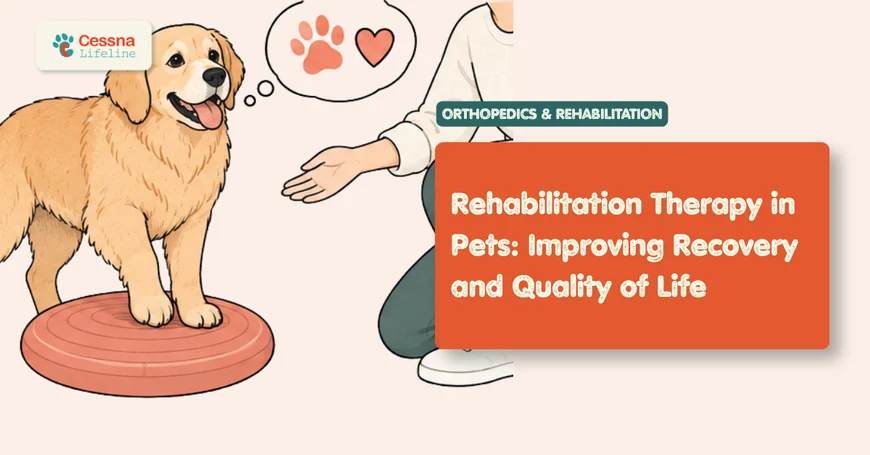
Veterinary rehabilitation medicine is a relatively young specialty, but the evidence base behind it has grown rapidly. What started as occasional post-surgical hydrotherapy has developed into a structured discipline with board-certified practitioners, validated outcome measures, and a toolkit of modalities adapted from human physiotherapy. Dogs recovering from orthopedic surgery, managing chronic arthritis, or rebuilding function after neurological injury now have access to interventions that meaningfully change their recovery trajectory. TPLO surgery recovery guide
What to Know Rehabilitation therapy consistently improves recovery speed and functional outcomes after orthopedic surgery in dogs. Dogs that receive structured physiotherapy and hydrotherapy after TPLO surgery return to full limb use significantly faster than those with rest alone (Marsolais et al., 2002). Rehabilitation also reduces chronic pain, restores muscle mass lost during confinement, and improves quality of life in senior pets with osteoarthritis.
The Discipline That Changed What Recovery Looks Like
For most of veterinary history, post-surgical recovery meant rest. Strict crate confinement, leash walks only, and time. The assumption was that the body would heal itself if given enough protection from load. What rehabilitation medicine added to this picture is that while protection from excessive load is necessary, complete immobility is harmful. Muscles atrophy within days of disuse. Cartilage loses nutrition without the compressive-decompressive cycling of weight-bearing movement. Proprioceptive pathways deteriorate without the sensory input of varied surfaces and movement patterns. Neural circuits that govern coordinated limb use go quiet without activation.
The transition from "rest and wait" to "rest and progressively load" is the foundational shift of veterinary rehabilitation. It mirrors the transformation that occurred in human physiotherapy decades earlier, where extended immobilization after joint surgery was replaced by early controlled mobilization protocols with demonstrably better outcomes. The same principles apply in dogs and, with appropriate adaptation, in cats.
Veterinary rehabilitation practitioners hold credentials including the Certified Canine Rehabilitation Therapist (CCRT), Certified Canine Rehabilitation Practitioner (CCRP), and the American College of Veterinary Sports Medicine and Rehabilitation (DACVSMR) board certification. These credentials ensure that rehabilitation plans are designed with an understanding of anatomy, biomechanics, surgical healing stages, and pain assessment rather than a general wellness philosophy.
Which Patients Benefit Most From Rehabilitation?
The range of conditions referred for veterinary rehabilitation has expanded considerably from its origins in post-orthopedic-surgery recovery. The current indications fall into four broad categories.
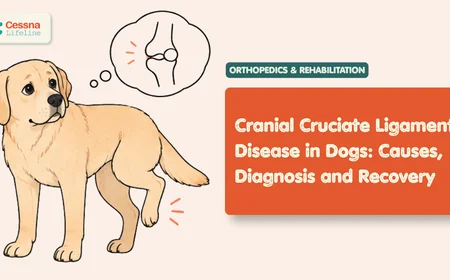
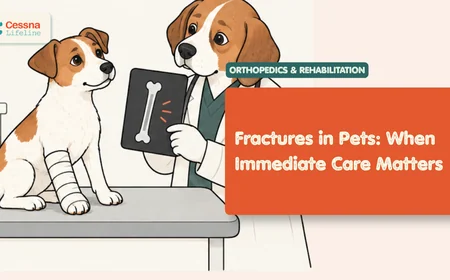
Post-surgical orthopedic recovery: TPLO, TTA, and lateral suture repair for CCL rupture; fracture repair; total hip replacement; femoral head and neck ostectomy (FHO); elbow dysplasia surgery. These patients arrive with a defined surgical healing timeline and a specific functional goal: restore limb use progressively within the constraints of healing tissue. Rehabilitation accelerates muscle mass restoration, maintains joint range of motion, and reestablishes proprioceptive competence without loading the repair before it can tolerate it. hip dysplasia management
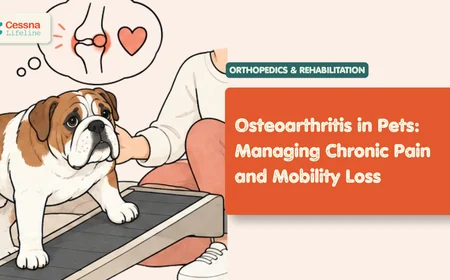
Chronic pain management: Osteoarthritis in dogs and cats is the most common referral diagnosis for long-term rehabilitation. Maintenance rehabilitation programs for arthritic pets combine therapeutic exercise, manual therapy, pain-relief modalities, and weight management. The goal shifts from recovery to sustained function maintenance over months to years. osteoarthritis pets guide
Neurological recovery: Intervertebral disc disease (IVDD), degenerative myelopathy, fibrocartilaginous embolism (FCE), and post-spinal-surgery patients require specialized neurological rehabilitation protocols targeting gait retraining, proprioceptive recovery, and bladder and bowel function where affected. This is the most technically demanding area of veterinary rehabilitation and benefits most from specialist involvement.
Weight loss and body composition: Obese pets are disproportionately represented in orthopedic and arthritis populations. Therapeutic exercise programs specifically designed for overweight pets provide controlled calorie expenditure with joint-appropriate loading, supporting weight loss while reducing the risk of injury from high-impact exercise on compromised joints. dog weight management
Citation Capsule: Dogs that underwent structured physiotherapy and hydrotherapy following TPLO surgery showed significantly improved ground reaction force measurements at 8 and 16 weeks postoperatively compared to dogs managed with rest and leash walks alone; the rehabilitation group achieved normal limb loading significantly sooner, demonstrating that early controlled mobilization accelerates return to function without compromising surgical outcomes (Marsolais et al., 2002). This study established the evidence base for post-TPLO rehabilitation as standard of care rather than optional supplementation.
What Does a Rehabilitation Session Actually Involve?
A first rehabilitation appointment begins with a comprehensive assessment: gait analysis (often recorded on video for baseline comparison), orthopedic and neurological examination, muscle mass measurement (girth tape circumference of affected limb versus contralateral limb), range-of-motion measurement with a goniometer, pain scoring using validated tools, and a review of surgical records and radiographs. From this baseline, a treatment plan is designed with specific goals, timelines, and measurable endpoints.
Subsequent sessions draw from a toolkit of modalities:
Rehabilitation Modality Reference
| Modality | Primary Mechanism | Main Indication | Frequency |
|---|---|---|---|
| Therapeutic exercise (land) | Muscle strengthening, proprioception, coordination | All surgical and chronic pain cases | 2-3x/week or daily home program |
| Underwater treadmill (UWTM) | Reduced weight-bearing, cardiovascular exercise, buoyancy | Post-surgical, arthritis, obese patients | 2-3x/week |
| Therapeutic laser (LLLT) | Photobiomodulation; reduces inflammation, promotes healing | Wound healing, acute pain, muscle injuries | 3x/week acute; 1x/week maintenance |
| Manual therapy / massage | Soft tissue mobilization, lymphatic drainage, relaxation | Muscle tension, post-surgical edema, IVDD | Each session |
| Neuromuscular electrical stimulation (NMES) | Prevents disuse atrophy; re-activates motor units | Paralysis, post-surgical immobilization | 3-5x/week |
| Therapeutic ultrasound | Deep heat; collagen fiber alignment in healing tissues | Tendon/ligament injuries, chronic scar tissue | 2-3x/week |
| Cryotherapy / thermotherapy | Acute pain and swelling reduction (cold); relaxation (heat) | Post-exercise recovery, chronic stiffness | As needed |
| Balance and proprioceptive training | Reestablishes sensory-motor pathways and joint stability | Post-orthopedic or neurological surgery | Each session |
Sessions typically last 45 to 60 minutes and combine three to five modalities selected for the patient's current stage of healing. A dog at week two after TPLO receives a different combination than the same dog at week eight: the former prioritizes pain management, edema control, and gentle range-of-motion; the latter progresses to strengthening exercises and higher-impact proprioceptive challenges.
What rehabilitation practitioners observe consistently: The first 72 hours after TPLO surgery are where owner management is most consequential and most frequently undermined. The surgical nerve block placed at the time of anesthesia provides dramatic early pain relief; the dog wakes up comfortable, wants to move, and the owner interprets this as "they must be fine." Early uncontrolled activity in this window, before postoperative swelling peaks and the nerve block wears off, accounts for a disproportionate share of early post-surgical wound complications, implant stress, and incision breakdown. The dog's apparent comfort in hours 6 to 24 is the nerve block, not healed tissue. This is the single most important thing to communicate to owners before they leave the surgical clinic with a comfortable-looking dog.
Citation Capsule: Veterinary rehabilitation encompasses a structured multimodal framework combining therapeutic exercise, manual therapy, electrophysical modalities, and hydrotherapy; the integration of these modalities is guided by the patient's healing stage, pain level, and functional goals rather than by fixed protocols, because the therapeutic window for each modality changes as tissue healing progresses from inflammatory to proliferative to remodeling phases (Millis and Levine, 2014). The rehabilitation practitioner's core competency is in selecting and sequencing modalities to match healing biology rather than in applying any single technique.
How Does Hydrotherapy Work and Why Is It So Effective?
Hydrotherapy, delivered most commonly via an underwater treadmill (UWTM) in veterinary rehabilitation, exploits the physical properties of water to enable exercise that would be impossible on land at equivalent stages of recovery. Three properties of water are therapeutically significant: buoyancy, resistance, and hydrostatic pressure.
Buoyancy reduces the effective body weight transmitted through limbs in proportion to the depth of immersion. At water depth to the hip joint (approximately dorsal immersion to the greater trochanter), approximately 38% of body weight is borne through the limbs. At stifle-level immersion, approximately 65 to 70%. At hock-level immersion, approximately 91%. fracture recovery dogs
This depth-weight relationship is a precise clinical variable, not an incidental feature of the equipment. A rehabilitation therapist adjusting water depth week by week is titrating the mechanical load on healing tissue with a specificity that is impossible to replicate on land. In week three after a TPLO, the therapist may fill the treadmill to hip level to keep limb loading below 40% of body weight. In week seven, the water level drops to stifle to increase loading to 65% as the healing callus and soft tissue repair can tolerate more. In week ten, it drops further. This progressive loading across weeks mirrors the "progressive overload" principle of human physiotherapy but with water depth as the load-adjustment dial.
Resistance of water is approximately 800 times greater than air at equivalent speeds. This means the dog walking at 1.0 mph in the underwater treadmill is working cardiovascular and muscular systems at an intensity equivalent to a much faster land pace, without the impact loads of that pace. For overweight patients, this allows genuine cardiovascular conditioning without joint-damaging compressive force.
Hydrostatic pressure exerted by water on immersed tissues reduces edema (swelling) by compressing venous and lymphatic drainage back toward the body. A post-surgical limb in warm water receives both the buoyancy benefit and a gentle compressive massage effect that assists lymphatic drainage of surgical swelling. This is why many post-surgical rehabilitation protocols start hydrotherapy earlier than most owners expect.
Citation Capsule: Underwater treadmill therapy reduces effective limb loading in proportion to water immersion depth; at depth to the hip joint, approximately 38% of body weight is transmitted through the hindlimbs, enabling cardiovascular exercise and muscle activation at loads that healing bone, cartilage, and soft tissue can tolerate weeks before equivalent land-based exercise would be appropriate (Levine et al., 2010). The ability to adjust load by adjusting water depth makes the UWTM the only veterinary modality that allows progressive, quantifiable load titration across the healing continuum.
Exercises Owners Can Perform at Home Between Sessions
In-clinic rehabilitation sessions are typically two to three times per week, which means the majority of the patient's daily hours are spent at home. A home exercise program (HEP) bridges the gap between sessions and maintains the gains achieved in the clinic. Consistent HEP compliance is one of the strongest predictors of rehabilitation outcome.
Passive range of motion (PROM): Owner gently flexes and extends each joint of the affected limb through its comfortable range, without force, for 10 to 15 repetitions, two to three times daily. This prevents joint capsule contracture, maintains synovial fluid circulation, and provides sensory input to the healing limb during the period when active movement is restricted.
Sit-to-stand exercises: The dog sits, then stands, then sits again, using the hindlimbs to bear load during both transitions. This is the single most effective simple strengthening exercise for hindlimb muscle mass and is prescribed for the vast majority of post-TPLO and hip dysplasia rehabilitation patients. It is performed in sets of 10, two to three times daily, on a non-slip surface.
Controlled leash walks: Duration and surface are both specified. "A five-minute walk on grass twice daily" is a prescription, not a vague recommendation. The timing, surface firmness, and pace all affect the mechanical stimulus delivered to healing tissue. A rehabilitation therapist's written HEP specifies each variable rather than leaving them to owner interpretation.
Cavaletti pole walking: Low poles arranged at specific spacings require the dog to lift each leg deliberately, increasing hip flexion and promoting symmetrical gait rather than compensatory weight-shifting. As simple as it sounds, this is a validated gait retraining tool used in equine, canine, and human physiotherapy.
What Are the Measurable Outcomes of Rehabilitation?
Outcome measurement is what separates veterinary rehabilitation from general wellness. Rehabilitation practitioners quantify change over time using objective tools that capture whether the patient is genuinely improving or whether recovery has plateaued.
Force plate gait analysis is the gold-standard objective outcome measure for limb use. A dog walks across a pressure-sensitive plate that records the peak vertical force, impulse, and stance time for each limb. The affected limb is compared to the contralateral limb and to normative values for the breed and body weight. A force plate shows whether a dog that appears to walk normally is actually loading the affected limb symmetrically, or is still subtly offloading it.
Girth circumference measurement quantifies muscle mass at the mid-belly of the quadriceps or hamstring group. A 1 cm difference between affected and contralateral limb represents significant clinically detectable atrophy. The same measurement at recheck tracks whether rehabilitation is successfully reversing disuse atrophy.
Goniometry measures joint range of motion in degrees. In post-TPLO patients, stifle flexion and extension angles are measured at each recheck and compared to the contralateral limb and the preoperative baseline. Restricted range of motion detected early triggers specific stretching and manual therapy interventions before joint capsule contracture becomes permanent.
Validated pain scores (Helsinki Chronic Pain Index, Canine Brief Pain Inventory) completed by the owner at each recheck provide longitudinal tracking of the owner's perception of their pet's pain and function. Changes in these scores over time capture what the force plate and goniometer cannot: how the dog behaves in daily life at home.
Citation Capsule: Ground reaction force measurements in dogs after TPLO surgery show significantly higher peak vertical forces in rehabilitation-treated dogs at 8 weeks (mean 57% of body weight in the rehab group versus 40% in the control group) and at 16 weeks postoperatively, with the rehabilitation group achieving force plate symmetry with the contralateral limb approximately 6 weeks earlier than the rest-only control group (Marsolais et al., 2002). These objective measurements confirm that the subjective owner impression of "doing better" reflects real differences in limb loading, not observer bias.
Does Rehabilitation Work Differently for Cats?
Yes, and the differences are substantial enough to warrant specific mention. Cats are not small dogs, and feline rehabilitation protocols that simply scale down canine exercises tend to fail because they do not account for the differences in feline pain expression, behavioral motivation, and stress response.
The foundational challenge of feline rehabilitation is that a cat in pain and a cat in a comfortable, calm resting state can look nearly identical. A quiet, still cat during a therapy session could be tolerating the modality appropriately, or could be in a stress-freeze response that is masking distress. These look the same to an untrained observer. Validated feline pain assessment tools, specifically the Feline Grimace Scale (FGS), which scores ear position, orbital tightening, muzzle tension, whisker position, and head position, provide a structured way for therapists to distinguish tolerance from distress in real time during a session. A rehabilitation practitioner who cannot score feline pain dynamically should not be treating cats. The FGS is the essential competence gate for safe feline rehabilitation.
Beyond pain assessment, motivating a cat to perform therapeutic exercises requires creativity that is not needed with most dogs. Food motivation through puzzle feeders, laser pointer tracking for range-of-motion exercises, and stair climbing between preferred resting spots on different levels are all used as therapeutic movement prompts. Most cats require significantly shorter session durations (15 to 20 minutes versus 45 to 60 for dogs) with more environmental control. Many cats do better with owners present; others do better without them.
Hydrotherapy is used more selectively in cats than in dogs. While some cats tolerate underwater treadmill therapy well, many find water immersion profoundly aversive. Land-based alternatives including therapeutic laser, NMES, and targeted therapeutic exercise are typically prioritized in feline rehabilitation before water-based modalities are attempted.
The outcome evidence for feline rehabilitation is less robust than for dogs, reflecting both smaller research populations and the greater difficulty of objective gait measurement in cats. However, clinical experience and the available case series support meaningful improvement in function in cats treated for intervertebral disc disease, degenerative joint disease, and post-orthopedic-surgery recovery. cat pain management
Citation Capsule: The Feline Grimace Scale (FGS) is a validated, real-time behavioral pain assessment tool that scores five facial action units (ear position, orbital tightening, muzzle tension, whisker position, and head position) to quantify acute pain in cats; it has been validated against other feline pain measures and is the most practically applicable real-time pain assessment tool for feline rehabilitation sessions, where distinguishing pain-mediated stillness from cooperative rest is essential for safe treatment (Evangelista et al., 2019). Rehabilitation practitioners treating cats should incorporate FGS scoring at treatment initiation, mid-session, and completion.
Frequently Asked Questions
When should I start rehabilitation after my dog's surgery?
Many surgeons recommend beginning rehabilitation within the first 24 to 48 hours post-surgery, or as soon as the dog is medically stable. Early sessions focus on pain management modalities (cold therapy, therapeutic laser, gentle massage) and passive range of motion rather than active exercise. Active strengthening begins once tissue healing permits, typically from week three or four onward depending on the procedure. Contact your rehabilitation therapist before surgery if possible; having a plan in place means sessions start immediately rather than after you navigate a referral while managing a freshly operated dog.
How many rehabilitation sessions does a dog need after TPLO?
A typical TPLO rehabilitation course involves 8 to 12 in-clinic sessions over 12 to 16 weeks, combined with a daily home exercise program throughout. Session frequency is highest in the first four weeks (two to three per week) and tapers as the dog improves and the home program becomes more independent. Dogs with complications, bilateral disease, concurrent conditions, or obesity typically require more sessions and a longer total program duration.
Is hydrotherapy the same as swimming?
No. Swimming and underwater treadmill (UWTM) therapy are both hydrotherapy modalities but with different therapeutic effects. Swimming requires the dog to use all limbs for floatation and propulsion, which limits therapist control over which limbs are working and at what intensity. The UWTM provides a controlled, stable walking surface at a specific water depth; the therapist controls speed, water level, and duration precisely. For most post-surgical rehabilitation, UWTM is preferred because it replicates normal gait mechanics in a controlled environment. Swimming may be introduced later in recovery as a general conditioning exercise.
What does a veterinary rehabilitation session cost?
Initial assessment sessions typically range from $100 to $200 in the United States. Follow-up treatment sessions range from $60 to $150 each depending on modalities used and session duration. A full 12-week TPLO rehabilitation course (initial assessment plus 10 follow-up sessions plus home program design) typically costs $800 to $2,000 depending on location and facility. Some pet insurance policies cover rehabilitation therapy; check your policy's physical therapy coverage clause before assuming it is excluded.
Can I do rehabilitation exercises at home without a professional?
Owner-performed home exercises are an essential component of rehabilitation, but they should be prescribed by a rehabilitation practitioner rather than self-designed. Exercises performed incorrectly, at the wrong intensity, or at the wrong healing stage can cause harm. The most common owner errors are starting exercises too early, performing too many repetitions, and skipping rest days. A rehabilitation therapist provides a written, staged home exercise program and demonstrates technique before the owner performs exercises independently.
The Recovery That Goes Further Than Expected
The most consistent observation from practitioners in veterinary rehabilitation is that the endpoint of recovery is further than owners expected when they started. The dog they brought in non-weight-bearing at three weeks post-TPLO, who seemed impossibly far from normal, reaches full limb use at fourteen weeks. The arthritic dog whose owner was managing day-by-day, measuring success in whether they could get up without help, walks further and rests more comfortably after eight weeks of maintenance rehabilitation than they had in two years of medication alone.
Rehabilitation does not change the underlying disease. It changes what the patient can do with the condition they have. That distinction matters less to the dog climbing into the car without hesitation for the first time in eighteen months than it does in theory. What matters in practice is what changes.