Toxic Foods for Dogs and Cats: What to Never Feed
Toxic foods for dogs include grapes, xylitol, onions and chocolate. Which human foods are dangerous, how fast each one acts, and what to do after ingestion.
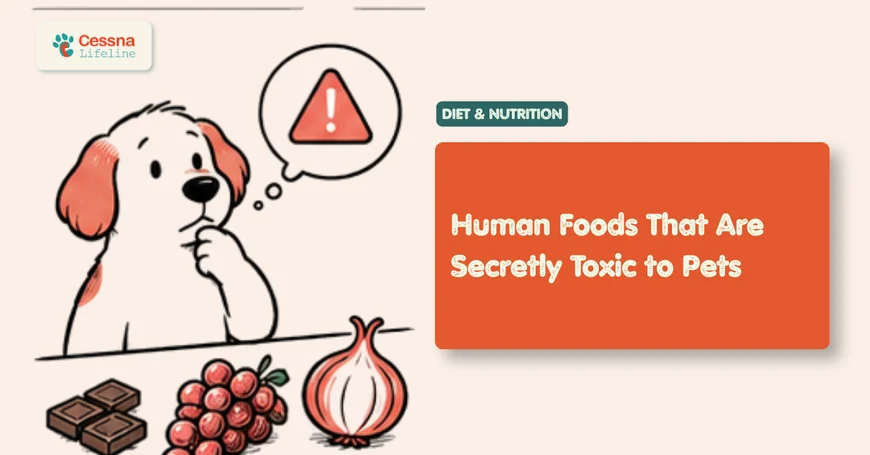
The practical problem with toxic foods for dogs is not that owners do not know chocolate is dangerous. It is that the genuinely high-risk items are less famous than chocolate, the dose that matters varies enormously between foods, and the window in which treatment works best closes before most owners decide the situation is serious enough to call.
This guide ranks the real risks by how dangerous they are rather than how well known they are, gives you the information a vet will actually ask for, and sets out what to do in the first thirty minutes.
What to Know Two things determine the outcome more than anything else: what was eaten, and how long ago. Decontamination, meaning making the pet vomit or giving activated charcoal, is most effective within roughly the first one to two hours, before absorption. That window is why calling immediately matters more than watching for symptoms. Several of the most dangerous items, including xylitol and grapes, cause no visible signs at all until organ damage is already underway. Never induce vomiting at home without being told to, because for some substances it causes additional harm.
Which Are the Most Toxic Foods for Dogs and Cats?
The foods poisonous to dogs and cats below are ranked by clinical seriousness rather than public awareness. Several dangerous human foods are far less famous than chocolate.
| Food | Species at risk | Mechanism | Urgency |
|---|---|---|---|
| Xylitol and birch sugar | Dogs | Triggers massive insulin release, causing collapse from low blood sugar; liver failure at higher doses | Immediate. Minutes matter |
| Grapes, raisins, sultanas | Dogs, probably cats | Acute kidney injury by an unidentified mechanism; no reliable safe dose | Immediate, even for a small amount |
| Onion, garlic, leek, shallot, chives | Cats especially, also dogs | Damages red blood cells, causing anaemia that appears days later | Same day. Cats are far more sensitive |
| Macadamia nuts | Dogs | Weakness, tremor, hind limb incoordination, fever | Same day |
| Chocolate, cocoa | Dogs, cats | Theobromine and caffeine cause cardiac and neurological toxicity | Depends on type and amount; dark and baking chocolate are worst |
| Ethanol, raw yeast dough | Dogs, cats | Alcohol toxicity; dough expands and ferments in the stomach | Immediate |
| Cooked bones | Dogs, cats | Splinter and perforate; obstruction | Same day assessment |
| Paracetamol / acetaminophen | Cats extremely, dogs | Destroys red blood cells and liver tissue; cats cannot metabolise it | Immediate. A single tablet can kill a cat |
| Lilies (not a food, but kitchen-adjacent) | Cats | Acute kidney failure from any part of the plant | Immediate |
| Caffeine, coffee grounds, tea | Dogs, cats | Cardiac and neurological stimulation | Same day |
| Raw fish in quantity | Cats | Thiaminase destroys vitamin B1 over time | Chronic concern |
| Milk and dairy | Cats, many dogs | Lactose intolerance causing diarrhoea | Not toxic, but avoid |
The two items at the top of that table deserve emphasis because they are the ones owners most often underestimate.
Xylitol is a sugar substitute in sugar-free gum, mints, some peanut butters, baked goods, toothpaste, and certain medicines. In dogs it causes a profound insulin release and a crash in blood sugar within an hour, and in larger doses liver failure. It is sometimes labelled as birch sugar, which makes it easy to miss. A few pieces of sugar-free gum is a genuine emergency for a small dog.
Grapes and raisins cause acute kidney injury in dogs by a mechanism still not fully identified, which has an important consequence: there is no established safe dose. Some dogs eat a large quantity and are unaffected, others develop kidney failure after a handful. Because susceptibility cannot be predicted, any grape or raisin ingestion is treated as significant. Raisins concentrate the risk by weight, so fruit cake, trail mix, and biscuits matter.
What Human Foods Are Toxic to Dogs Specifically?
Dogs are the species most often presented for food poisoning, mostly because they are indiscriminate eaters with better access to kitchens and bins.
Xylitol, grapes and raisins, and chocolate head the list. Macadamia nuts produce a distinctive syndrome of weakness and hind limb incoordination with tremor and fever. Onion and garlic in quantity cause red cell damage, and powdered forms are more concentrated than fresh, so gravy granules and spice mixes count. Raw bread dough is a genuine emergency on two fronts, because it expands in the stomach and the yeast produces alcohol.
Chocolate is worth a sentence on dose, since it is the one owners most often phone about. The toxic agent is theobromine, and concentration drives the risk: baking chocolate and cocoa powder are far more dangerous per gram than dark chocolate, which is more dangerous than milk chocolate, which is more dangerous than white chocolate. A Labrador eating a few squares of milk chocolate is usually a different conversation from a terrier eating a bar of 85% dark. Body weight matters as much as quantity, which is why the vet will ask both.
Also on the list without being classically toxic: fatty trimmings and rich leftovers, which are a recognised trigger for pancreatitis in susceptible dogs, and cooked bones, which splinter. Corn cobs deserve a specific mention because they are a common cause of intestinal obstruction, pass through the stomach just far enough to lodge, and do not show on radiographs clearly. foreign body ingestion in pets
What Are the Toxic Foods for Cats?
Toxic foods for cats overlap with the dog list, but cats eat less indiscriminately than dogs, so they present less often, but their metabolism makes certain exposures far worse.
Onion and garlic are more dangerous to cats than to dogs at equivalent doses, and the anaemia they cause develops over several days rather than immediately, so a cat can appear fine the evening it ate onion-containing food and be unwell later in the week. Paracetamol is the exposure to be most careful about: cats lack the enzyme pathway needed to process it, and a single standard tablet can be fatal. Never give a cat human pain relief under any circumstances.
Lilies are not a food, but they belong in any kitchen list because cut flowers sit on kitchen tables. Every part of a true lily, including pollen a cat brushes against and then grooms off, can cause acute kidney failure in cats. This is one of the few exposures where an immediate vet visit is warranted on suspicion alone.
Raw fish fed regularly introduces thiaminase, which breaks down vitamin B1 and over time produces neurological signs. Occasional fish is not the concern; a diet built on it is. Dog food is not toxic to cats but is not a substitute either, since cats require taurine and arachidonic acid that dog food is not formulated to supply.
Among foods cats should never eat, the quiet one is milk. It is not toxic, but most adult cats are lactose intolerant and a saucer of milk reliably produces diarrhoea.
What to Do if My Dog Ate Toxic Food
Act on the clock rather than on symptoms, because waiting for signs wastes the window in which treatment is most effective.
Call a vet or an emergency service immediately, before searching online. Have four things ready: what was eaten, with the packaging if you have it; how much, as honestly as you can estimate; when, as a clock time; and your pet's weight along with any existing conditions or medications. Those four facts are what determine whether your pet needs to come in, and a packet in your hand is worth more than a description, particularly for sugar-free products where xylitol may or may not be the sweetener.
Remove any remaining food so a second pet does not eat it, and keep the wrapper. If a second animal had access, mention that too, because dose per animal becomes a guess otherwise.
Do not induce vomiting unless you are specifically told to. Hydrogen peroxide and salt are both circulating as home remedies and both cause harm: salt can produce dangerous sodium elevation, and peroxide causes significant gastric irritation. For caustic substances and petroleum products, vomiting re-exposes the oesophagus and makes the injury worse. For a pet that is already collapsing, seizing, or struggling to breathe, vomiting risks aspiration.
Do not give milk, food, or any human medicine. Milk does not neutralise toxins, and human pain relief is itself a common cause of poisoning, especially in cats.
Then go when you are told to go. For xylitol, grapes, raisins, lilies in cats, or paracetamol in cats, that is immediately rather than after a period of observation, because by the time signs appear the treatable phase has passed.
The single most useful thing an owner can do before leaving the house is photograph the packaging, including the ingredient panel. Owners reliably remember the product and reliably misremember the detail that changes management, which is almost always the sweetener in sugar-free products, the cocoa percentage on chocolate, or the raisin content of a baked item. A photograph also survives the car journey when the wrapper does not. In practice, the cases that go best are the ones where the owner arrives able to say "140 grams, 70% cocoa, forty minutes ago, he is 12 kilos", and that is a photograph plus a glance at the clock rather than any special knowledge.
What Are the Signs of Pet Poisoning?
Signs vary by toxin, which is why they are a poor trigger for action. These warrant immediate assessment:
- Vomiting or diarrhoea, especially with blood
- Weakness, wobbliness, or collapse
- Tremor, twitching, or seizures
- Excessive drooling or pawing at the mouth
- Rapid or laboured breathing
- Racing or irregular heartbeat
- Marked lethargy or unresponsiveness
- Drinking and urinating noticeably more, or producing no urine at all
- Pale or yellow gums
- Abdominal pain or a distended, tense abdomen
- Any sudden behaviour change after unsupervised access to food or a bin
Two patterns are worth recognising specifically. A sudden crash with weakness and wobbliness in a dog that ate something sugar-free points to xylitol and hypoglycaemia. Pale gums and lethargy developing several days after a cat ate onion-containing food points to red cell damage, and the delay is why the connection gets missed.
No visible signs does not mean no poisoning. Xylitol, grapes, onion in cats, and paracetamol all have a silent early phase, and that phase is exactly when treatment works.
How Do I Prevent Food Poisoning at Home?
Prevention is mostly storage and household habit rather than vigilance.
- Keep bins behind a door or use a lid a dog cannot nose open
- Store chocolate, nuts, and sugar-free products in closed cupboards, not on counters
- Check every sugar-free product for xylitol or birch sugar before it enters the house
- Keep all human medication out of reach, and never give any to a pet
- Keep true lilies out of homes with cats entirely, including cut flowers
- Brief guests and family, since festive food and children sharing snacks are common routes
- Clear plates and counters promptly rather than after the meal
- Feed pets before the family eats, so there is less motivation to beg or scavenge
- Save an emergency number in your phone now, before you need it
A note on pancreatitis risk: rich, fatty leftovers are not toxic in the strict sense but are a recognised trigger in susceptible dogs. pancreatitis in dogs
Festival and holiday periods account for a recognisable spike, because sweets, dried fruit, rich food, and distracted households combine. If you keep one habit from this list, make it checking labels for xylitol, since it is the item most likely to be in the house unrecognised.
Frequently Asked Questions
What human foods are toxic to dogs?
The most dangerous are xylitol (in sugar-free gum, mints and some peanut butters), grapes and raisins, onion and garlic, macadamia nuts, chocolate, and raw bread dough. Xylitol and grapes are the most underestimated, because both can cause serious organ damage with no visible signs in the early hours when treatment works best.
What to do if my dog ate toxic food?
Call a vet immediately rather than waiting for symptoms. Have ready what was eaten with the packaging, how much, the clock time, and your pet's weight. Do not induce vomiting unless told to, and do not give milk, food, or human medicine. Photograph the ingredient panel before you leave the house.
Which are the toxic foods for cats to avoid?
Onion, garlic, and chives, which damage red blood cells and affect cats more than dogs; chocolate and caffeine; raw fish in quantity; and alcohol. Never give a cat paracetamol, as a single tablet can be fatal. Keep true lilies out of the house entirely, since any part can cause acute kidney failure.
How much chocolate is dangerous for a dog?
It depends on the type and the dog's weight, because the toxic agent is theobromine and its concentration varies widely. Baking chocolate and cocoa powder are far more dangerous per gram than dark, which is worse than milk, which is worse than white. Phone with the cocoa percentage, the weight eaten, and your dog's weight.
Are grapes really toxic to dogs?
Yes, and there is no established safe dose. Grapes and raisins cause acute kidney injury by a mechanism that is still not identified, and susceptibility varies unpredictably between individuals. Some dogs tolerate a large amount and others develop kidney failure after a handful, which is why any ingestion is treated as significant.
Can I make my dog vomit at home?
Not unless a vet specifically instructs you to. Hydrogen peroxide causes significant gastric irritation and salt can produce dangerous sodium elevation. For caustic substances and petroleum products, vomiting worsens the injury, and in a pet that is already collapsing or seizing it risks aspiration. Phone first, every time.
My pet seems fine after eating something toxic. Should I still call?
Yes. Several of the most serious toxins have a silent early phase, including xylitol, grapes, onion in cats, and paracetamol. By the time signs appear, absorption is complete and the window for decontamination has closed. A phone call costs nothing and is how the decision gets made on facts rather than on hope.
Next Steps
If your pet has eaten something on these lists, this is not the moment for further reading. Call now, with the packaging in your hand and the time it happened.
Emergency and critical care at Cessna Lifeline covers toxin exposure, and the decontamination window is short enough that calling before symptoms appear genuinely changes outcomes.
If nothing has happened yet and you want to get ahead of it, a nutrition and preventive consultation is a good place to review what is in your kitchen and what your pet can actually reach. Book an appointment and save an emergency number in your phone today rather than looking for one at eleven at night.